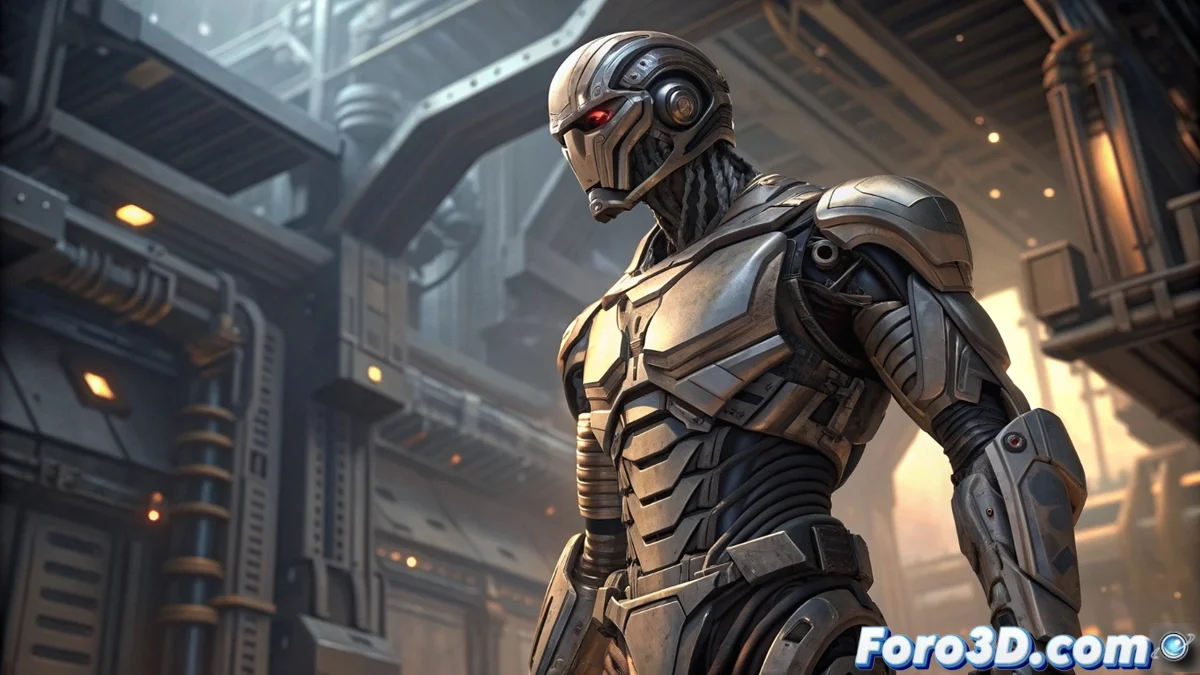
Anti-Arc Movement in 2D Animation
Imagine a digital world where characters don't flow gracefully, but move like pieces of a broken machine. In 2D animation, anti-arc movement occurs when a body part or the entire character advances in straight trajectories, breaking the natural fluidity and creating a robotic and unsettling sensation that captures the audience's attention. This approach, far from being an error, is used intentionally to evoke unease and mechanical realism 🚀.
Examples in Animation
This movement style is frequently seen in works representing non-human entities, such as robots in science fiction films. Here, straight lines highlight inherent rigidity, contrasting with the smooth arcs of organic characters and helping to establish a mechanical tone that defines the atmosphere. For example, in chase scenes, a robot with linear trajectories emphasizes its artificial nature, making the viewer feel that cold precision that distinguishes the human from the synthetic 🛠️.
Descriptive List:- In science fiction productions, such as cinema classics, robots use anti-arc movement to accentuate their lack of emotion, creating a striking visual contrast with organic protagonists.
- This method also appears in experimental animations, where it is combined with visual effects to highlight the duality between the natural and the artificial, enhancing narrative immersion.
- Animators employ it in action sequences to create tension, as straight trajectories break the expected flow and provoke an emotional response from the audience.
In a world where fluidity is essential for vitality, watching a character move like a rusty gear at a dance party is like seeing an android trying to be graceful: it's amusing in its clumsiness, but it reminds us that robotic perfection can be the most evident imperfection.
Effects on Creativity
Integrating anti-arc movement allows creators to delve into deep themes like alienation or surrealism, altering the viewer's perception and highlighting the artificiality of characters. This fosters innovations in narratives, questioning reality and promoting debates on how animation serves as an expressive medium. With this resource, artists can explore new ways of storytelling, where the unnatural becomes a tool for reflecting on humanity 🎭.
Another Descriptive List:- It allows innovation in productions addressing emotional disconnection, such as animations that critique modern society and its dependence on technology.
- It facilitates discussions about animation as art, by highlighting how altered movements can transform the narrative into something more impactful and memorable.
- It offers opportunities to mix genres, such as combining it with humorous elements to create contrasts that make people laugh while provoking thought.
Final Subtitle: Reflections on Its Impact
In summary, anti-arc movement in 2D animation is not just a technical technique, but a powerful tool that enriches creativity by challenging the conventional. By maintaining the essence of the robotic and the disturbing, animators can explore themes of alienation and surrealism, reminding us that in digital art, the imperfect often reveals profound truths. This approach invites continued innovation, ensuring that animation continues to evolve as a vibrant expressive medium 🌟.