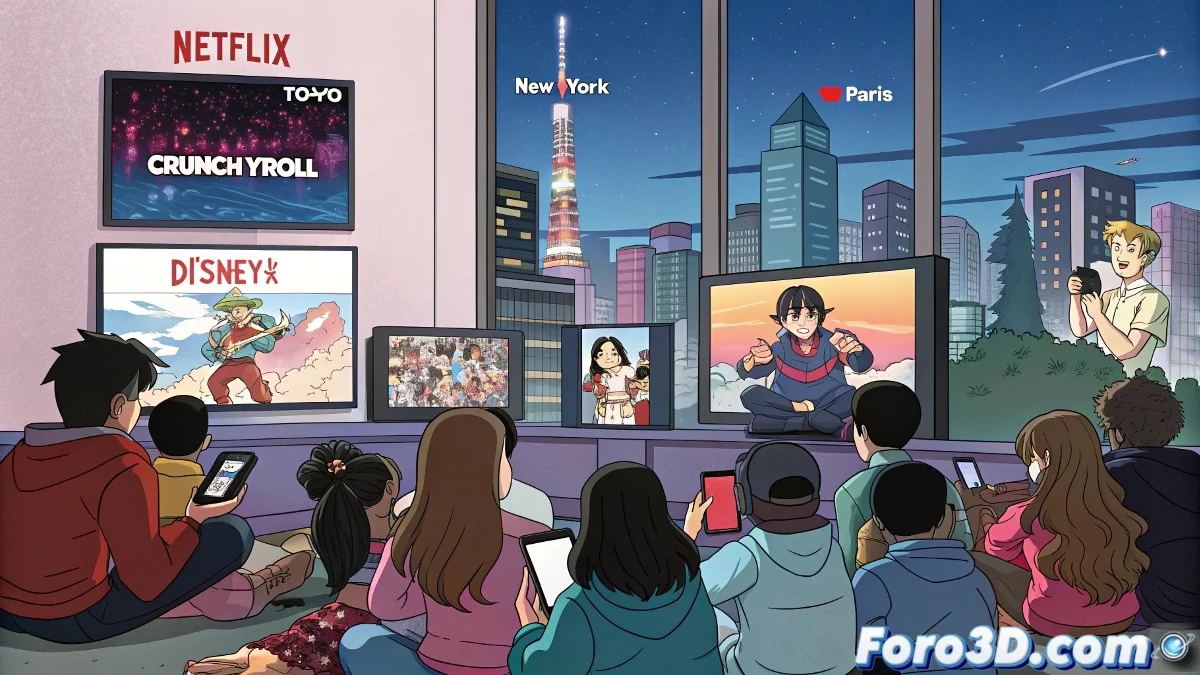
From Subculture to Global Domination: The Golden Age of Anime
What was once exclusive territory of geek conventions now moves millions: anime has been crowned king of entertainment. With statistics showing that 1 in 3 people consume it weekly, this Japanese genre has left behind its stigma to become everyday pop culture 🌍.
"48% of global anime consumption occurs on Netflix," reveal Dentsu data, demonstrating how platforms have embraced this phenomenon.
Streaming: The Fuel for Anime Expansion
Platforms have understood the potential: from original productions like Cyberpunk: Edgerunners to rescued classics, the anime catalog grows exponentially. What's interesting is how the line between "authentically Japanese" and globalized anime style has blurred 🚀.
- Netflix leads with the largest catalog and its own productions
- Disney+ and Prime Video vie for their share of the pie
- The quality/authenticity debate continues to divide purists
Generation Z: Consumers and Creators
Young people don't just watch anime: they live it, buy it, and reinvent it. With 40% spending more than $200 annually on merchandising and many turning their passion into businesses, they have created a parallel economy that brands eye avidly 💰.
Why Does It Succeed? Stories Hollywood Doesn't Tell
The secret lies in its diversity: from existential dramas to absurd comedies, anime offers what mainstream cinema often ignores. It's not uncommon for viewers tired of repetitive formulas to find in anime a narrative freshness that hooks them 🎭.
Opportunities for Digital Artists
For visual creators, the anime boom means new market demands:
- Mastery of anime styles in software like Blender or Clip Studio
- Creation of characteristic visual effects
- Adaptation of anime aesthetics to different formats
Moral: the one who 20 years ago told you "stop watching those weird cartoons" is probably hooked on Attack on Titan today. The world turns... like the eyes of a shojo character 😵💫.