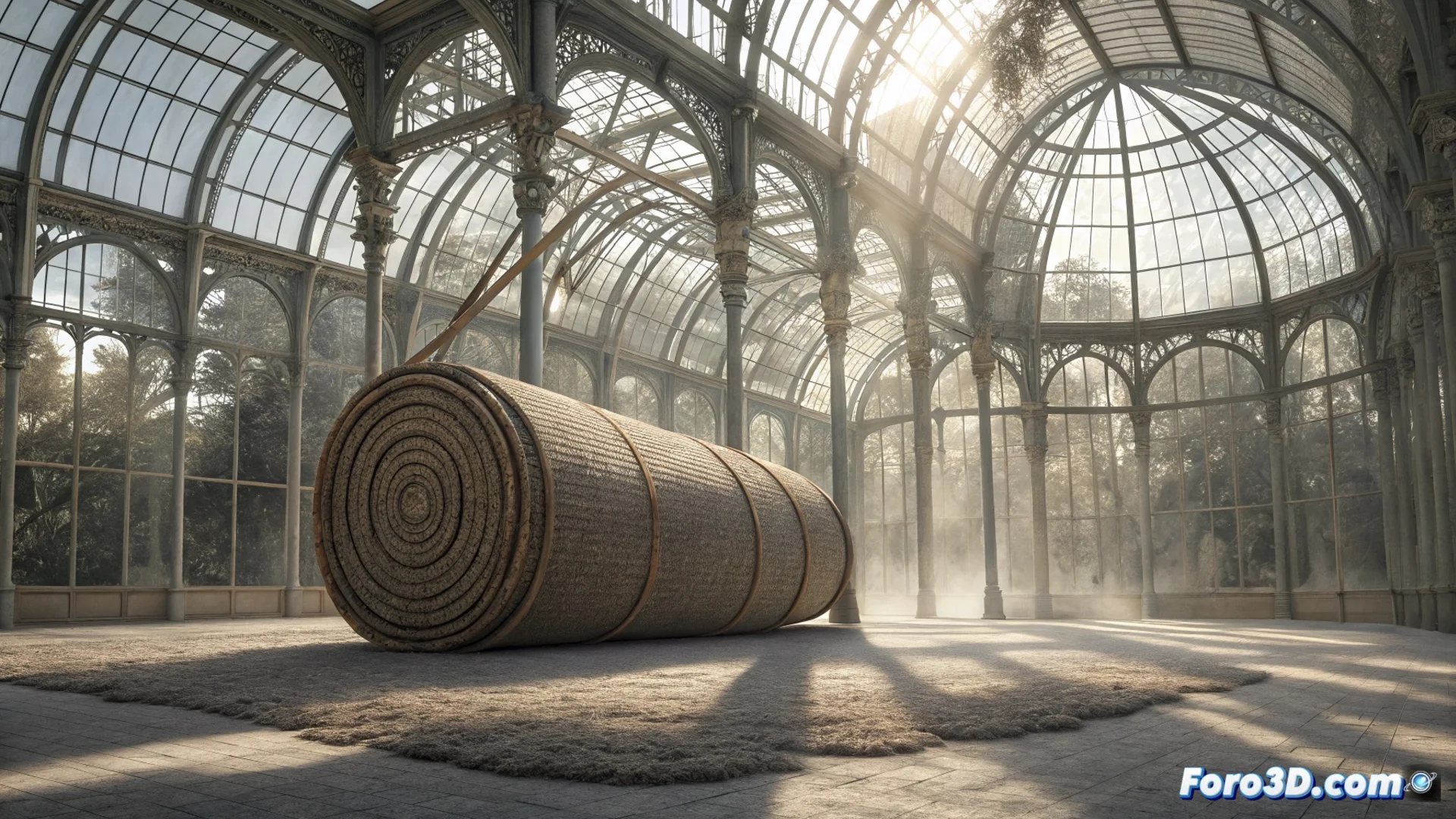
Andrea Canepa Installs Her Work Fardo in Madrid's Crystal Palace
The Reina Sofía Museum presents a new proposal in its contemporary art program. Peruvian artist Andrea Canepa deploys her installation Fardo in the iconic Crystal Palace of Retiro Park, where it can be visited until April 20. 🏛️
A Dialogue Between Ritual Past and Museum Present
The piece Fardo explores how objects with deep cultural significance transform when changing context. Canepa constructs a large cylindrical textile structure that directly evokes the pre-Columbian burial bundles. By suspending it under the glass dome, it generates a powerful contrast between the earthy materiality of the work and the transparent, modern geometry of the 19th-century building.
Key Elements of the Installation:- A large-scale textile structure several meters high.
- Earthy-colored materials that recall the earth and the ancestral.
- Central location under the dome, taking advantage of the Crystal Palace's natural light.
The work invites us to think of death not as an end, but as a transition, a wrapping of the body for a journey.
Connection of Memory, Space, and Materiality
The project delves into the relationship between funerary rituals, the architecture that contains them, and the materials that symbolize them. The Crystal Palace, originally a greenhouse and now an exhibition hall, hosts a symbol of ancestral practices, underscoring the idea of transforming the meaning of spaces.
Aspects that Define This Dialogue:- The lightness and transparency of glass versus the symbolic heaviness of the bundle.
- The visual tension between a modern container and an object representing centuries of history.
- Reflection on how museums present and reinterpret past cultures.
An Experience That Transcends the Usual Exhibition
This installation proposes an immersive experience where the viewer perceives the clash between two worlds. The next visit to Retiro Park may hold an unexpected encounter: instead of plants, a large textile package that condenses memory and ritual, challenging expectations about what is exhibited in a greenhouse turned museum. Canepa's work remains as a material testimony of a dialo