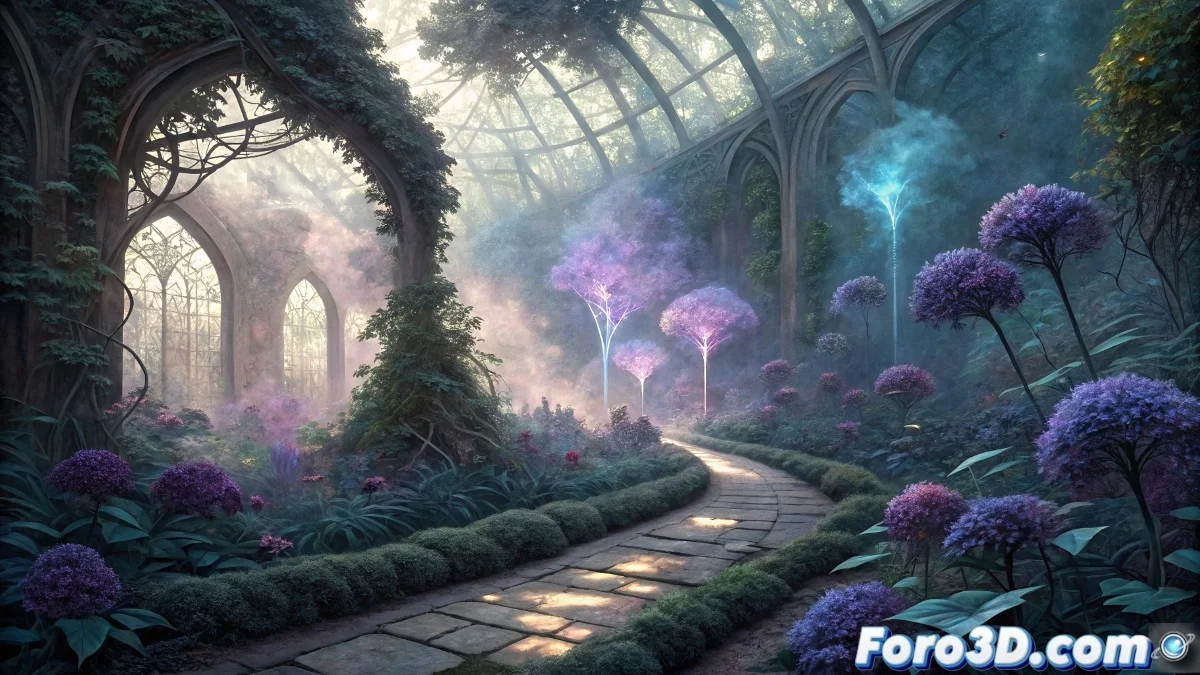
Ancient Botanical Gardens and the Garden of Oblivion in History and Visual Effects
Historical botanical gardens with areas dedicated to dangerous plant species are documented in various Mediterranean and Asian civilizations. These spaces fused scientific research with mystical and protective elements, creating unique environments that challenged the boundaries between botany and spirituality 🌿.
Origins and Historical Development
The Garden of Oblivion has its roots in Persian and Byzantine traditions, where plants with psychoactive properties were cultivated for spiritual initiation rituals. Specialized gardeners selected species whose pollens or aromas could induce altered states of consciousness, establishing restricted zones within the main botanical complexes. During the European Renaissance, these concepts were integrated into university gardens as living laboratories to study human memory and identity.
Main characteristics of these gardens:- Specific sections for plants with neurotoxic and psychoactive effects
- Areas with controlled ventilation and warnings about safe exposure times
- Documentation of temporary memory loss cases in visitors
The real danger of this garden is not forgetting why you came, but forgetting to render with the correct passes setup.
Cultural Legacy and Modern Applications
The concept of the Garden of Oblivion has profoundly influenced fantasy literature and experimental psychology, representing the fragility of human identity in the face of external influences. These legends have inspired contemporary research on plants with neurotoxic effects and their controlled therapeutic potential. Culturally, it symbolizes the danger of forbidden knowledge and the ethical limits in botanical experimentation.
Highlights of the legacy:- Inspiration for metaphors about the relationship between nature and consciousness
- Modern research on therapeutic properties of dangerous plants
- Representations in art and literature on the limits of human knowledge
Implementation in Visual Effects with Boris FX
To recreate these gardens in digital environments, a project is started in Boris FX with a cinematic 2.39:1 aspect ratio. The setup includes a 24 fps timeline and separate layers for static and dynamic elements. Base plates of real botanical gardens are imported as visual references, adjusting color management to the ACEScg space for greater dynamic range.
Modeling and Visual Structure
3D tracking tools are used to integrate ancient architectural structures with vegetation. Winding paths guide the gaze toward areas of exotic plants, applying subtle deformations to create a sense of unease. For poisonous plants, procedural vegetation generators are employed with altered parameters that produce organic but slightly unnatural shapes.
Key modeling elements:- Digital sculpting in leaf and petal textures to increase foreground detail
- Procedural generators for vegetation with disturbing appearance
- Integration of historical architectural structures with natural elements
Lighting and Materials System
The three-dimensional lighting setup includes warm key lights that simulate sunlight filtered through dense foliage. Volumetric lights are added to create visible sun rays that interact with suspended pollen. Custom materials for poisonous plants use subsurface scattering shaders with saturated colors in purple and electric blue tones.
Lighting and materials features:- Variable roughness maps for surfaces that reflect light irregularly
- Shaders that suggest toxic properties through intense colors
- Volumetric lights that create ethereal and mysterious atmospheres
Special Effects and Rendering Process
Particle systems are implemented to simulate floating pollen with swarm dynamics behaviors, adjusting opacity based on proximity to virtual cameras. Separate passes are created for atmospheric elements, depth of field, and selective blur effects. Advanced compositing tools allow applying progressive optical distortions in specific areas, suggesting the garden's hallucinogenic effect.
Technical rendering aspects:- Rendering in multiple passes with individual control over each element
- Advanced compositing for progressive optical distortions
- Particle systems with swarm dynamics for floating pollen
Conclusion: Integration of History and Technology
Ancient botanical gardens and the concept of the Garden of Oblivion represent a fascinating intersection between history, botany, and psychology. Their recreation using modern visual effects tools allows exploring these complex ideas through advanced rendering techniques and compositing, keeping alive the legacy of these mysterious spaces that challenge our understanding of memory and human identity 🎨.