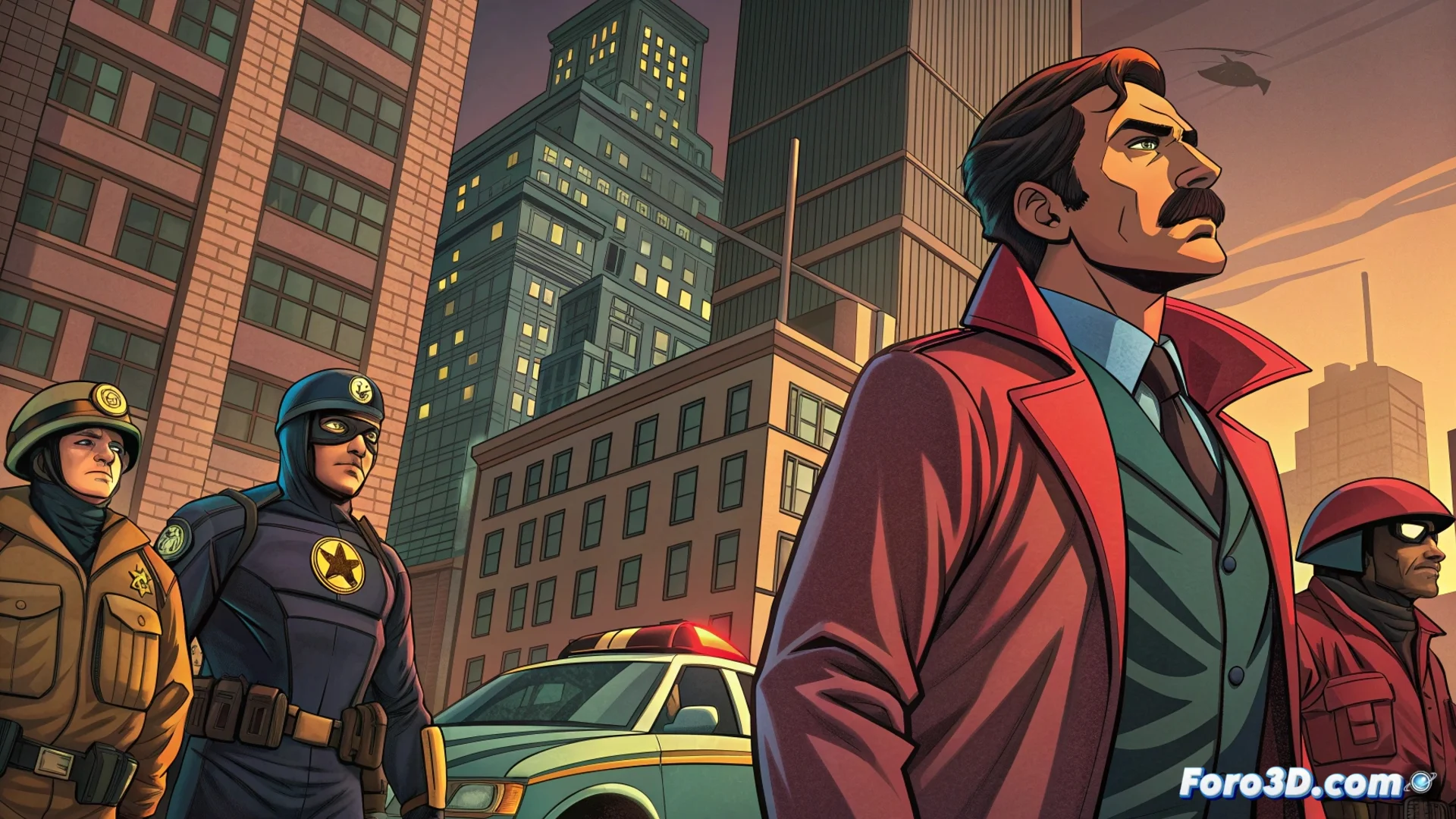
Analyzing the Top 10 Series by Alan Moore and Gene Ha
The comic series Top 10, created by writer Alan Moore and artist Gene Ha, presents a unique setting: the city of Neopolis, where every resident possesses superhuman abilities. The narrative functions as a police drama that follows the daily life of a precinct, blending criminal cases with the personal stories of its officers. This premise allows for an examination of how a society of powerful beings organizes its life and enforces norms. 🦸♂️
Gene Ha's Dense and Detailed Art Defines the Series
Gene Ha's artistic work stands out for its visual density. Every panel and every background is saturated with elements that build the world of Neopolis. The artist inserts visual jokes, nods to comic book history, and clues about the infrastructure of a city for beings with abilities. This level of detail invites readers to revisit the pages multiple times to capture all the information and hidden humor. The art not only illustrates but narrates additional layers of the story.
Key Features of the Art in Top 10:- Packed Panels: Every page is filled with secondary characters, posters, and technology that expand the lore.
- Visual Humor: Includes references and cameos from other comic characters in everyday situations.
- Narrative Architecture: The design of the city and precinct reflects the logic of a world with superpowers.
The irony lies in the fact that, in a city of gods, police must fill out forms in triplicate and handle calls about noise complaints from sonic booms.
The Series Blends Genres to Build Its World
Top 10 combines the classic police procedural with science fiction and absurd humor. The cases investigated by the characters, from murders to robberies, are complicated by the widespread use of powers. The series not only solves crimes but also shows how the characters deal with domestic problems and relationships in such an extraordinary environment. This approach humanizes the heroes and serves as sharp social satire on bureaucracy and normalcy.
Main Narrative Elements:- Police and Science Fiction: Agents use advanced technology and their own powers to investigate supernatural crimes.
- Personal Drama: Explores the lives, conflicts, and relationships of the police outside of duty.
- Bureaucratic Satire: Critiques how administrative systems persist even in a society of seemingly rule-free beings.
Legacy and Impact of the Series
Upon analyzing Top 10, it becomes evident as a work that transcends the superhero genre. Alan Moore and Gene Ha created a sociological study disguised as a police comic. The persistence of bureaucracy, the trivialization of the extraordinary, and the search for normalcy in chaos are central themes. The series demonstrates that, regardless of the power one possesses, the challenges of coexistence, work, and law remain fundamentally human. Its detailed art and layered narrative make it a rich and rewarding read. 📚