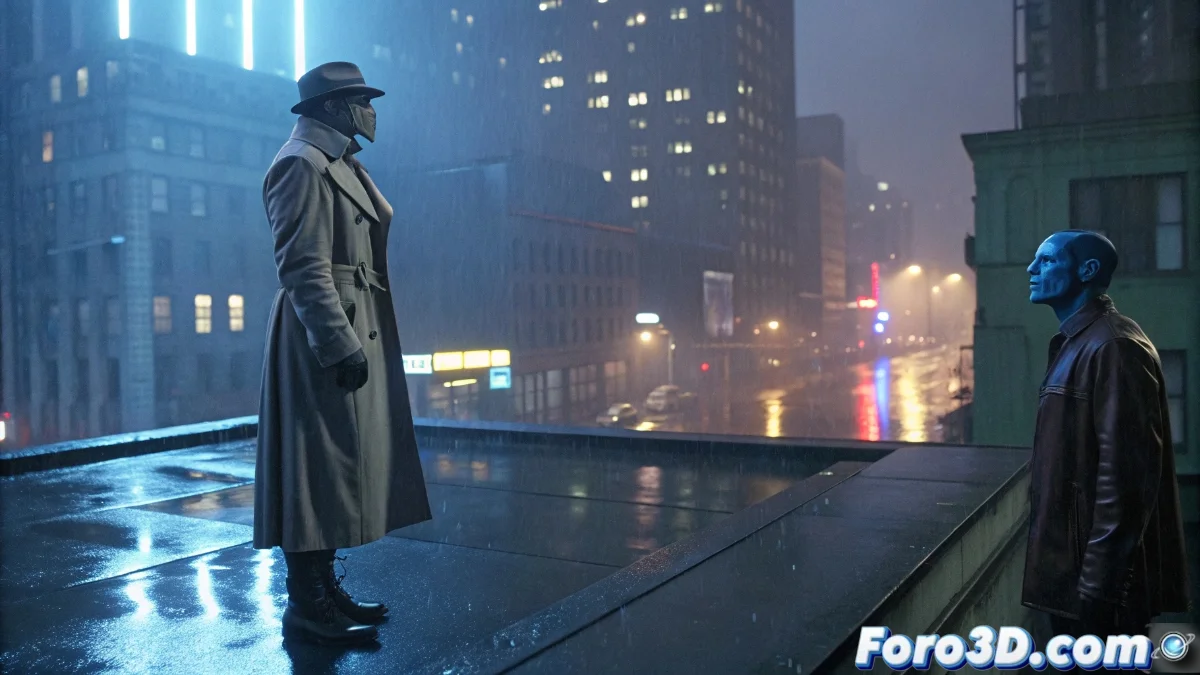
Watchmen Analysis: The Deconstruction of the Hero in a World on the Brink of Collapse
In an alternate universe where masked vigilantes were banned by the government, Watchmen immerses us in a dystopian reality during the height of the Cold War. The threat of nuclear annihilation looms over humanity as a mysterious killer systematically eliminates former heroes. The masterpiece by Alan Moore and Dave Gibbons transcends the comic book medium to become a profound study on morality, the exercise of power, and the abysses of the human psyche 🎭.
Revolution in Graphic Narrative
The narrative structure of Watchmen represents a radical break with superhero genre conventions. The main plot is masterfully interwoven with fictional documents, newspaper clippings, personal memoirs, and even a comic within the comic itself. Each chapter culminates with supplementary material that not only expands the universe but also deepens the historical and psychological context of the characters. This multi-layered approach creates an immersive and complex reading experience that redefines the possibilities of the graphic medium 📚.
Innovative Narrative Elements:- Interweaving of the main plot with fictional documents that enrich the background
- Inclusion of the comic "Tales of the Black Freighter" as a parallel metaphor
- Supplementary material that deepens the psychology of each character
"I look at the streets, infested with scum... I must stop them." - Rorschach
Antiheroes in a Gray World
The characters of Watchmen are far from traditional heroic archetypes. Each vigilante embodies profound human conflicts and traumas that shape their actions. Rorschach represents inflexible morality taken to the extreme, Dr. Manhattan personifies disconnection from humanity from his cosmic perspective, while the Comedian embodies the most absolute cynicism. Their interactions reveal the complexities of power and the consequences of those who set themselves up as society's protectors. The moral duality present in each character challenges conventional notions of good and evil 🎪.
Psychological Archetypes:- Rorschach: obsessive vigilante with an absolute moral code
- Dr. Manhattan: omnipotent being who loses his humanity
- Comedian: cynic who understands the true nature of the world
The Final Paradox
The conclusion of Watchmen presents one of the most devastating ironies in contemporary narrative. The solution to avoid global nuclear destruction requires committing an atrocity of catastrophic proportions. This fundamental paradox questions the very foundations of heroic morality: can a greater evil be justified to prevent an even greater evil? The work confronts us with the uncomfortable reality that, sometimes, world peace depends on unthinkable sacrifices that defy all conventional ethical logic. Human salvation emerges precisely from the destruction it sought to avoid, creating an ending that remains in the reader's consciousness long after closing the book 💥.