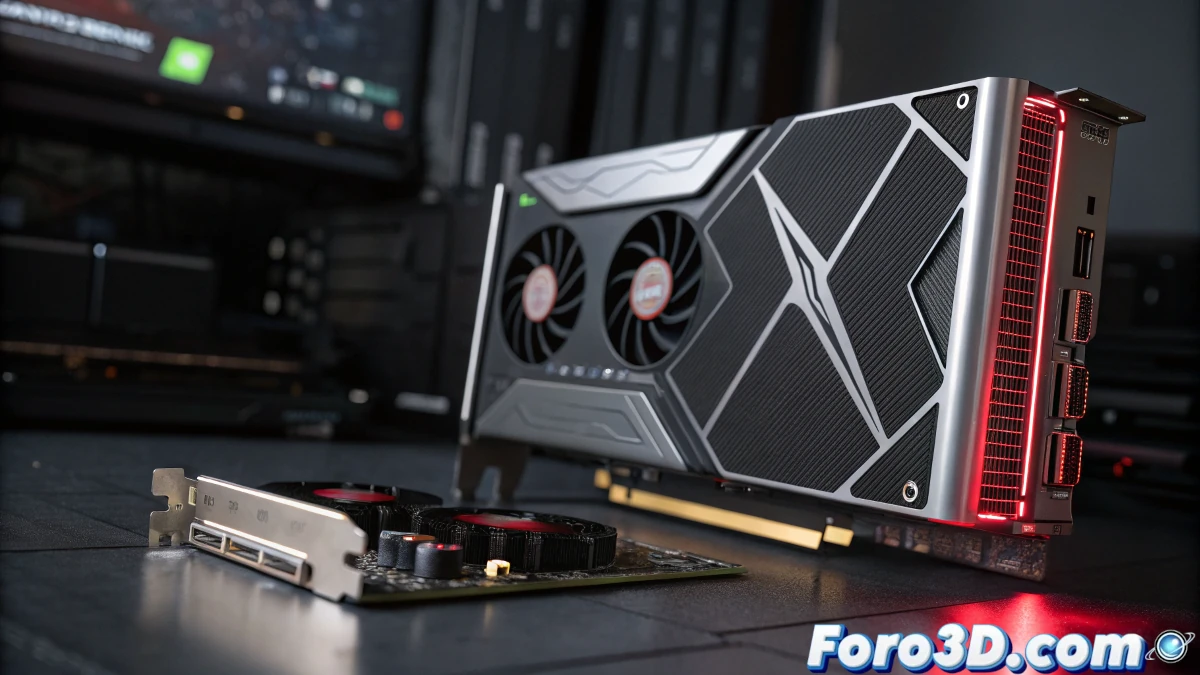
The GeForce RTX 5090, one of NVIDIA's most anticipated products, has generated significant controversy due to a fault in its GB202 core. This error has affected some units of the graphics card, raising doubts about the quality of certain models that do not meet the specifications announced by the brand.
The Specification Mismatch
Initially, the GeForce RTX 5090 was presented with impressive features, such as 21,760 shaders, 680 texturing units, and 176 rasterization units. However, it was discovered that some models had only 168 rasterization units, raising serious concerns about the reliability of the graphics cards released to the market. Although it was initially thought that this error affected only certain ZOTAC assemblies, it was soon discovered that the fault was much more widespread.
Is It a Hardware or Software Problem?
In the first analyses, some experts suggested that the error might have been caused by an incorrect reading from the GPU-Z tool, which is used to verify the features of graphics cards. However, it was soon confirmed that it was not a software error. The fault appears to be the result of a defect in the GB202 core of some GeForce RTX 5090 units, preventing them from meeting the specifications promised by NVIDIA.
The Impact on Performance
The reduction to 168 rasterization units instead of the announced 176 may seem like a minor change, but in practice, this fault has a direct impact on the graphics card's performance. In some games and applications, this difference can translate to a drop of up to 5% in overall performance. This can be particularly noticeable for users seeking optimal performance in demanding tasks like gaming or professional work in design and 3D rendering.
Does It Affect All GeForce RTX 5090 Units?
Although it has been identified that the problem may be related to defective GB202 cores, it is still unknown how many units are affected. Even NVIDIA's Founders Edition series cards could have this defect. The lack of an official confirmation on the magnitude of the problem has generated uncertainty, and many fear that the fault could be related to a deeper hardware issue that would not be resolved with just a software update.
Limited Stock Could Reduce the Impact
A possible advantage for NVIDIA is that the GeForce RTX 5090 has had limited stock since its launch. This could mean that the number of defective units is lower than it seems, as not all produced cards have reached the market. However, it is essential to closely follow this situation to understand its true impact on both users and the company's reputation.
What Can Affected Users Do?
If you are one of those affected by this fault in the GeForce RTX 5090, the first thing you should do is check your card's specifications using a reliable tool like GPU-Z. If you confirm that your unit has fewer rasterization units than promised, the most recommended course of action is to contact NVIDIA technical support or the distributor that sold you the card to discuss possible solutions, which could include a replacement or hardware upgrade.
In any case, it is essential to maintain constant communication with the brand to obtain more information about the measures they are taking to resolve this issue and how it will affect users in the long term.