Munch Rexford: A hunt for the absurd and the legendary
In the world of adult animation, Adult Swim has once again surprised with its latest release: Munch Rexford: Legendary Poacher. This short film, created by the talented Australian Millie Holten in collaboration with Nicolas Colla from LateNite Films, is part of the SMALLS initiative, a project that seeks to give visibility to emerging animation creators worldwide. The series, which premieres weekly on Adult Swim's YouTube channel, follows the misadventures of Munch Rexford, a hunter of mythological creatures who combines melancholy, black humor, and a touch of absurdity.
A title that says it all
The full name of the series is as extravagant as its content: Munch Rexford: Legendary Poacher Of Beloved, Easy To Kill, Very Weak, Over-Hyped, Pissy Little Prey In Pop Culture And Folklore Wee Wee Woo Wooo. This title, loaded with irony and sarcasm, perfectly reflects the irreverent tone that defines the narrative. Munch is not a traditional hero; he is a wounded, morally ambiguous character trapped in a competition to capture legendary creatures before his rival.
"Munch is clearly damaged and traumatized, and that's what makes him interesting. Bad people are often sad people." — Millie Holten.
The creative mind behind Munch
Millie Holten, known for her work in improvised comedy and her grotesque style, found in this project an opportunity to explore her fascination with the absurd. "Exploring legendary creatures from the perspective of someone who wants to eliminate them turned out to be a very fertile idea," Holten comments. Her approach not only focuses on humor but also on building a complex protagonist who, despite his flaws, manages to capture the audience's attention.
A creative process full of challenges
The production of Munch Rexford took approximately three months, a record time for a project of this magnitude. Holten handled much of the initial work, defining the visual look of the series and collaborating closely with the Adult Swim team to ensure that the scripts and animatics worked properly. To bring her vision to life, she had the support of designers and animators like Dale Anderson, who directed the animation.
A unique visual style
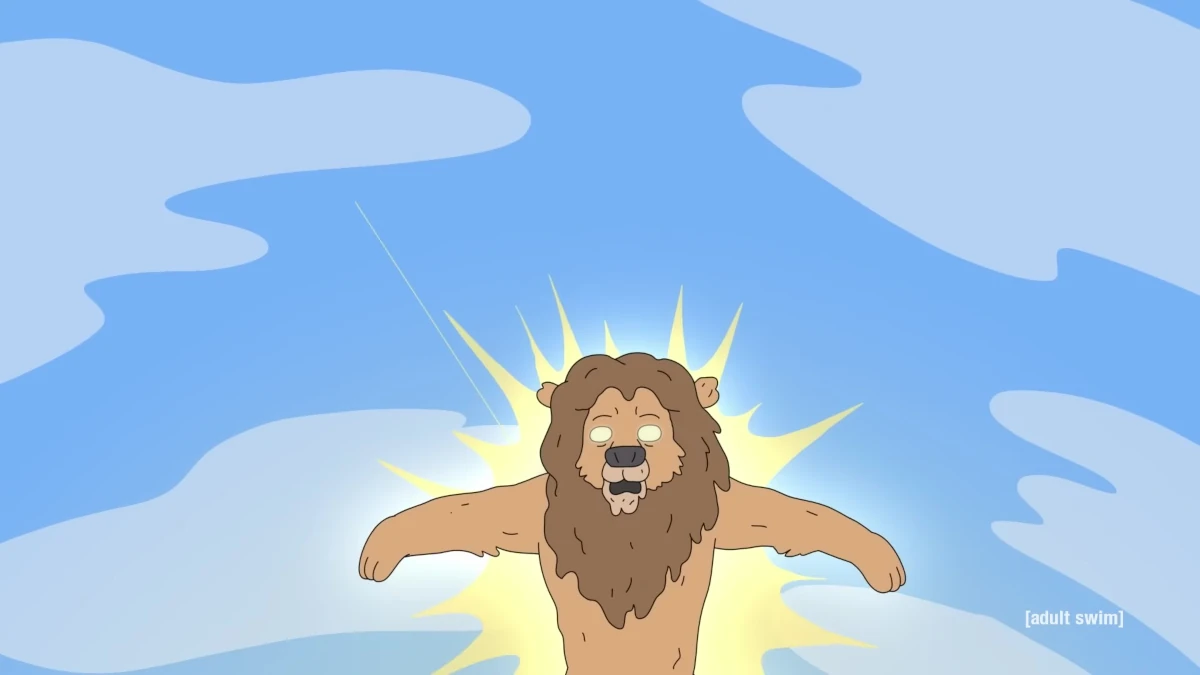
Holten's style is characterized by its rawness and hand-drawn aesthetic. During the COVID-19 lockdowns in Melbourne, the artist began to develop her technique, marked by limitations that ended up defining her personal signature. "I never knew how to draw noses, so they are represented as simple smudges," she explains. Her color palette, predominantly dark with brown tones, reinforces the melancholic and grotesque atmosphere of the series.
- Bags under the eyes: A recurring detail in the characters, reflecting their emotional exhaustion.
- Marked texture lines: Add depth and realism to an apparently simple style.
- Flat colors and gradients: Used to simplify backgrounds and scenes without losing visual impact.
A narrative that evolves
One of the biggest challenges during production was adjusting the narrative to improve the story's flow. In the second episode, White Whale, a voice-over and an additional scene were added to develop the relationship between Munch and Miriam, one of the main characters. These last-minute changes allowed for a more comprehensible and emotionally resonant introduction.
A series that breaks molds
With its mix of dark humor, complex characters, and a distinctive visual style, Munch Rexford: Legendary Poacher presents itself as a work that challenges the conventions of traditional animation. The first episodes, Holy Lion and White Whale, are already available, offering a unique experience for genre lovers.
In summary, this series is not only an exploration of the absurd and the legendary but also a testament to emerging talent in independent animation. Millie Holten and her team have created a work that, despite its limitations, shines through its originality and boldness.
