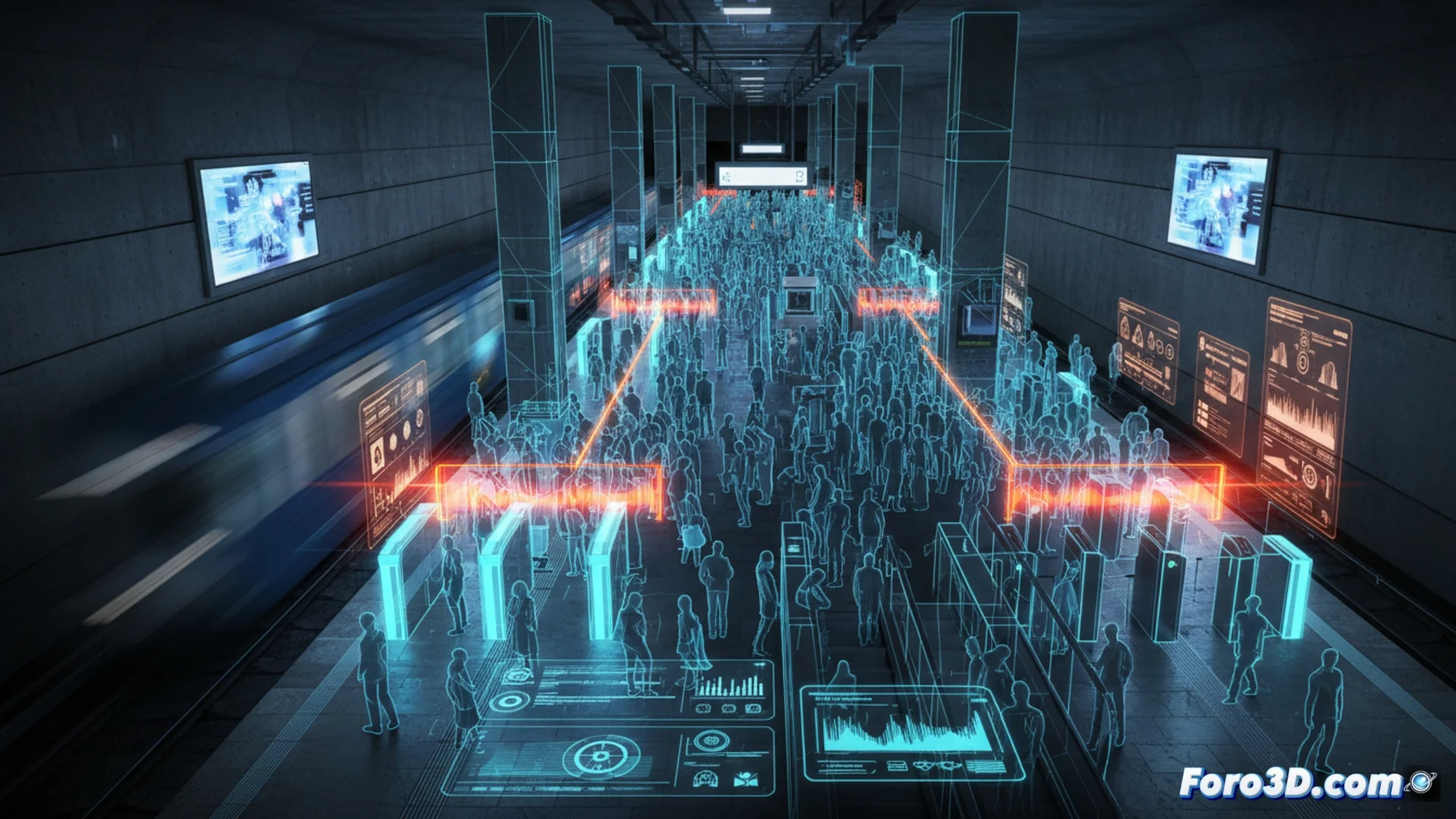
An incident in Hamburg shows the utility of 3D simulations
A tragic incident at the Wandsbek-Markt subway station in Hamburg, where two people lost their lives after falling onto the tracks on January 29, 2026, is being investigated by the police as a possible homicide. Investigators note that one of the victims held onto the other before the incident. This event, handled by the LKA 41 homicide commission, has disrupted service on the U1 line and left witnesses receiving psychological support. The identities of the deceased have not been made public. 🚇
Virtual planning as a prevention tool
This case highlights a crucial application of 3D technology: analyzing and optimizing safety in complex and crowded environments. By digitally recreating a station and the movement of its users, experts can test measures to prevent accidents, design more efficient evacuation routes, and prepare response protocols. These tools process crowd flow data to detect points where people can congregate or where access to dangerous areas is most vulnerable.
Key advantages of simulating transportation environments:- Allows testing barriers, signage, and security personnel positioning in a virtual environment without risk.
- Facilitates identifying bottlenecks and critical areas through pedestrian flow data analysis.
- Helps prepare responses to unexpected behaviors or collective stress situations.
A good 3D simulation could have helped prevent the tragic reality.
Modeling crowd behavior is essential
Creating dynamic models that simulate crowd behavior is fundamental to improving protection. Simulations can reproduce scenarios of blockages, panic, or unforeseen acts, similar to the one being investigated in Hamburg. This allows authorities to evaluate and implement solutions proactively, before a real problem occurs, thus protecting citizens.
What can be achieved with these simulations?- Evaluate the impact of different infrastructure designs on safety.
- Train emergency personnel in station-specific protocols.
- Optimize the management of large volumes of people during peak hours or events.
Conclusion: From tragedy to technological prevention
The subway service disruption underscores the urgent need to better plan safety and manage emergencies in public transportation. Although reality sometimes surpasses fiction, 3D simulation tools offer a powerful means to anticipate risks and design safer public spaces. The technology to model passenger flows and simulate scenarios exists, and its application could be decisive in preventing future tragedies. 🔍