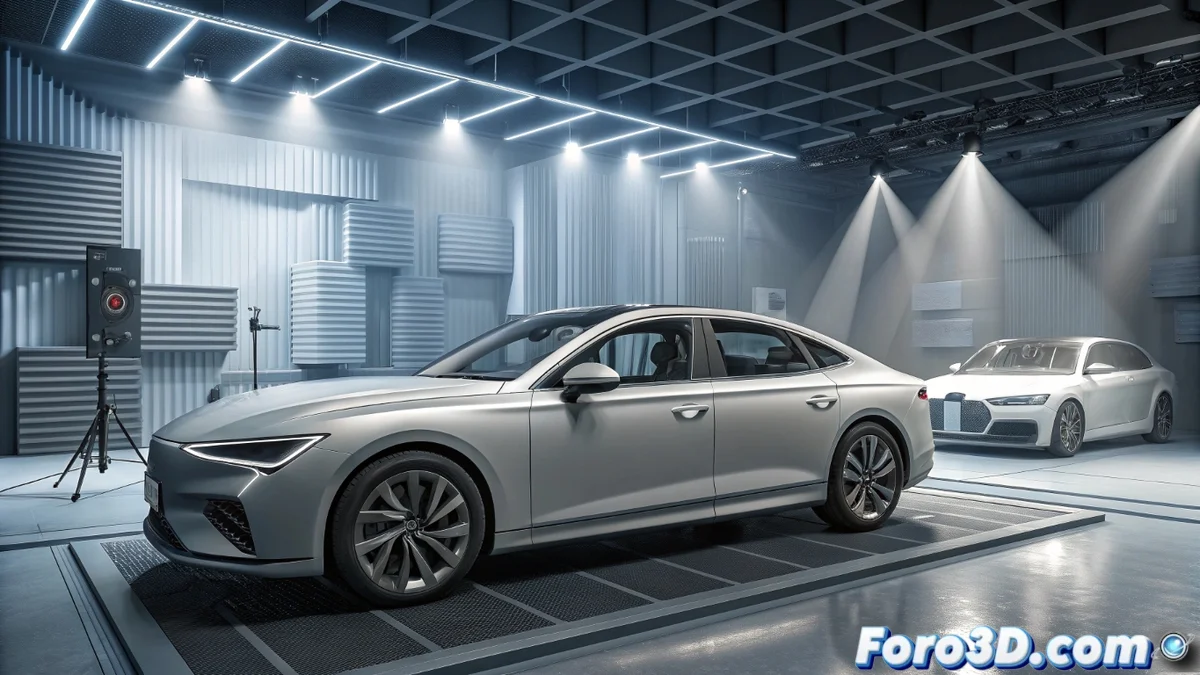
An Electric Sedan Outperforms Premium Models in Acoustic Insulation
Electric vehicles are competing on a new front beyond range: interior silence. A recent technical test places a newcomer ahead of established rivals in the premium segment. 🎯
Method for Evaluating Noise Entering the Car
To measure accurately, a constant pink noise of 110 decibels is generated outside the vehicle. Then, it is recorded how much of that sound manages to penetrate the interior. All auxiliary systems are turned off and the windows are closed to isolate the variable. A greater difference between the external and internal level means superior insulation.
Key Test Conditions:- Sound source: Pink noise at 110 dB external.
- Vehicle setup: Air conditioning and audio off, windows sealed.
- Main metric: Difference in decibels between the exterior and the interior of the cabin.
Luxury in electric mobility is no longer defined solely by materials, but by the decibels that are eliminated.
Results of the Acoustic Attenuation Comparison
The published data show concrete figures. The Xiaomi YU7 records only 20.8 dB inside, implying noise attenuation of 89.2 dB. The BMW i7 scores 22.8 dB internal, with 87.2 dB attenuation. The Zunjie S800 shows 24.1 dB inside, isolating 85.9 dB from the exterior. These numbers place the Xiaomi model in first position.
Breakdown of Interior Sound Levels:- Xiaomi YU7: 20.8 dB (Attenuation: 89.2 dB).
- BMW i7: 22.8 dB (Attenuation: 87.2 dB).
- Zunjie S800: 24.1 dB (Attenuation: 85.9 dB).
Silence as the New Engineering Standard
This test demonstrates that the battle for acoustic comfort is in full swing. Achieving a cabin that is a bubble of silence requires meticulous engineering work in materials and design. The fact that a new competitor outperforms brands traditionally associated with refinement signals a change in the parameters that define the high end. Acoustic insulation is consolidated as a decisive factor for the user. 🔇