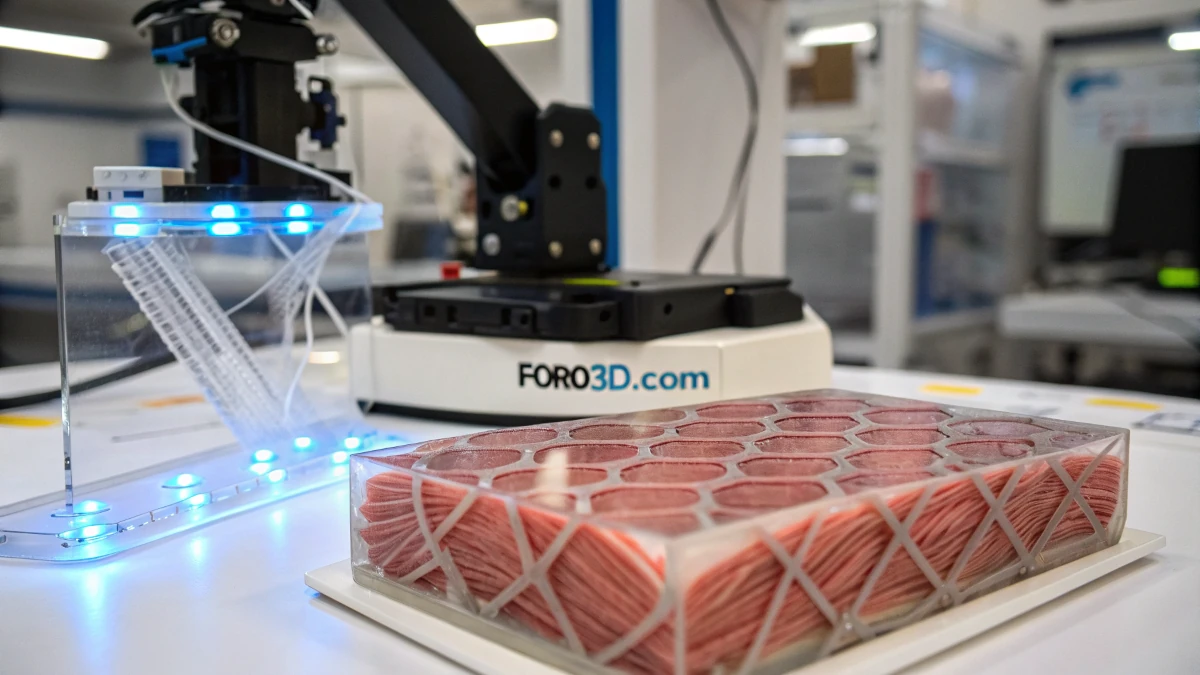
Researchers at MIT have successfully developed a novel method for creating artificial muscle tissue capable of performing coordinated movements in multiple directions. This innovative technique uses a 3D-printed structure with microgrooves to organize muscle cells within a hydrogel, marking significant progress in the field of biohybrid robotics.
A Nature-Inspired Design
The team led by Professor Ritu Raman designed a structure similar to an artificial iris, capable of contracting both concentrically and radially. Using desktop 3D printers, the stamp contains microgrooves as small as the size of a cell. By pressing this stamp onto a hydrogel and seeding the muscle cells, the created tissue emulates the complex movement patterns of human muscles.
Control Through Light Stimuli
The cells used in this study were genetically modified to react to light stimuli. This allowed the researchers to control the movement of the artificial muscle with great precision. According to Ritu Raman, this experiment has shown for the first time a robot powered by skeletal muscle, capable of generating force in multiple directions, opening new possibilities for various applications.
Potential Applications in Medicine and Robotics
This stamping method has promising applications in two key areas: medicine and robotics. In the medical field, it could be used to create artificial tissues to help treat neuromuscular injuries. In robotics, the advances would allow the creation of soft and biodegradable robots, ideal for exploring delicate environments or performing underwater tasks. Although this study focused on skeletal muscle cells, the approach could be adapted for other cell types.
Institutional Support and Next Goals
The study was supported by various U.S. government agencies, such as the Office of Naval Research and the National Institutes of Health. The researchers now plan to explore new muscle architectures and ways to activate these artificial muscles for use in practical applications. This advance not only expands knowledge about tissue engineering but also brings the integration of artificial muscles into medical devices and robots closer.
The Future of Biohybrid Robotics
This development represents a major step towards creating robotic systems that mimic human movement with greater precision. By combining living cells, soft materials, and 3D printing technology, scientists are laying the groundwork for a new era of devices that will transform areas such as medicine, exploration, and automation.