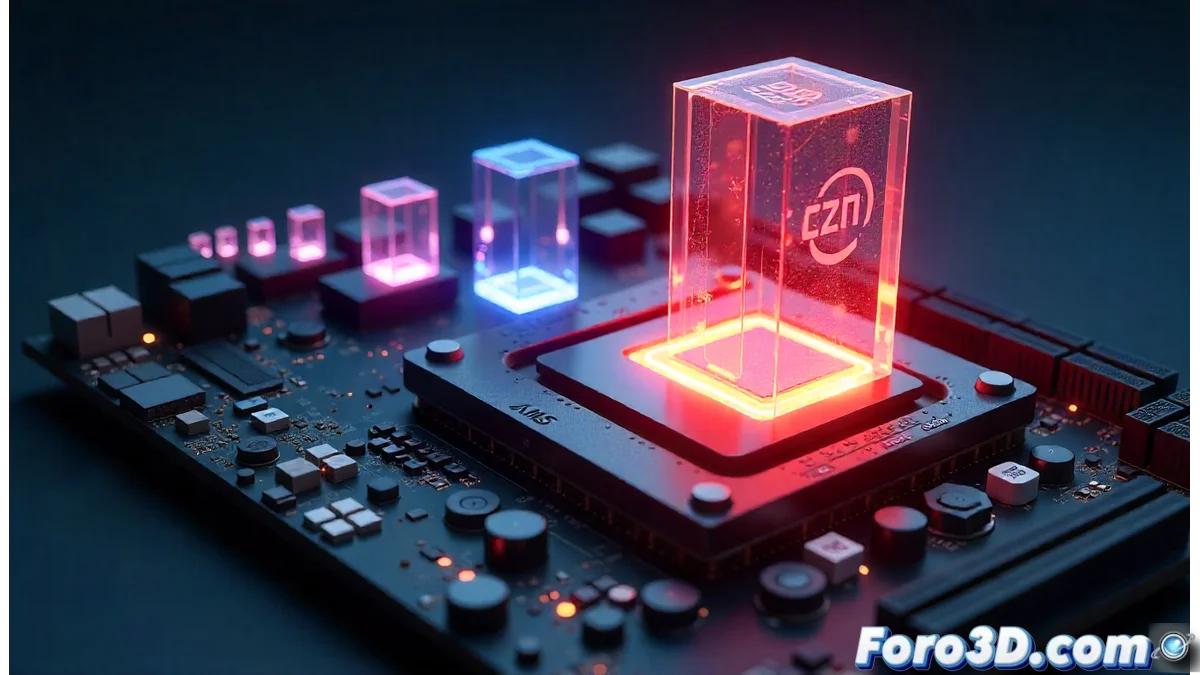
AMD has officially confirmed what many users were hoping for: the future Zen 6 CPUs will work perfectly on current AM5 motherboards. This announcement represents an exceptional commitment to long-term compatibility in an industry known for constant platform changes. 🔄
This decision means that those who invested in the AM5 platform with Zen 4 or Zen 5 processors will be able to upgrade to Zen 6 without changing their motherboard. This philosophy contrasts sharply with the strategy of some competitors, where each new generation typically requires a new socket.
Your current motherboard already has a secured future
AMD's Compatibility Strategy
This is not the first time AMD has demonstrated its commitment to platform longevity. The AM4 socket maintained compatibility across multiple generations, and now AM5 follows the same path, protecting users' investment and reducing electronic waste.
Key benefits of this compatibility:
- protection of user investment
- reduced upgrade costs
- lower environmental impact from less disposal
- more stable ecosystem for manufacturers
Technical Implications of the Announcement
The compatibility between Zen 6 and existing AM5 suggests that AMD planned the platform with sufficient headroom for future generations. This implies that the power infrastructure, memory protocol, and Infinity Fabric interconnection have the capacity to evolve without requiring physical changes.
Technical aspects enabling this compatibility:
- oversized power delivery design
- PCIe protocol with evolution capability
- thermal management compatible with future TDPs
- updatable BIOS firmware for new features
Impact on the Market and Users
This confirmation not only benefits individual users but also influences purchasing decisions at the corporate level and in the second-hand market. AM5 motherboards gain greater residual value knowing they will support at least three generations of processors.
And so, while some companies see incompatibility as a sales driver, AMD demonstrates that customer loyalty is earned by respecting their investment. The beautiful paradox that selling fewer motherboards could mean selling many more processors in the long run. 💡