When the Nanometer Race Defines the Future of AI
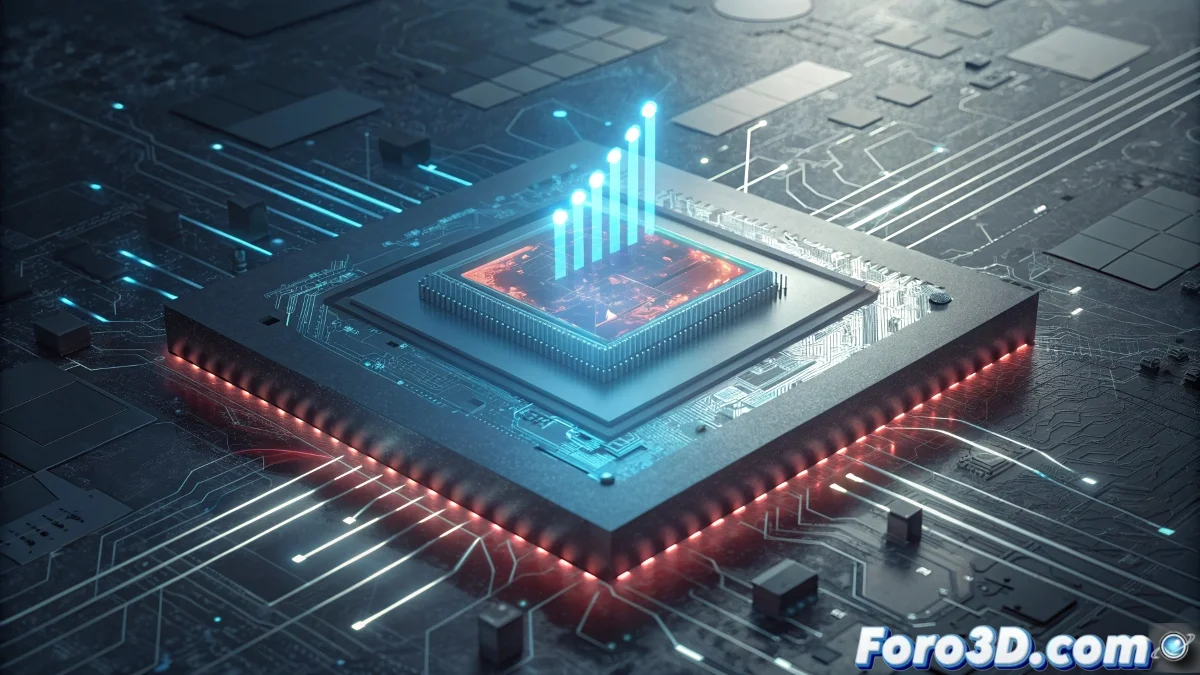
In what represents a crucial strategic move in the battle for supremacy in artificial intelligence computing, AMD has confirmed that its upcoming Instinct MI450 graphics accelerators will be manufactured using TSMC's 2-nanometer process. This decision places the company at the absolute forefront of semiconductor manufacturing technology, promising significant advances in energy efficiency and processing capability for AI data centers. The migration to 2 nm is not just a numerical reduction, but a qualitative leap that redefines what is possible in accelerated computing.
The Instinct MI450 accelerators are specifically designed to handle the most demanding workloads for training and inference of large-scale artificial intelligence models. By leveraging the 2 nm node, AMD can pack significantly more transistors into the same physical space, enabling more complex architectures that consume less power while delivering substantially greater performance. This efficiency is critical for operations that traditionally require massive amounts of electricity.
Key Advantages of the 2 nm Process
- 45% increase in transistor density compared to previous nodes
- 30% reduction in power consumption for the same performance
- Higher clock frequency enabling faster computing operations
- Improved thermal management allowing sustained high-performance operation
The Impact on the Artificial Intelligence Ecosystem
The transition to the 2 nm process represents much more than a simple improvement in technical specifications. For developers and companies that rely on AI capabilities at scale, these accelerators will mean the possibility of training larger and more complex models in less time, with reduced operational costs. The improved energy efficiency also addresses growing concerns about the environmental sustainability of massive AI data centers.
In the AI era, every nanometer counts double
The architecture of the Instinct MI450 is specifically optimized for the types of mathematical operations that dominate modern machine learning model processing. The specialized matrix processing units can simultaneously handle multiple mixed-precision operations, accelerating both the training and inference of complex neural networks. The high-speed interconnection between accelerators allows performance to scale almost linearly when used in multi-GPU configurations.
Applications That Will Directly Benefit
- Large language models like GPT-4 and successors with trillions of parameters
- Scientific research requiring molecular simulation and massive data analysis
- Autonomous vehicles that process sensor information in real time
- Medical diagnosis through medical image analysis with advanced AI
This announcement significantly intensifies competition in the AI accelerator market, where AMD seeks to capture a larger share of the growing artificial intelligence cloud computing business. The decision to use TSMC's 2 nm process, considered the most advanced commercially available, demonstrates the company's commitment to technological leadership in a sector where performance advantages translate directly into competitive advantages for its customers.
Those who thought Moore's Law was reaching its limit probably didn't count on the AI race giving new life to semiconductor miniaturization ⚡