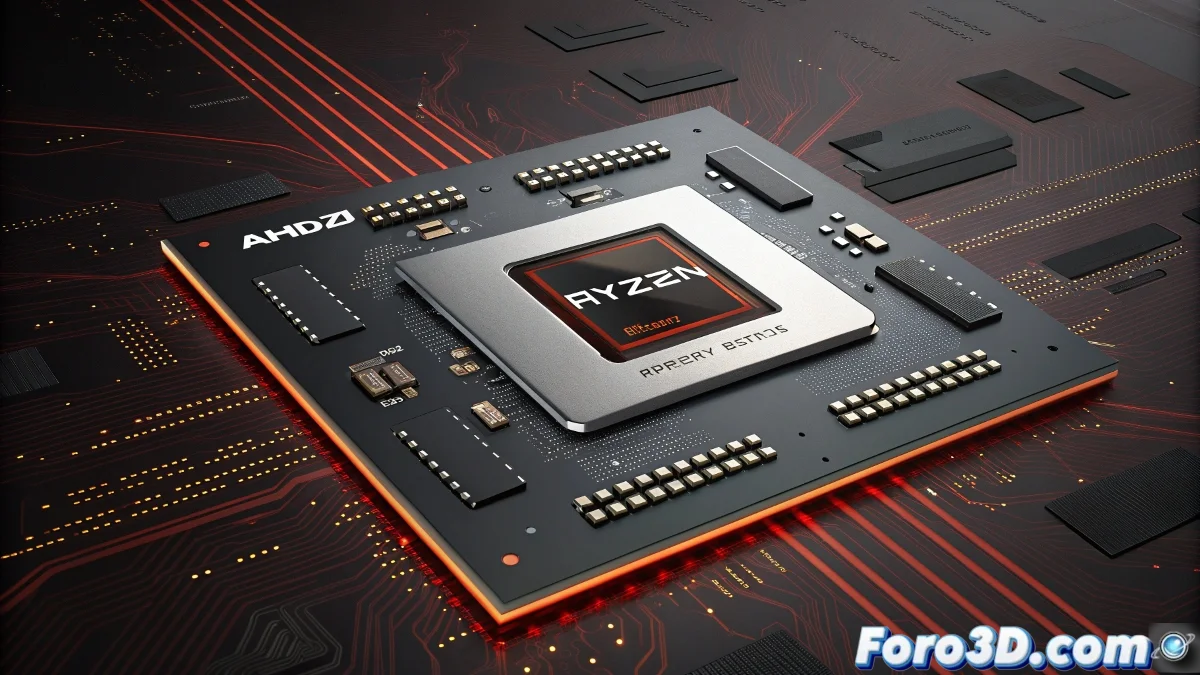
AMD Makes a Strong Bet on Gaming in the Palm of Your Hand
The market for handheld gaming consoles is experiencing a true renaissance, and AMD doesn't want to be left behind. 🎮 The company has officially presented its new family of Ryzen Z2 processors, available in three variants: Z2 GO, Z2, and Z2 Extreme. These chips are designed from the ground up with a clear goal: to power the next generation of handheld devices, offering performance that approaches that of a desktop PC but with the portability and efficiency this segment demands.
Raw Power for a Compact Format
The major promise of the Z2 series is a significant leap in graphics performance. This means future handheld consoles integrating these chips will be able to run AAA games with a smoothness and visual quality that were previously hard to achieve in this format. 💻 The improved architecture not only translates to more frames per second but also to better power management, which is crucial for balancing performance with decent battery life during gaming sessions.
The Ryzen Z2 chips are designed so that power is not a luxury in handheld gaming.
Three Options for Different Levels of Demand
AMD has intelligently segmented its offering. The Ryzen Z2 GO aims for a perfect balance between performance and efficiency for more accessible devices. The standard Ryzen Z2 positions itself as the main option for most mid-to-high-end consoles. Finally, the Ryzen Z2 Extreme is the no-compromise bet for users who demand maximum performance, even at the cost of higher power consumption. 🚀 This strategy allows manufacturers to choose the chip that best fits their product's philosophy.
- Direct Competition: It faces off against solutions from Intel and Qualcomm in a growing market.
- Integrated Optimization: Developed specifically for the unique needs of handheld gaming.
- Future of the Segment: Its success will depend on adoption by brands like Lenovo, ASUS, or MSI.
The Battery Life Challenge
The major challenge facing all chips for handhelds, including the Ryzen Z2, remains battery life. 🔋 No matter how much efficiency is achieved, running demanding games consumes a lot of power. The key will be how manufacturers implement dynamic power management systems that allow for real-time performance adjustments to extend battery life without ruining the gaming experience.
It's the paradox of handheld gaming: we want the power of a gaming tower, but with the battery life of a smartphone. 😅 AMD promises to bring us a little closer to that ideal, although we'll probably still have to charge the device more often than we'd like.