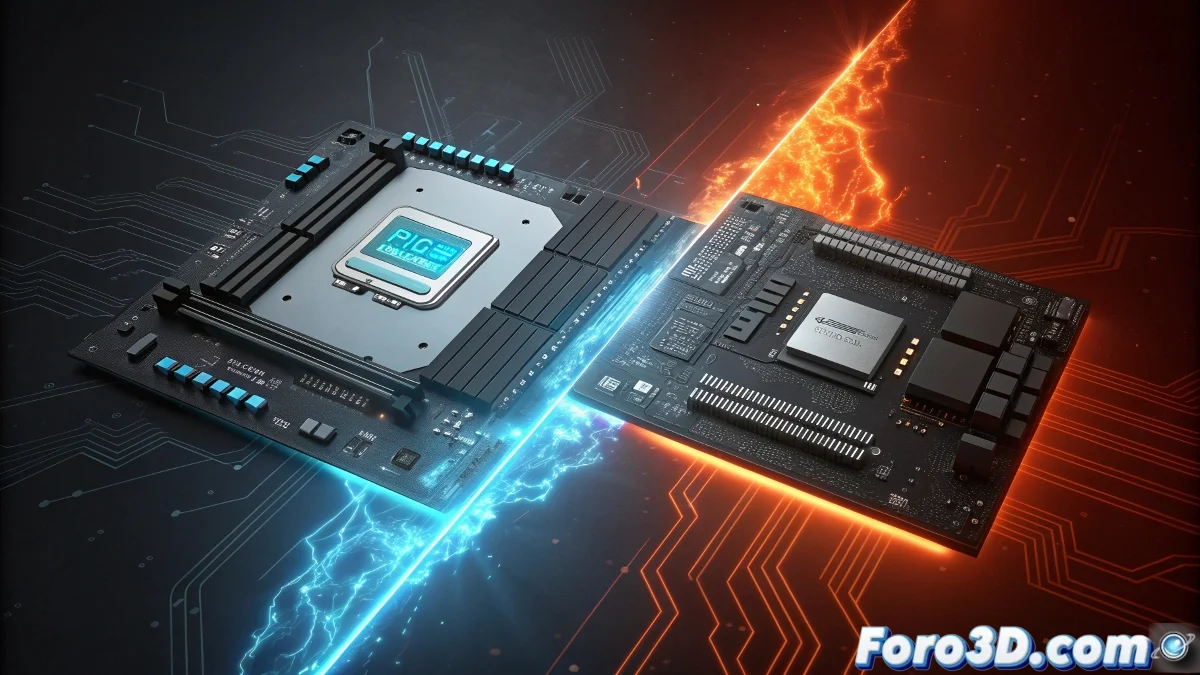
A Socket War That Defines Tomorrow
The heart of any modern computer beats in its motherboard, and the socket that houses the processor is its vital core. 💻 Right now, two giants are waging a silent but crucial battle: AMD with its AM5 socket and Intel with the LGA 1851. Each represents a distinct philosophy about the future of hardware. While Intel brings all the firepower of the latest generation, AMD plays the card of stability and the promise of not making your investment obsolete in two years. A fight where, as always, the user is the final judge.
Intel LGA 1851: Cutting-Edge as its Banner
Intel's new socket arrives with a clear ambition: to be the most advanced platform on the market from day one. 🚀 With native support for DDR5 and PCIe 5.0, it is designed to squeeze the most out of the most modern components. It is the natural choice for the enthusiast who wants to build the most powerful system possible without compromises, assuming they will likely have to change the motherboard with the next generation of processors. Innovation has a price, and sometimes that price is a lack of continuity.
Intel offers the highest performance today, but with no guarantees for tomorrow.
AMD AM5: The Bet on Longevity
AMD, for its part, has built its strategy around user confidence. Its AM5 socket promises the same long-term compatibility that made its predecessor, AM4, famous. 🛡️ This means a motherboard purchased today will likely be able to house future Ryzen processors for several years. For the user who prioritizes a sensible investment and plans gradual upgrades, this philosophy is enormously attractive. It offers a balance between present performance and future peace of mind.
- Solid Performance: Both platforms offer more than enough power for gaming and content creation.
- User's Dilemma: Adopt the newest technology or prioritize system durability?
- Ecosystem: The availability of motherboards and chipsets is an equally important factor.
The Final Verdict: Opposing Philosophies
The choice between AM5 and LGA 1851 is, at its core, a matter of personal priorities. If the goal is to have the latest and most powerful, even if it implies more frequent component replacement, Intel is the path. If you value stability and long-term savings more, AMD presents a value proposition that is hard to ignore. 💡 Both are excellent options, but for different types of users.
In the end, one can't help but think that the only ones who really lose in this technological race are the users' wallets, forced to keep up with the pace of an increasingly accelerated planned obsolescence. 😮💨 A race where the finish line moves with every new announcement.