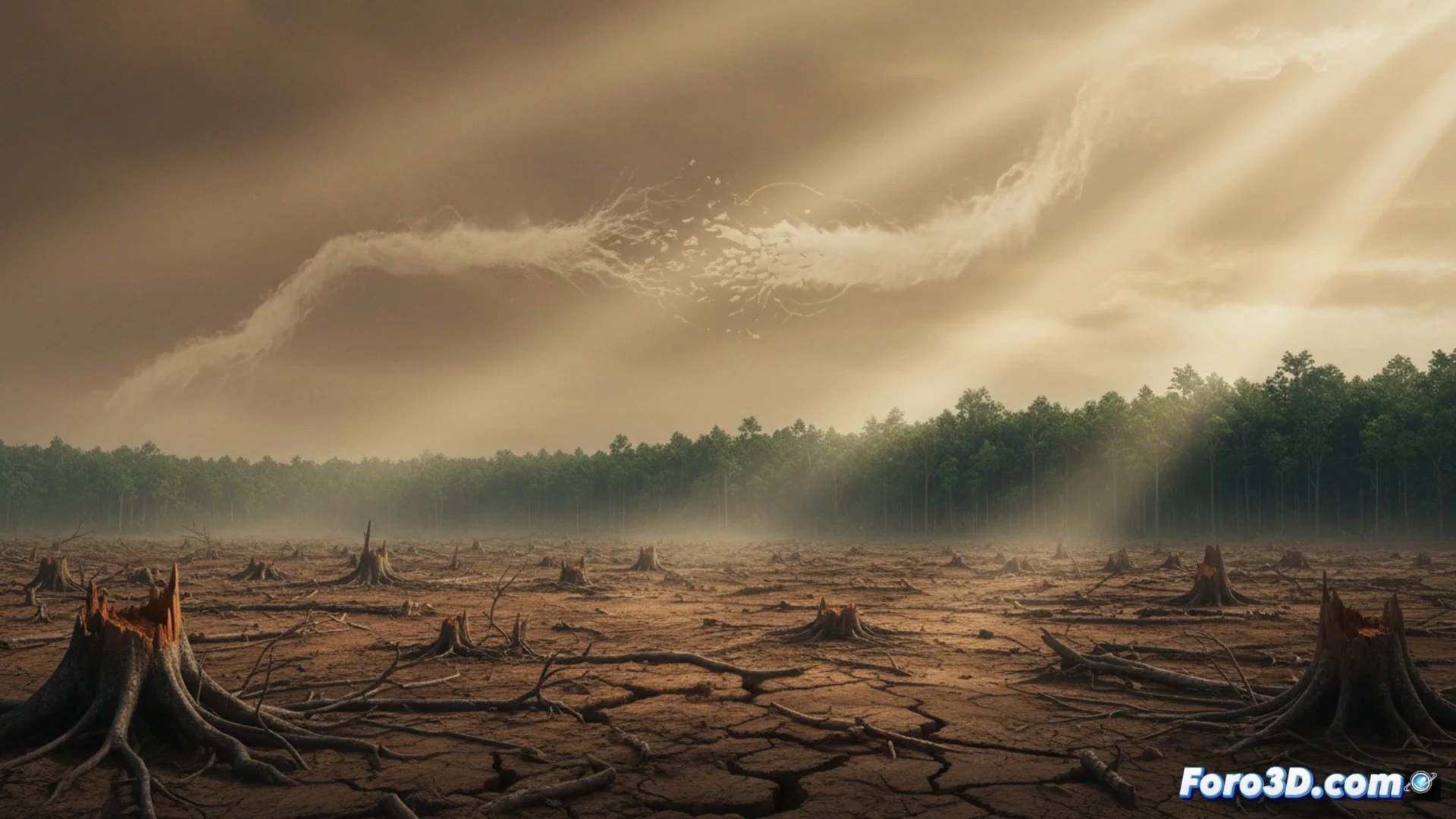
Amazonian Deforestation Alters Atmospheric Moisture Rivers
Indiscriminate logging in the Amazon rainforest generates an impact that goes far beyond the loss of forested area. Recent research confirms that this process directly interferes with regional climate systems, specifically with the moist air currents known as atmospheric rivers. 🌍
A Natural Pumping System That Fails
The Amazonian vegetation functions as a giant moisture engine. Through evapotranspiration, trees absorb water from the soil and release it into the atmosphere. This vapor condenses, forms clouds, and is driven by trade winds. The large-scale removal of forests stops this crucial contribution. Without it, climate models indicate that moisture-laden air flows lose strength and fail to penetrate as deeply into the continent, reducing precipitation in areas that need it. 💧
Direct consequences of weakening the air rivers:- Less rain inland: Regions that depend on this transported moisture experience a marked decrease in precipitation.
- Increase in drought: A drier environment becomes the norm, stressing the remaining ecosystem.
- Greater propensity for fires: Dry vegetation is much more flammable, creating ideal conditions for fires to spread.
By cutting down trees, we don't just lose wood, but also rain. It's an effective way to turn a green paradise into arid land.
Chain Effects for the Planet
The alteration of this cycle triggers a negative feedback loop that is dangerous. A drier Amazon with more fires releases large amounts of stored carbon, which in turn worsens global warming and further reduces forest cover. This change in rainfall patterns can harm distant agricultural areas, affecting food security. Additionally, as it degrades, the forest loses its capacity to regulate the climate on a planetary scale, as it stores less carbon dioxide. 🌱
Global and regional impacts:- Carbon release: Fires and the decomposition of logged vegetation emit greenhouse gases.
- Regional climate alteration: Rainfall patterns in South America may change, affecting countries outside the Amazon basin.
- Loss of biodiversity: Unique habitats are fragmented and destroyed, leading to species extinction.
The Urgency to Protect What Remains
Scientific findings underscore that conserving the primary forests that still exist is essential to keep this complex climate system stable. It's not just about saving trees, but preserving an essential mechanism that generates rain, regulates temperatures, and stores carbon. The active protection of the Amazon emerges as a critical action not only for the region, but for the climatic health of the entire planet. 🔒