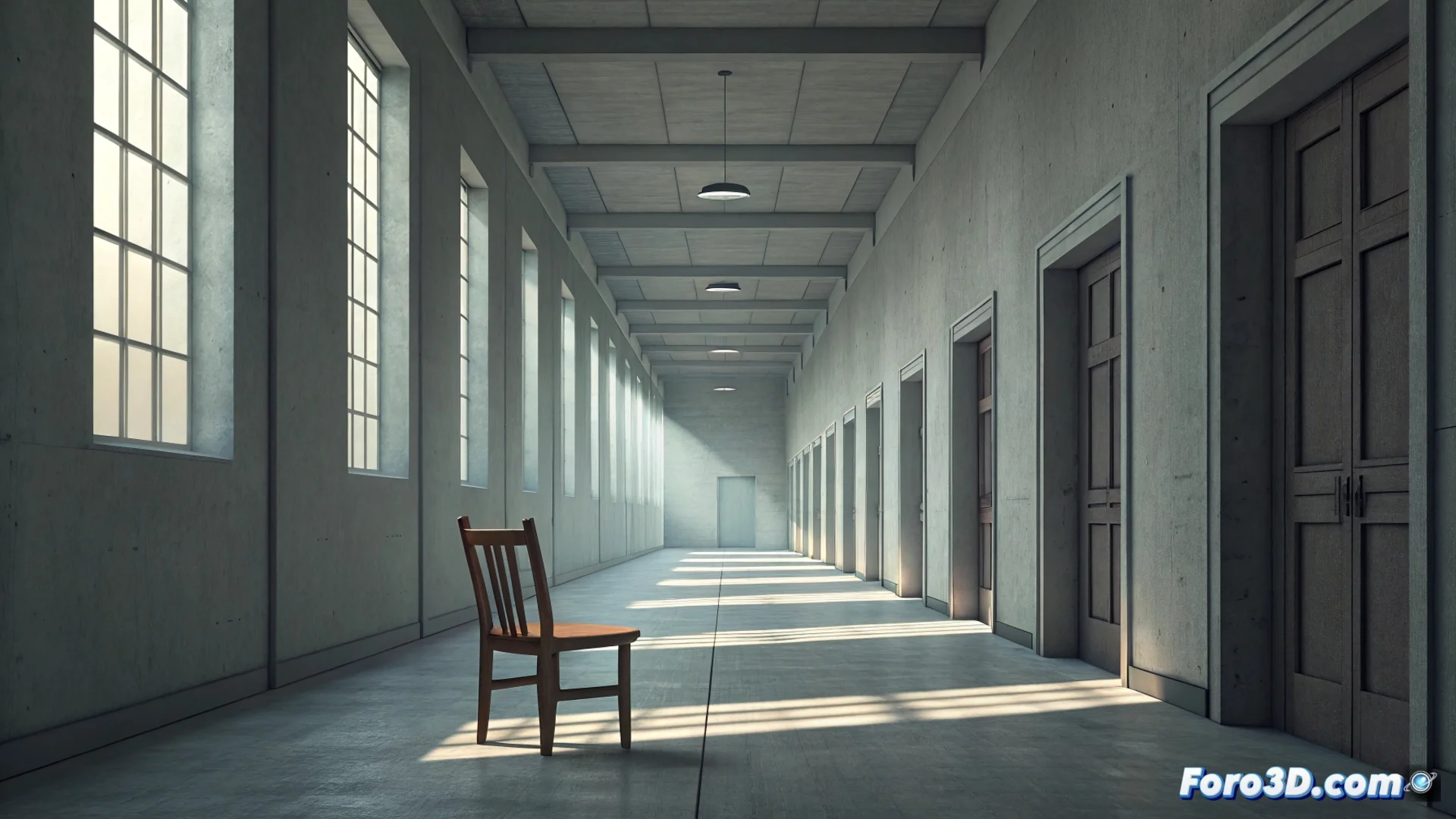
Altered Proportions and the Uncanny Valley in 3D Spaces
In architectural visualization and 3D interior design, manipulating the expected measurements of built objects triggers a subtle yet powerful sense of disorientation 🌀. Elements like doors exceeding 2.5 meters, disproportionately elongated windows, or steps with a ridiculously small tread break with the anticipated human scale. This effect is not meant to be grotesque, but to disturb the observer's perception, generating a spatial version of the well-known Uncanny Valley.
The Subverted Body Reference
Our brain evaluates spaces using the body as the primary reference measure. When a 3D model presents an excessively wide hallway or door knobs at an unusual height, the mind processes that information as erroneous. The strangeness arises because the design does not conform to ergonomics or everyday experience. In architectural renders, this tool serves to evoke emotions like insignificance or intrigue, without the need to include obvious fantastical elements.
Examples of alterations that generate strangeness:- Doors and windows with heights or lengths much greater than standard.
- Steps with a minimal tread or exaggerated riser.
- Furniture like chairs or tables with excessively short or long legs.
A client might ask if a three-meter door is a modeling error or a design statement. The answer is usually both.
Creating Scale Dissonance in 3D Software
Achieving this effect requires precision in modeling software. It's not about uniformly scaling the entire environment, but selectively and consciously modifying key dimensions. The artist can model a ceiling that seems to crush the room or a railing at an uncomfortable height. Lighting and materials must maintain high photorealistic quality to accentuate the contrast between impeccable visual quality and altered scale.
Keys to implementing this technique:- Alter proportions of key architectural elements in isolation.
- Maintain hyperrealistic textures and lighting to contrast with the erroneous scale.
- Use the camera and angles to emphasize the sense of disproportion.
The Ultimate Goal: Possible but Unsettling
The goal is not to create an impossible space, but one that is perceived as possible but out of place. This calculated mismatch makes the viewer question their own perception of the environment. It is a powerful strategy for visual storytelling, conveying complex emotions, or simply making an architectural render stand out for its ability to disturb and fascinate in equal measure 🤔.