AlphaFold Turns Five: How AI Redraws the Map of Life
Half a decade ago, the world of molecular biology experienced a historic turning point with the presentation of AlphaFold by Google DeepMind. This artificial intelligence system not only solved a decades-old scientific problem—the accurate prediction of the 3D structure of proteins—but also ushered in a new era of accelerated discoveries. What began as an academic breakthrough has solidified as an indispensable tool for hundreds of thousands of researchers, transforming fields such as drug design, synthetic biology, and the fight against diseases. 🧬
The Global Catalyst with Roots in Asia and the Pacific
The success and widespread adoption of AlphaFold owe a significant debt to the scientific community in the Asia and Pacific (APAC) region. Researchers from Australia, South Korea, Japan, and other countries were pioneers in integrating and validating the model's predictions in their laboratories, demonstrating its practical utility for both local and global challenges. This early and active collaboration was fundamental to scaling its impact, culminating in the free release in 2022 of the AlphaFold database, which contains predicted structures for virtually all proteins cataloged by science. 🌏
Key achievements driven by APAC collaboration:- Accelerated validation: Scientists from the region were crucial in testing AlphaFold's accuracy on proteins relevant to endemic diseases and agriculture.
- Adoption in workflows: They integrated predictions into their research methodologies, creating new standards in bioinformatics.
- Model for open science: Their participation helped lay the foundation for the resource to become a global and accessible public good.
The initiative demonstrates how AI can act as a powerful catalyst for open science and borderless global collaboration.
Looking to the Horizon: Beyond the Isolated Protein
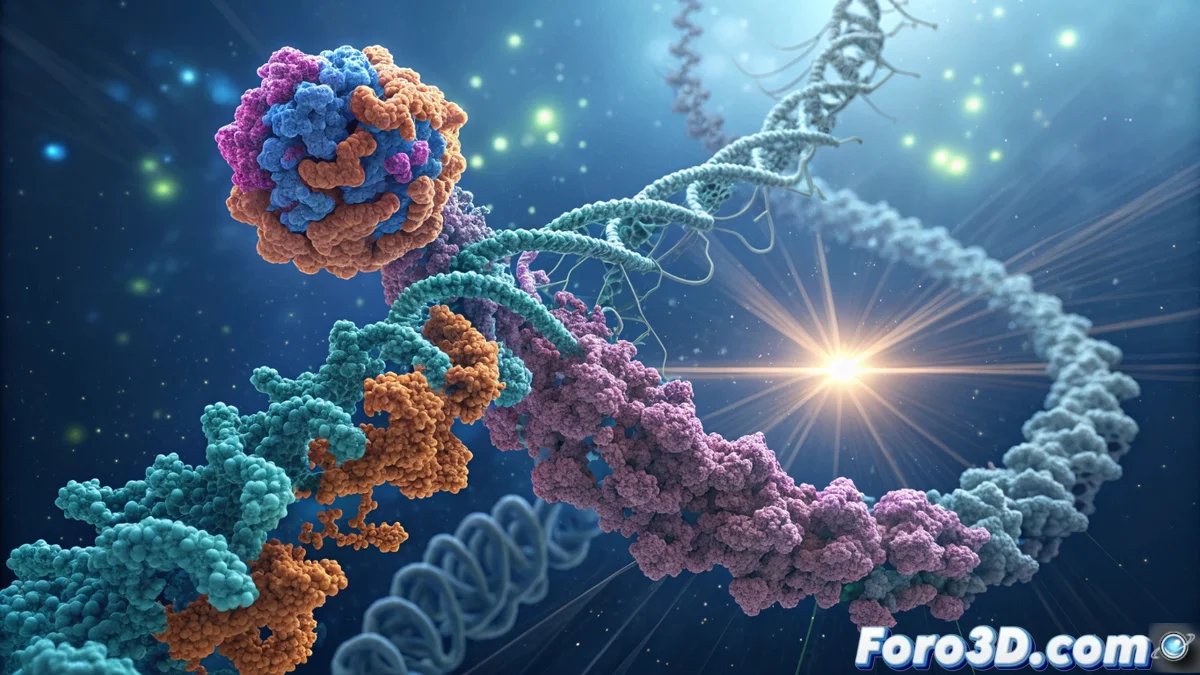
AlphaFold's journey is far from over. Teams from Google DeepMind and Isomorphic Labs are already working on the next generation of models. The new challenge is even more ambitious: predicting the complex interactions between proteins, and between them and other vital molecules such as DNA, RNA, or small drugs. This leap is fundamental because real biological function does not occur with isolated proteins, but within a dynamic network of molecular contacts. 🔬
Future directions of research:- Interaction systems: Modeling how proteins assemble to form functional complexes.
- Rational drug design: Predicting with high accuracy how a medicinal compound binds to its protein target.
- Comprehensive systems biology: Aspiring to create a unified AI model that helps decipher the complete mechanisms of life.
A New Paradigm for Deciphering Biology
The legacy of these five years goes beyond structural predictions. It has redefined the scientific method in biology, demonstrating that some of the deepest mysteries of life can begin to be unraveled not only with decades of laboratory experiments, but with advanced algorithms, computational power, and access to open data. The map of life is now being built with pixels and parameters, accelerating the path to innovative therapies and a deeper understanding of ourselves. The future of biology is irrevocably digital. 💻