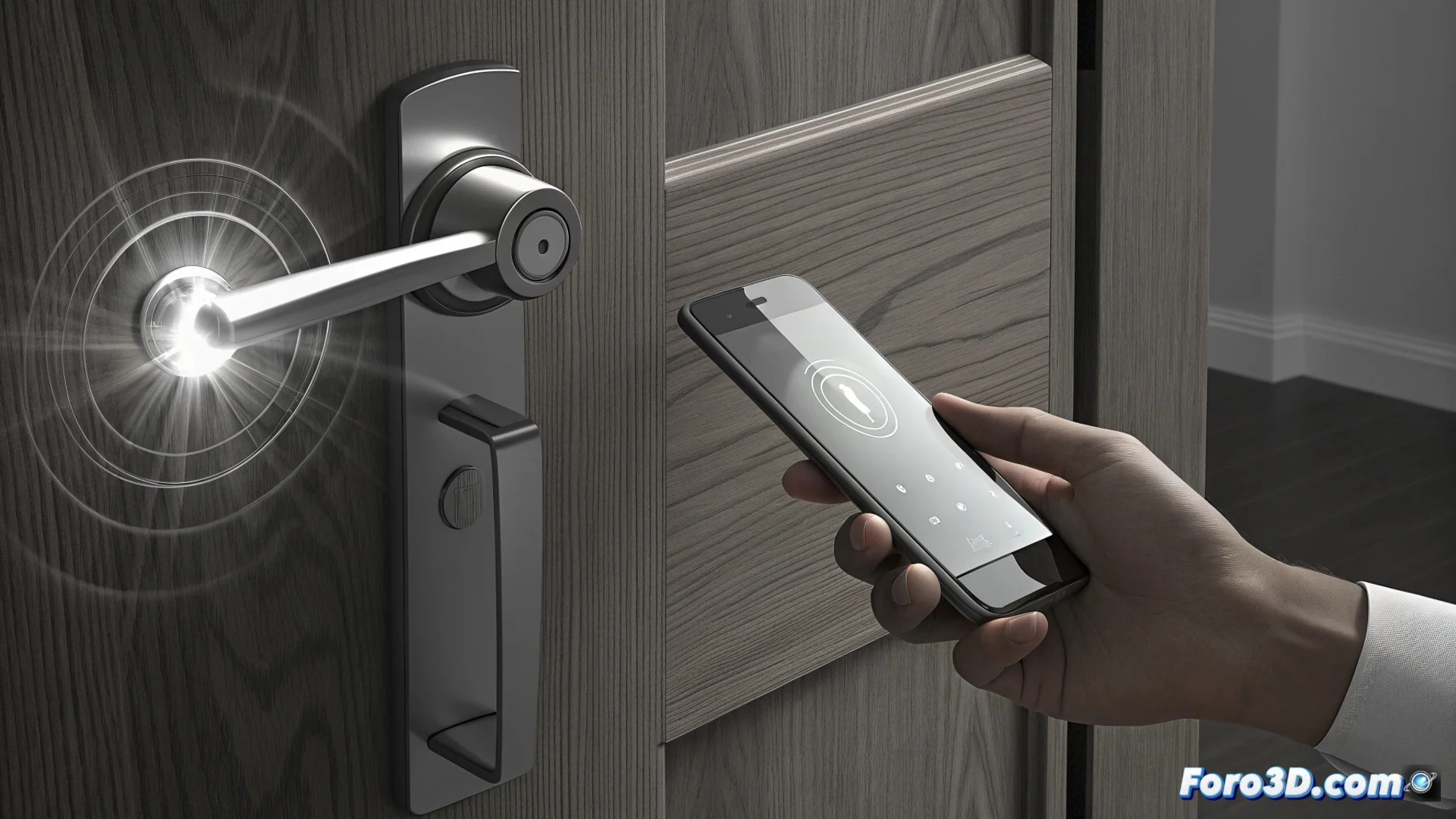
Aliro, with Apple, Google, and Samsung, Launches a Smart Lock Standard for 2026
A group of tech giants joins forces to change how we enter our spaces. The Aliro Consortium, backed by Apple, Google, and Samsung, has officially presented its proposal to unify keyless access. This standard aims to let you use your mobile phone or smartwatch to open doors securely and compatibly across different manufacturers. The first devices integrating this technology are expected to be available starting in 2026. 🔓
The Technology Enabling Keyless Access
The system is based on two main technological pillars: Ultra Wideband (UWB) and NFC. UWB technology is crucial because it can precisely locate the position of your authorized device relative to the lock. This solves a key security issue, preventing someone from opening the door from afar or through it, a risk present in other wireless solutions. NFC technology serves as an essential backup when your smartphone's battery runs out, ensuring you never get locked out. The standard's design allows integration into locks for homes, offices, hotels, and vehicles, aspiring to create a single access ecosystem.
Key Features of the Standard:- Location Precision: UWB determines if the device is right next to the lock, not meters away.
- NFC Backup: Provides an alternative, low-power access method when the phone has no battery.
- Interoperability: Designed to work uniformly across products from different brands that adopt the standard.
The protocol encrypts access credentials directly in a secure element of the device, such as a chip. The keys never leave this protected environment.
Focus on Security and User Control
Aliro places security and privacy at the center of its proposal. Its protocol handles access credentials within a trusted execution environment, typically a dedicated security chip in the phone or watch. According to the consortium, this method offers better protection than traditional physical keys, which can be duplicated, and solutions relying solely on Bluetooth, which may be more vulnerable to certain attacks. Users manage and monitor all their accesses through a dedicated app, having full control over who can enter and when. 🛡️
Declared Security Advantages:- Hardware Credentials: Digital keys are stored and processed in a secure hardware element, not in easily accessible software.
- Centralized Control: An app allows granting, modifying, or revoking accesses remotely and instantly.
- Fewer Physical Risks: Eliminates the possibility of copying keys or having them stolen conventionally.
Considerations and Future of the Standard
The vision of using the smartphone as a universal key is powerful but not without practical challenges. Total reliance on an electronic device raises the scenario of getting locked out if the battery fails, though NFC backup mitigates this risk. Widespread adoption will require many lock manufacturers, building systems, and automakers to integrate the standard. If successful, Aliro could significantly simplify how we interact with locks, making carrying a physical keychain a thing of the past. The path to 2026 will be key to seeing how this promise of truly universal and secure access materializes.