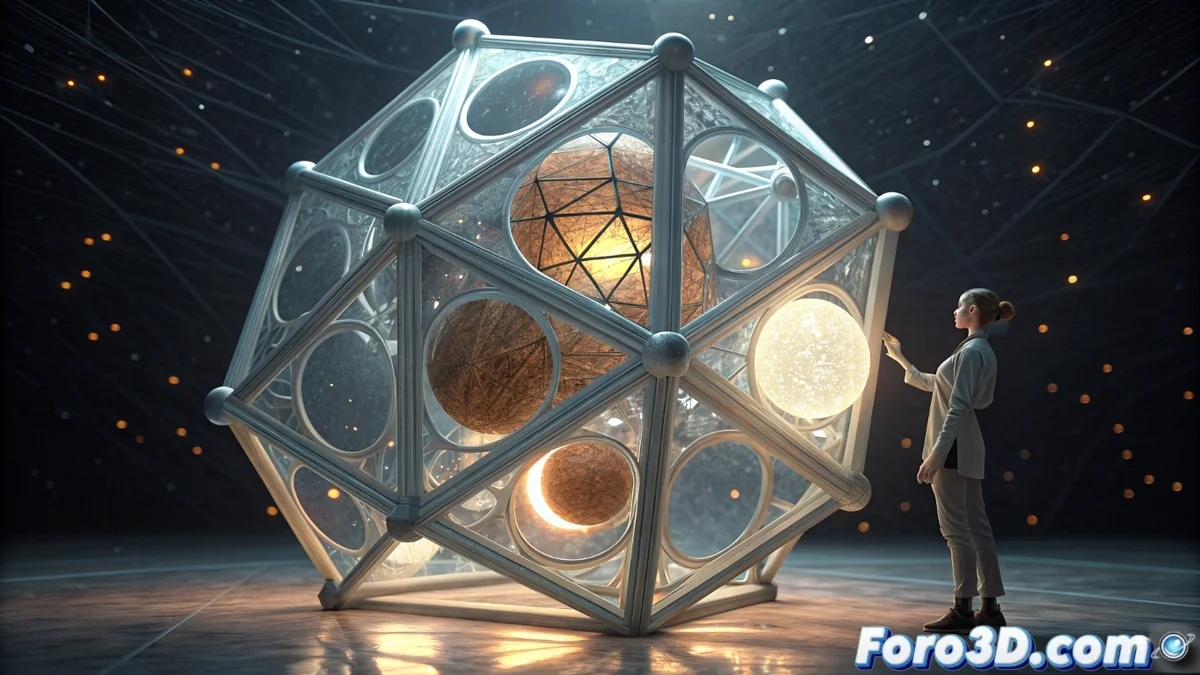
AlignSAE Improves Interpreting Language Models
A new approach called AlignSAE is changing how we understand large language models. This method maps specific concepts to precise locations within the model's latent spaces, making its internal workings more accessible and manageable. 🧠
A Bridge Between Abstract Concepts and Code
The technique operates in two fundamental stages. First, an unsupervised training phase explores the model's activations to autonomously discover patterns and internal representations. Then, a supervised stage takes care of anchoring each identified concept to a dedicated slot or space within the neural architecture. This anchoring is the key that later allows locating and manipulating ideas in isolation.
Key Advantages of Concept Anchoring:- Allows causal intervention in the model, for example, swapping the "style" concept without altering a character's "pose."
- Facilitates inspecting internal relationships of the model, providing transparency to a system that often functions like a black box.
- Turns the model's operation into something more manipulable, giving researchers precise control over specific attributes.
Now artists will be able to discuss whether a change in the latent was intentional or a creative glitch, with real technical arguments.
Direct Applications in 3D Graphics and Generative Tools
For the foro3d.com community, this advancement has immediate practical implications. By being able to edit concrete semantic attributes within latent spaces, new possibilities open up for creative workflows.
Potential for Artists and Technicians:- Edit image or 3D scene attributes in isolation, such as materials, lighting, or compositional style, without affecting other elements.
- Create more stable and predictable user interfaces for manipulating latent spaces in image generation tools.
- Assist texturing and modeling processes with fine semantic control, allowing adjustments based on concepts rather than abstract numerical values.
Towards More Transparent Creative Tools
The end result is generative tools that not only produce, but also explain their process. Technical artists can better understand why a model makes certain decisions and adjust its behavior based on comprehensible reasoning, not trial and error. This represents a significant step toward integrating artificial intelligence more intuitively and reliably into visual production pipelines. 🎨