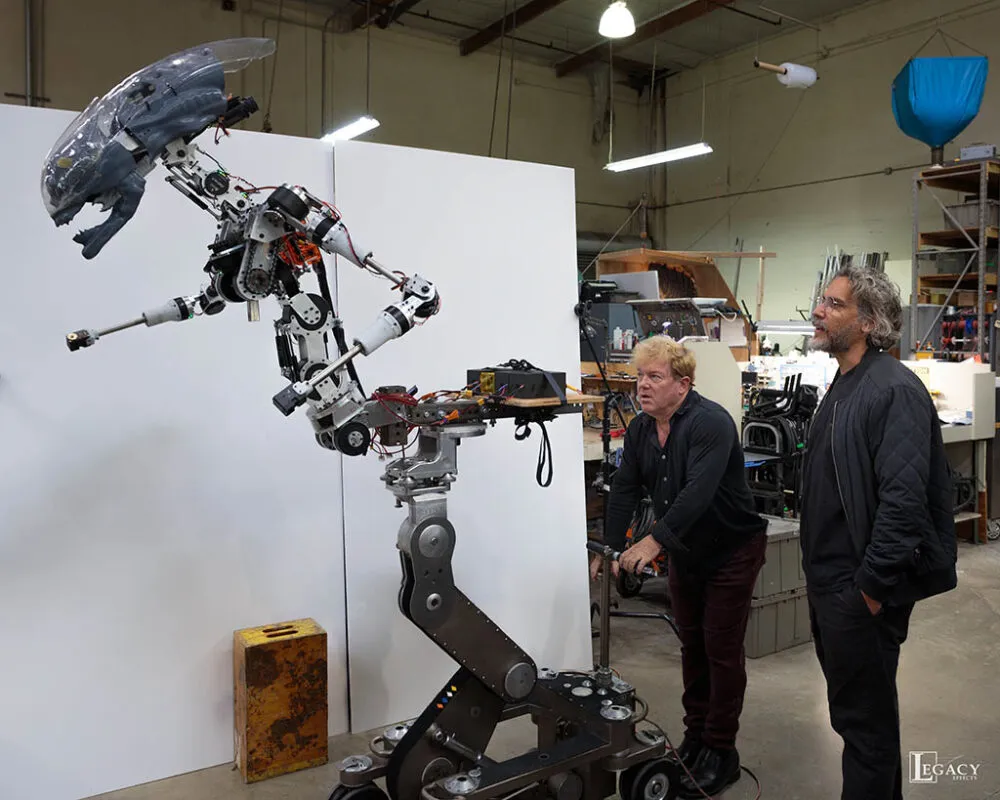
From its beginning with Ridley Scott in 1979 and James Cameron's sequel in 1986, the Alien saga marked a milestone with immersive narratives and innovative practical effects. Decades later, Alien: Romulus revives that essence by combining traditional techniques like animatronics and miniatures with advanced digital effects, achieving a balance between nostalgia and innovation.
A New Stage with Fede Álvarez
Director Fede Álvarez, a fan of the franchise, led this new stage with a hybrid approach that integrates practical effects supervised by veterans and cutting-edge digital enhancements. The film, shot in Budapest with an 80 million dollar budget, stands out for its tangible and gloomy texture, characteristic of the saga, while elevating its visual scale.
The Creative Team and Technologies Used
The creative team, including Legacy Effects and Amalgamated Dynamics, used technologies like 3D scanning, ZBrush, and 3D printed models to design creatures and memorable sequences, such as the birth of a hybrid alien-human. This combination of traditional and digital techniques creates a result that feels both classic and contemporary.
"With Alien: Romulus, we wanted to pay homage to the classic biomechanical style of the franchise, while implementing new technologies to enrich the cinematic experience." — Fede Álvarez
Romulus: A Return to the Classics
Alien: Romulus pays homage to the classic biomechanical style of the franchise, adding technological innovation to offer a faithful yet renewed cinematic experience. The Alien saga remains a benchmark for science fiction, and this return marks a new stage, taking the franchise to new heights.
Impact and Legacy of the Franchise
The Alien series has not only influenced science fiction cinema but has also left a mark on popular culture, creating a base of loyal fans over the years. With the return of Alien: Romulus, the saga ensures it remains relevant for new generations while honoring its roots.