The Delicate Balance Between Tradition and Innovation
Alien: Earth faces the most complex creative challenge in the franchise's universe: honoring the visual and narrative legacy established by Ridley Scott while charting a genuinely new course. This approach requires a deep understanding of what elements make the franchise essentially "Alien," versus which aspects can evolve without betraying the original spirit. The title itself suggests a significant shift in setting—from the claustrophobic confines of interstellar space to a planetary environment that could offer both new opportunities and new terrors.
What makes this project particularly intriguing is how it could expand the mythology without diluting it. While previous installments focused on the threat of the xenomorph as a perfect biological entity, Alien: Earth has the potential to explore the planetary origins of the species, its natural ecology, and possibly even its collective intelligence in a broader context. This expansion of the lore needs to be handled carefully to maintain the fundamental mystery that has made the creature so terrifying for decades.
Essential Elements That Must Be Preserved
- The biomechanical aesthetic of H.R. Giger as a visual foundation
- The characteristic psychological tension and body horror
- Moral ambiguity and cosmological pessimism
- The fusion of gothic horror with hard science fiction
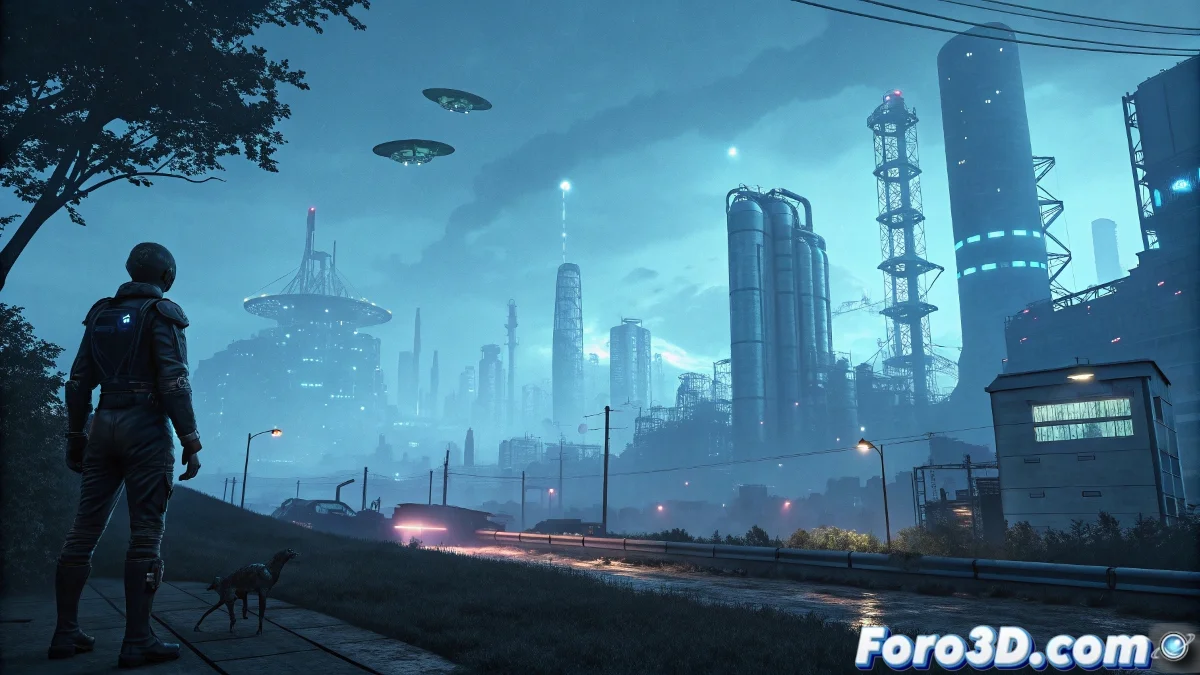
The New Frontier: Earth as a Setting
The shift to an Earth setting represents both a fresh narrative opportunity and a significant risk. On one hand, it allows exploration of how Earth's ecosystem would interact with alien biology, potentially creating new xenomorph variants adapted to different environments. On the other, it risks losing the spatial claustrophobia that defined the original films. Success will depend on finding new sources of tension that are as effective as the isolation of deep space, perhaps through the planetary scale of the threat or the ecological implications of a large-scale infestation.
The true terror of Alien has always resided in what we do not fully see
From a thematic perspective, Alien: Earth could explore new metaphors relevant to the contemporary era. Where the original reflected anxieties about corporatocracy and dehumanization, a story set on Earth could address ecological themes, climate change, or the fragility of human civilization in the face of existential threats. This thematic update, if handled with subtlety, could connect the franchise with current concerns while maintaining its dark and philosophical essence.
Potential Directions for Expansion
- Exploration of the Engineers' society and culture
- New xenomorph variants adapted to specific ecosystems
- The symbiotic relationship between the aliens and their native environments
- The long-term impact of the black goo on planetary biology
Alien: Earth finds itself in the unique position of being able to learn from the successes and mistakes of previous expansions of the universe. The challenge will be to create something that feels fresh and necessary rather than simply another entry in a franchise that has already explored numerous variations on its central concept. For fans, the promise is to see their favorite monster in new contexts that expand rather than diminish its legacy of terror—an opportunity for the franchise to demonstrate that, like the xenomorph itself, it can evolve while maintaining its fundamental essence. 👽
And so, between the legacy of the Nostromo and the new terrestrial frontiers, Alien: Earth reminds us that honoring the past does not mean living in it, but rather understanding so deeply what made something great that you can take it to places it has never been before—even if those places turn out to be as familiar as our own planet. 🌍