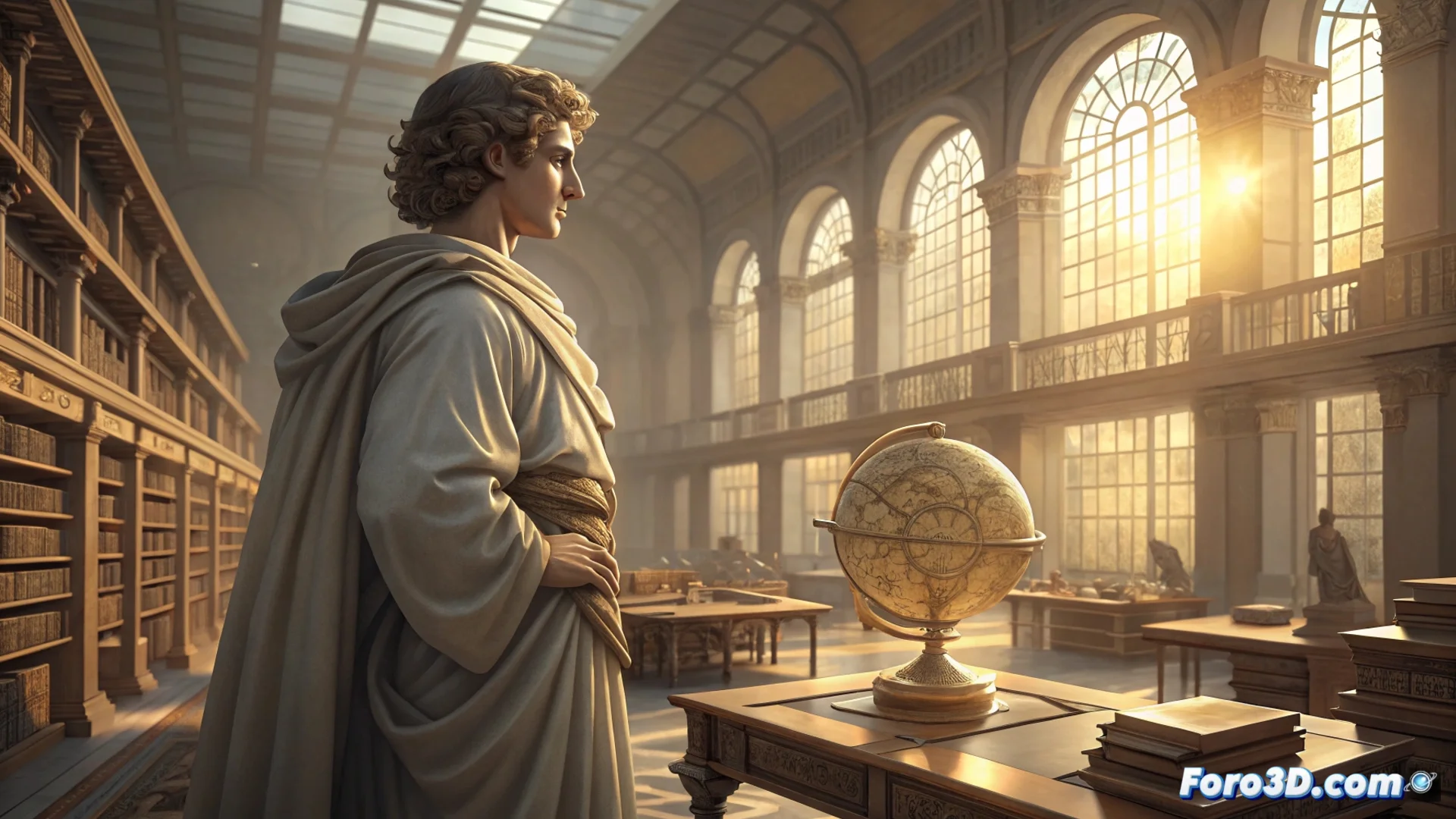
Alexander the Great Weaves an Empire with Culture and Ideas
After the military conquests, Alexander perceives a fractured empire by cultural barriers. To prevent it from disintegrating, he opts for a revolutionary tactic: unify through intellect and art, not just with the sword. His vision transcends command to build a cohesive civilization. 🏛️
The Alexandria Project: a mission to conquer thought
Alexander channels resources toward knowledge expeditions. These missions do not seek to plunder, but to collect and synthesize universal knowledge. He summons scholars, philosophers, artists, and technicians from every conquered corner, creating a crucible of ideas. The result is a renewed Hellenistic culture, a vibrant hybrid that adopts the best of Greece, Persia, Egypt, and beyond.
Fundamental pillars of the strategy:- Fund trips to document and bring knowledge from each conquered people.
- Establish exchange centers where diverse art, science, and technology are fused.
- Create a common visual and conceptual language that overcomes linguistic barriers.
"I prefer to win a city with a new idea than with ten thousand hoplites." - Reflection attributed to the new court.
Forge a common identity with symbols and rituals
So that people feel part of something greater, the project generates shared symbols. It invents athletic competitions with mixed rules and organizes festivals that honor all traditions equally. This effort seeks to shift local loyalty toward a shared imperial identity.
Actions to integrate:- Design hybrid sports, like a ball game that mixes Persian and Macedonian elements.
- Celebrate expanded panhellenic festivals where each culture showcases its heritage.
- Promote narratives and iconography that exalt the benefits of belonging to the unified empire.
Resistance and the new paradigm of power
The old military guard shows skepticism. Commanders accustomed to building fortresses and collecting tributes now must understand cultural dynamics and learn rules of symbolic games to connect with the new generations. This clash underscores the transition from an empire sustained by force to one