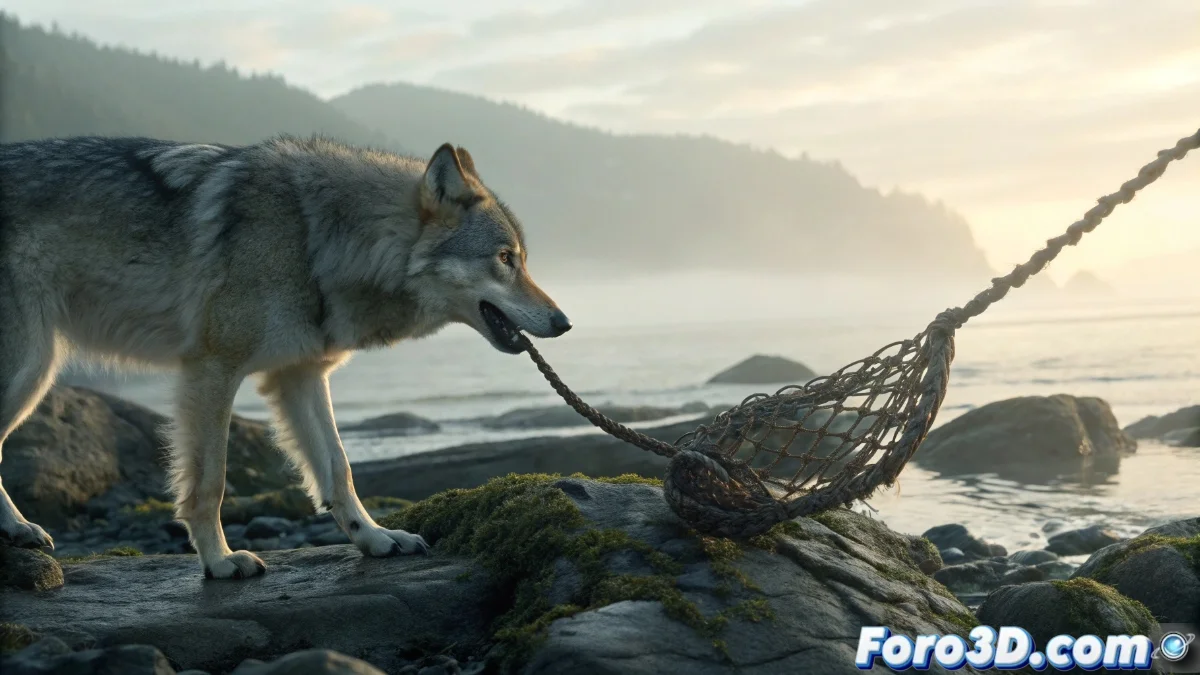
Alaska Wolf Manipulates Crab Trap in Remarkable Display of Intelligence
In the wild coasts of Alaska, an extraordinary gray wolf has been documented interacting with a crab trap in a way that challenges our conventional understandings of animal cognition. The canid not only methodically pulls the rope tied to the device, but strategically drags it toward the shore and finally manages to open it to reach the prized bait inside 🐺.
The Scientific Debate on Tool Use
For animal ethology specialists, true tool use requires an animal to employ an external object as a functional extension of its body for a specific purpose. The coastal wolf technically meets this definition by using the rope as a means to obtain food. However, controversy persists about whether this behavior implies the complex planning observed in species like chimpanzees and corvids, known for modifying and storing tools for future uses.
Key Definitions in Ethology:- Tool Use: Employment of external objects as bodily extensions for specific objectives
- Adaptive Intelligence: Ability to solve problems through observation and learning
- Complex Planning: Modification and storage of tools for future use
While humans debate behavioral classifications, the wolf has simply discovered that the most practical innovation is the one that fills the stomach without the need for group hunting
The Perspective of Canine Intelligence
Gray wolves possess remarkable problem-solving abilities through observation and trial-and-error methods. This particular case could represent a clear example of associative learning, where the animal has discovered that manipulating certain environmental elements provides immediate food rewards. This cognitive flexibility characterizes canids, who regularly demonstrate impressive skills to overcome obstacles in their natural habitats.
Cognitive Abilities of Wolves:- Observational Learning: Acquisition of behaviors through observing others
- Problem Solving: Ability to overcome obstacles through innovative strategies
- Behavioral Flexibility: Adaptation of behaviors according to environmental circumstances
Implications for Understanding Animal Intelligence
This coastal Alaska wolf seems to have found the wild equivalent of a food delivery service, where its daily menu arrives conveniently packaged in floating boxes. The episode not only illustrates the remarkable adaptability of canids, but also questions the traditionally established boundaries between instinctive use and conscious employment of tools in the animal kingdom 🌊.