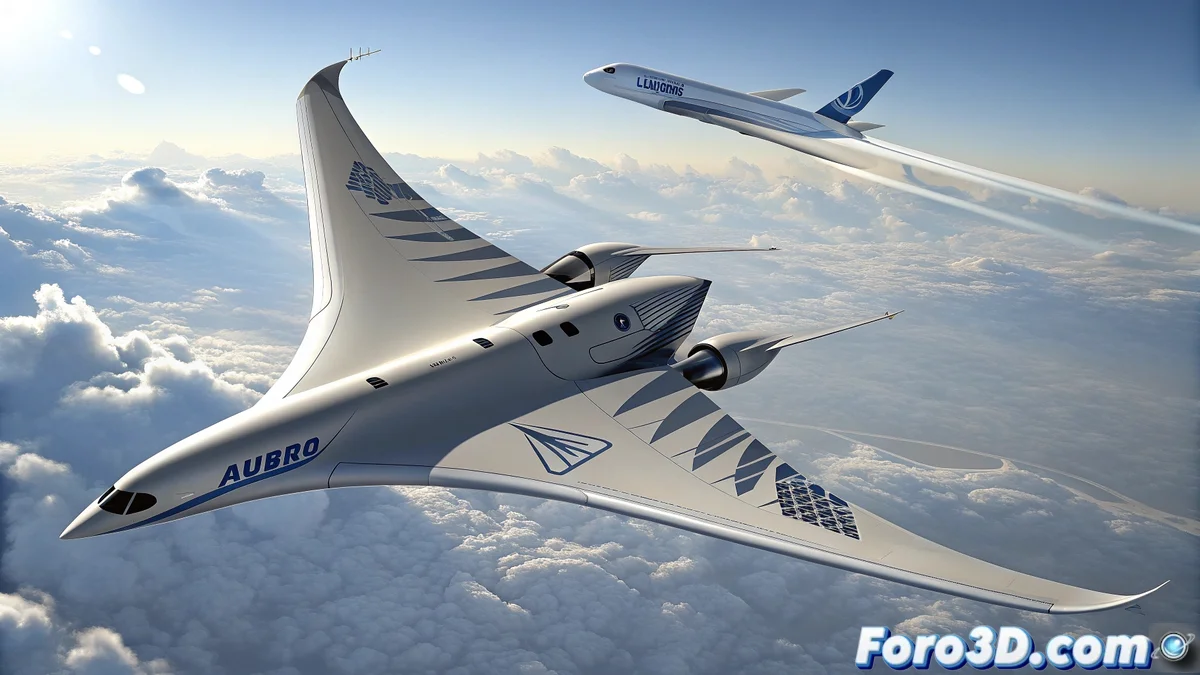
When Wings Learn to Transform Mid-Flight
Airbus has announced the revolutionary development of a wing capable of transforming mid-flight, an advance that promises to redefine the aerodynamics and efficiency of future commercial aircraft. ✈️ This innovative concept, known as a morphing wing, uses internal mechanisms that allow the wing's shape to be dynamically modified according to flight conditions, optimizing lift and reducing fuel consumption through continuous adaptation to different phases such as takeoff, cruise, and landing.
The first prototype will make its inaugural flight in 2026, marking a significant milestone in aeronautical innovation. 🛫 The technology will allow the adjustment of the wing's curvature angle and extension to maximize efficiency at every moment of the flight, representing the greatest advance in wing design since the introduction of winglets. This development positions Airbus at the forefront of sustainable aviation, simultaneously addressing the economic and environmental challenges of commercial aviation.
A step towards aircraft that adapt to flight like birds to air currents.
Morphing Technology and Efficiency Benefits
The morphing wing system incorporates smart actuators and advanced composite materials that allow smooth, controlled shape changes. 🔧 These internal mechanisms modify the aerodynamic curvature and surface extension of the wing, optimizing the airflow around the wing surface in real time. The dynamic adaptation significantly reduces aerodynamic drag, decreasing fuel consumption and CO₂ emissions by up to 5% on long-haul flights, according to Airbus estimates.
The most significant advantages of this technology include:
- Reduced aerodynamic drag during all flight phases
- Automatic optimization of lift according to atmospheric conditions
- Lower fuel consumption and carbon emissions
- Greater economic efficiency for commercial airlines
Next Steps and the Future of Commercial Aviation
The testing program will include the prototype's first flight in 2026, where its performance under real conditions will be evaluated. 📊 Airbus engineers will use data from advanced sensors to adjust the control algorithms and ensure the safety and effectiveness of the technology before its integration into future commercial aircraft models. This development could eventually be applied to both new aircraft and modernizations of existing fleets, expanding its potential impact on the global aeronautical industry.
With wings that transform on the fly, pilots might feel a bit like aerodynamics wizards… or high-flying acrobats! 🎩 Although they will probably prefer that the technology works so smoothly that passengers don't even notice the transformations happening just meters from their windows, while the aircraft quietly optimizes its shape to fly farther with less fuel.