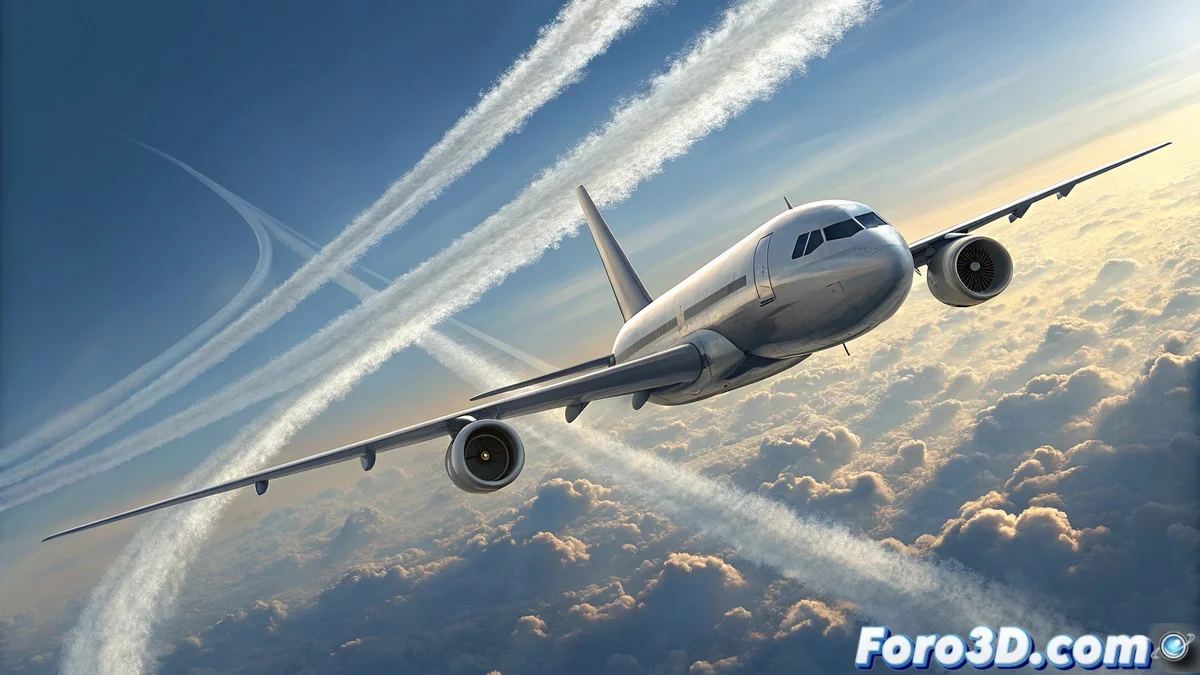
Airline Emission Calculators Underestimate Real Climate Impact
Most available tools for calculating the carbon emissions of commercial flights offer an incomplete view of the real environmental problem. 🛩️
The Invisible Iceberg of Air Pollution
Conventional calculation systems focus exclusively on carbon dioxide emissions from kerosene combustion, but completely ignore other crucial elements released during high-altitude flight.
Ignored Climate Components:- Nitrogen oxides that alter atmospheric composition
- Water vapor that contributes to the greenhouse effect
- Persistent condensation trails that form artificial clouds
- Induced cirrus clouds that trap heat in the atmosphere
These non-CO2 factors have a considerably greater climate impact than simple carbon calculations, leading to a systematic underestimation of real emissions.
The Hidden Climate Multiplier
Recent research shows that the real impact of aviation on global warming is significantly greater than what basic carbon figures indicate. Advanced scientific methodologies recommend applying a multiplier factor of 2 to 3 times the CO2 emissions to obtain an accurate estimate.
Critical Limitations of Current Calculators:- They do not consider the specific type of aircraft and its efficiency
- They ignore the actual passenger occupancy and cargo transported
- They omit variables of exact route and weather diversions
- They do not include the impact of layovers and connections on the journey
Towards an Honest Environmental Assessment
Detailed studies incorporating these operational variables reveal that real emissions can far exceed the estimates from standard tools. The next time you consult an emission calculator, remember you are only seeing the tip of the environmental iceberg, while the true climate impact continues to fly under the radar directly into our atmosphere. 🌍