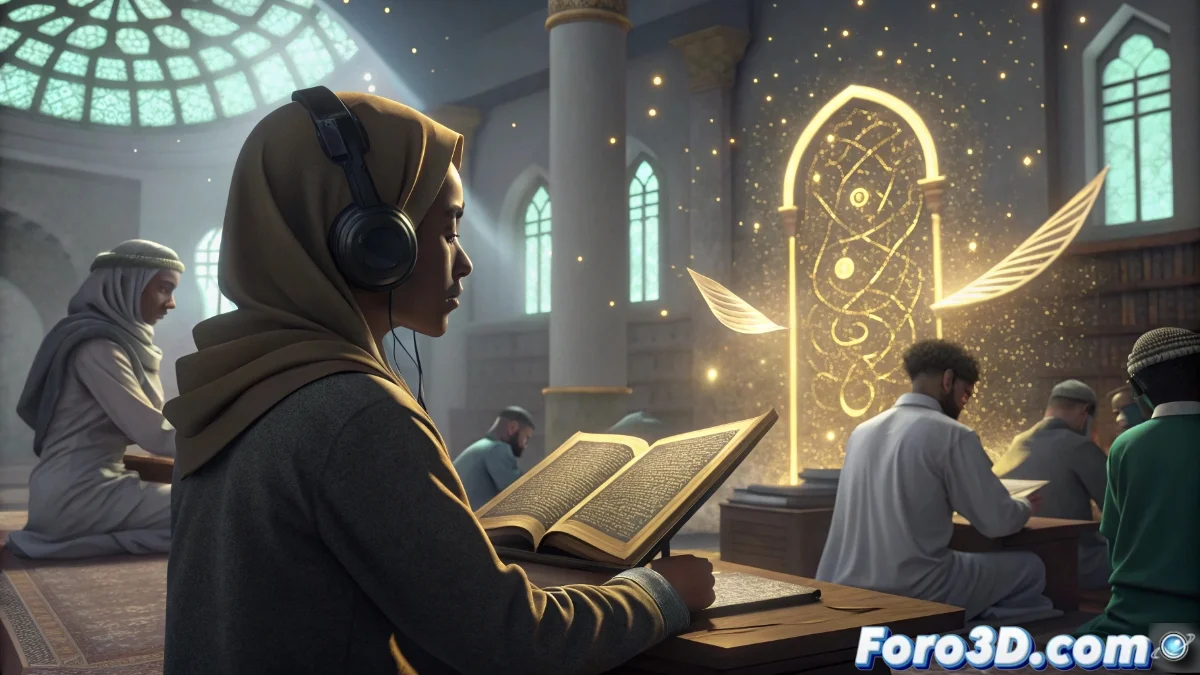
AI Transformer Revolutionizes Quranic Arabic Pronunciation Teaching
An AI transformer architecture is marking a before and after in the pedagogy of Quranic recitation, where each phoneme must be articulated with exactness to preserve the sacred meaning. This innovation fuses acoustic analysis of the voice with textual representations, identifying phonetic deviations imperceptible to the human ear and offering instant corrections 🎯.
Transformative Educational Applications
For non-native Arabic students, this platform acts as a permanent personalized tutor, analyzing each sound and pointing out specific errors. Teachers, in turn, leverage detailed reports on individual progress and recurrent error patterns, optimizing teaching with a more personalized and efficient approach 📊.
Key Advantages of the System:- Real-time evaluation allowing immediate corrections
- Identification of errors at the phoneme level for unprecedented precision
- Continuous availability, eliminating dependence on human supervisors
The technology not only teaches, but preserves the essence of a millennial tradition through scientific exactness.
Social and Cultural Impact
This tool democratizes access to quality religious education, overcoming geographical and economic barriers. By ensuring correct pronunciation from the start, the integrity of the sacred text is safeguarded and the spiritual connection of believers is strengthened. Additionally, it contributes to keeping the traditions of classical Arabic alive among new generations 🌍.
Additional Benefits:- Strengthening of linguistic skills beyond the religious sphere
- Preservation of phonetic authenticity in cultural transmission
- Optimization of educational resources for institutions and self-learners
Technological Integration into Everyday Life
Now, anyone with a mobile device can receive more precise feedback than that of a traditional instructor, although with a more technical and less affective approach. This technological evolution represents a crucial step toward inclusive and accessible education, without compromising the rigor required in Quranic recitation 📱.