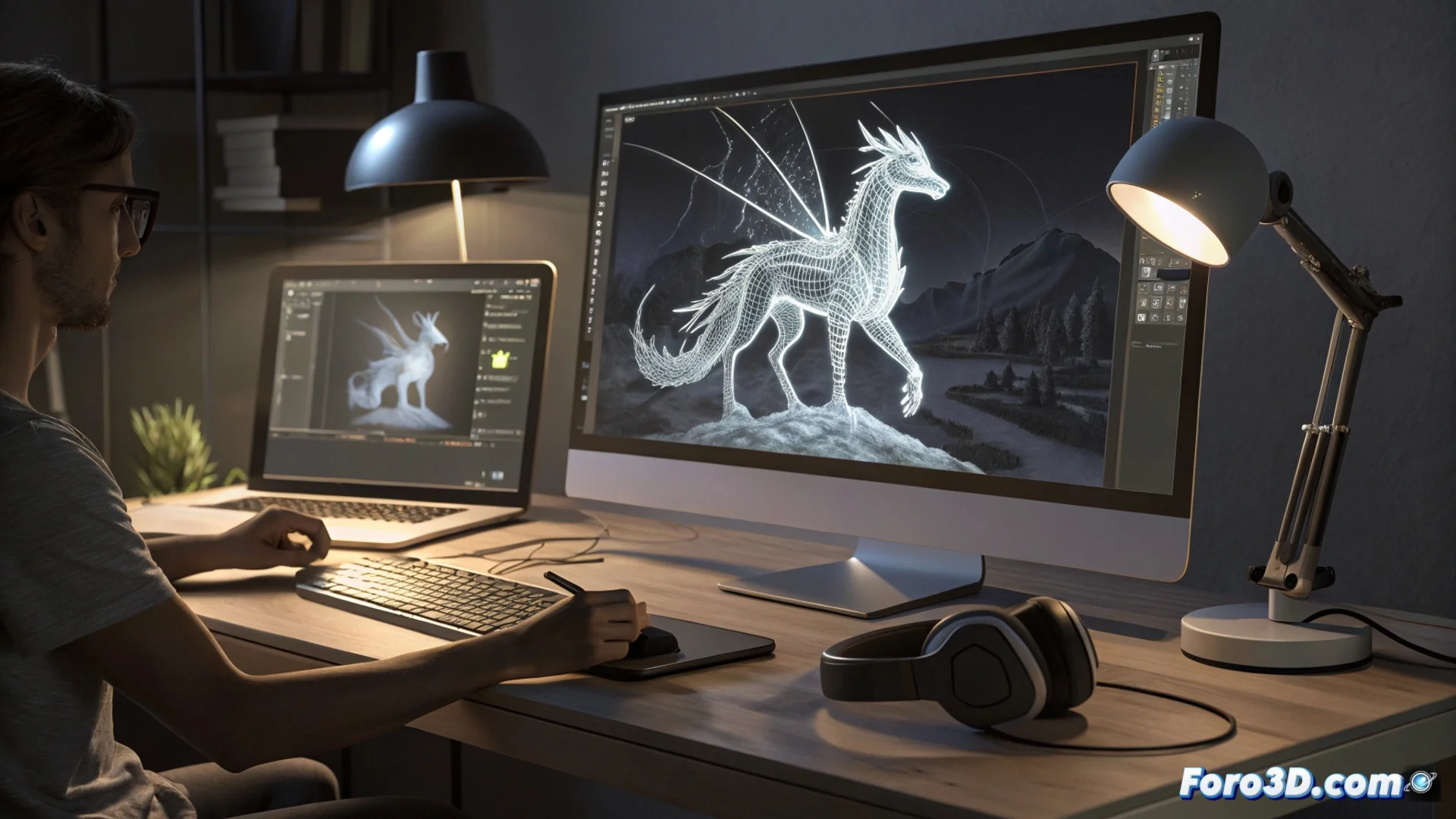
AI-Generated Visual Content Labeling Becomes Mandatory
The major global platforms are implementing a new directive that requires labeling any visual content where artificial intelligence plays a substantial role. This measure aims to make the origin transparent of digital assets, including 3D models, animations, and virtual reality worlds. The main goal is to inform the end consumer. 🎨
Direct Impact on Creative Workflows
Any artist who publishes their work on portals like ArtStation, Sketchfab, or SteamVR must now review and adapt their processes. If an AI tool generates or modifies a significant part of an asset, it is mandatory to incorporate a clear and permanent watermark. This does not prevent the use of these technologies, but it does require declaring their use visibly, either integrated into the file or during its visualization.
Key points creators must consider:- The label must be visible and not go unnoticed, integrated permanently into the asset.
- It affects the distribution of 3D models, animations, and VR environments on public platforms.
- Many artists are already automating this step within their production workflows to streamline the process.
The regulation does not prohibit using AI tools, but it does require declaring their use transparently to the public.
Control Systems and Possible Penalties
The most important platforms are developing verification algorithms to analyze files uploaded by users. These systems look for characteristic traits of AI generation. If they detect these traits and do not find the corresponding watermark, they may reject the publication or reduce its visibility in search engines.
Consequences of non-compliance with the directive:- Platforms may reject or limit the distribution of unlabeled content.
- Progressive penalties are being considered for users who repeatedly violate the rule.
- The debate on the accuracy of these automatic detectors continues, although the regulatory trend is firm.
A New Standard for the Digital Era
This move establishes an important precedent in how authorship is managed and perceived in the digital realm. It forces reflection on originality and transparency in creation with assisted tools. As artists adapt, verification technology also evolves, marking the beginning of a new stage for sharing