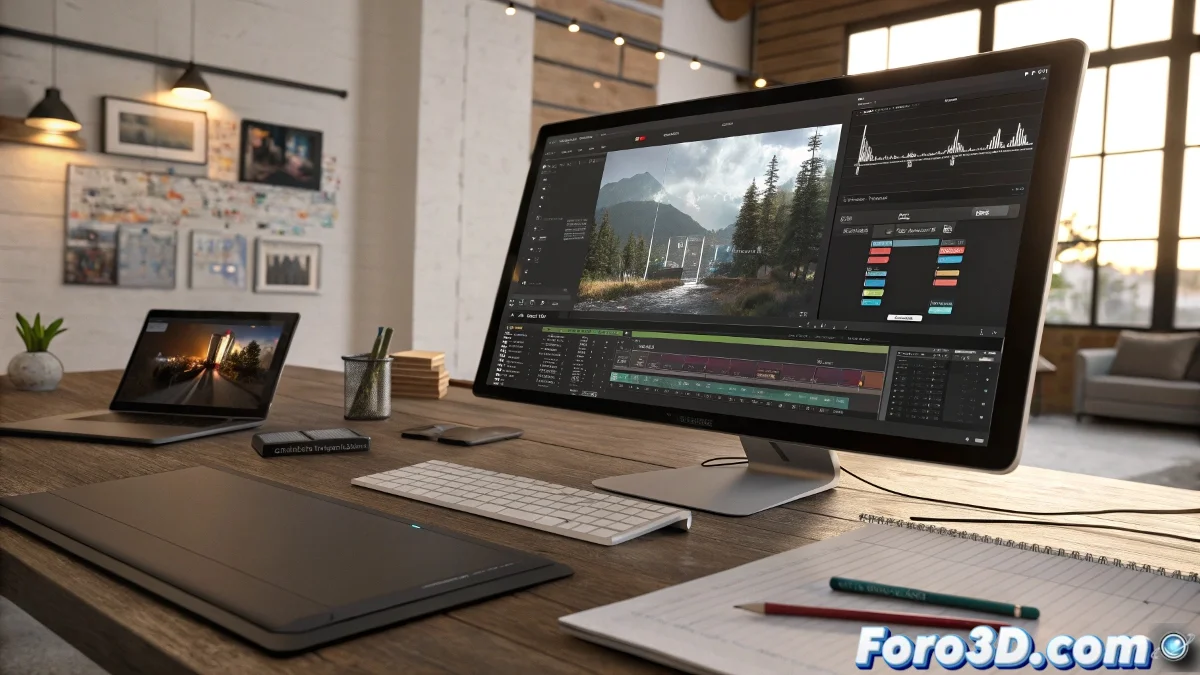
After Effects vs Combustion: The Evolution of Digital Post-Production
Comparing After Effects to Combustion today is like putting a Ferrari next to a horse-drawn carriage: both get you from point A to point B, but with radically different experiences. 🏎️🐎 While one continues to define the industry standard, the other rests in the software graveyard. Want to know why? Keep reading.
After Effects: The Digital All-Terrain Vehicle
Adobe's flagship has no rival in:
- Advanced motion graphics (from titles to animated infographics)
- Seamless integration with Photoshop, Illustrator, and Premiere
- Thousands of plugins and scripts to automate any task
- Support for advanced 3D and tracking
Practically everything you see on television, social media, or in cinema goes through After Effects at some point. And for good reason: it's like a complete post-production workshop in a single application. 🎬
Combustion: Digital Relic
Autodesk's former software had its glory days, but today:
- Hasn't received updates since 2008
- Its interface looks like it's from Windows 98
- It's incompatible with modern systems
- Was replaced by Flame and Fusion
Using Combustion today is like trying to record an album on vinyl: it has vintage charm, but it's not practical for daily work.
Modern Alternatives That Are Actually Worth It
If you're looking for something different from After Effects:
- Nuke (for high-end visual effects)
- DaVinci Resolve Fusion (free and powerful)
- Blender Compositor (for direct 3D integration)
The reality is clear: while After Effects keeps innovating with tools like Content-Aware Fill and 3D Camera Tracker, Combustion has become that program you only mention to say "remember when...?". And although there will always be nostalgic people, in digital production, time waits for no one. ⏳
Fun fact: If you find someone who still uses Combustion, they probably also have a phone with a retractable antenna and believe that "MySpace was the best social network." How times have changed! 😂