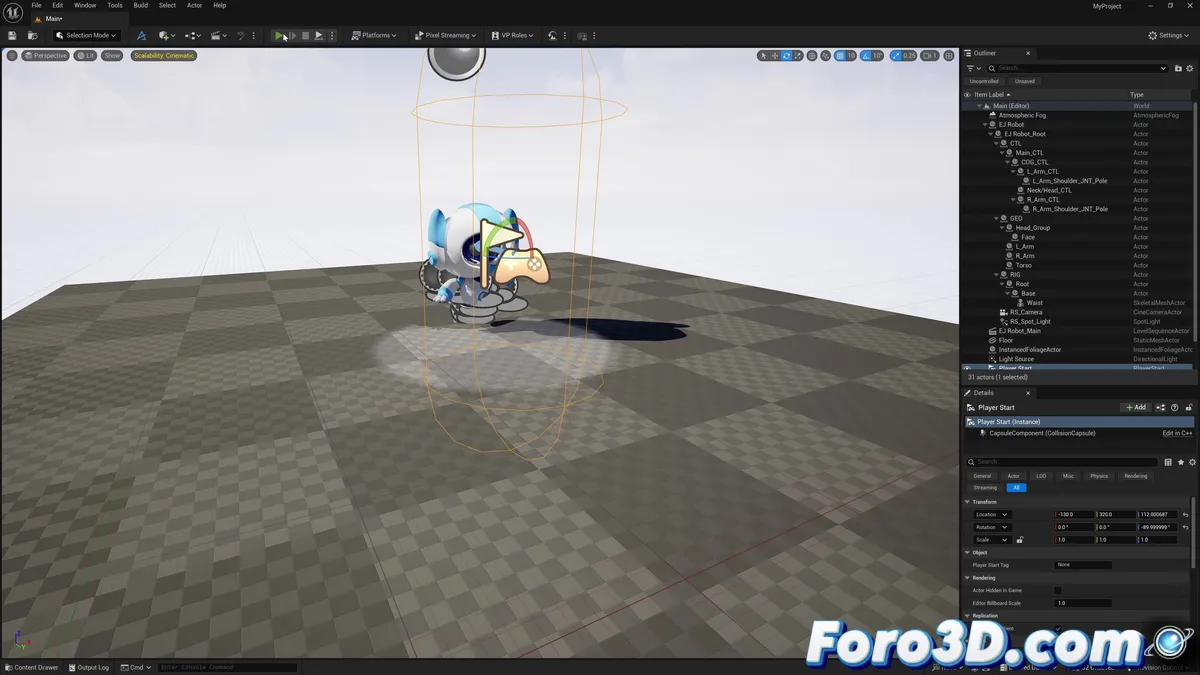
Revolution in 3D Integration Between Cinema 4D and Unreal
The recent release of Cineware 2025.2 marks a turning point in the interoperability between animation software and real-time engines. This tool removes technical barriers that historically complicated work between applications, establishing a new paradigm in digital production.
Real-Time Bidirectional Communication
The plugin implements an automatic synchronization system that maintains absolute coherence between projects. Any modification made in either environment is instantly reflected in the other, enabling:
- Creative iterations without intermediate processes
- Immediate corrections during collaborative sessions
- Time optimization in artistic reviews
Advances in Character Animation
The ability to transfer complex rigging systems solves one of the main bottlenecks in professional pipelines. Complete skeletons, facial controls, and advanced deformations now flow seamlessly between both environments.
"The transfer of animations via the Interchange framework represents a qualitative leap for productions that mix CGI and real-time"
Technical Requirements and Alternatives
To take advantage of all features, Unreal Engine 5.5+ is required, although previous versions maintain limited compatibility. Datasmith technology remains available as a secondary option, especially useful for projects with:
- Complex lighting configurations
- Advanced custom materials
- Teams working with stable versions
Impact on the Creative Industry
This technological evolution especially benefits studios producing hybrid content, where the boundary between traditional animation and interactive environments is increasingly blurred. Sectors such as film, AAA video games, and immersive experiences will find new expressive possibilities.
As a final consideration, developers recommend carefully evaluating the specific needs of each project before fully migrating to the new system, thus ensuring stability in critical productions.