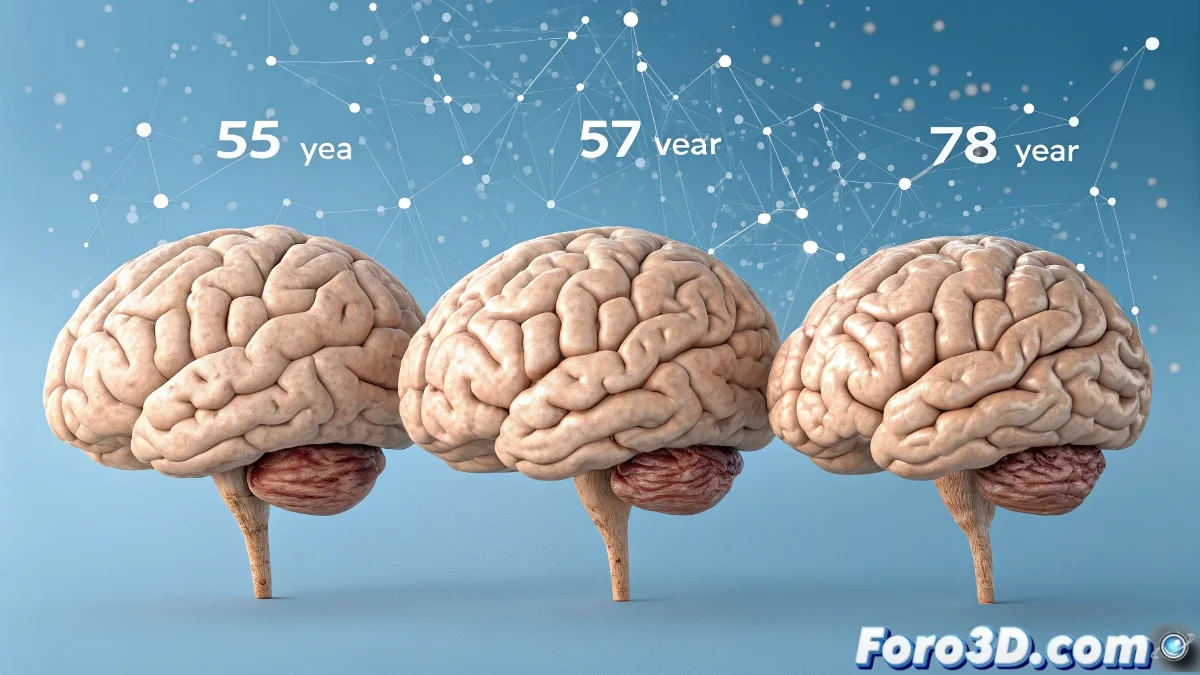
When the Science of Aging Demands a Render
2025 is shaping up to be the year we understand aging better... and what better way to explain it than by turning medical data into 3D art 🧠. Because a bar chart will never convey the tragic beauty of an aging brain, even if the render takes longer than the natural process.
Three Key Moments to Model
The milestones discovered in longevity research are gold for 3D artists:
- Age 57: The first major brain change. Perfect for showing transitions with semi-transparent materials.
- Age 70: The cholesterol-vision-brain connection. Time to play with degenerative textures!
- Age 78: The last major transformation. Ideal for dramatic compositions with contrasting lighting. 👵
A 3D model of the brain without its characteristic wrinkles is like a map without relief: technically correct but lacking soul. Displacement maps are your best allies.
Techniques to Bring Science to Life
Transform cold data into impactful visualizations:
- Use Substance Painter to create realistic neuronal deterioration textures
- Experiment with emotional lighting: warm for social connections, bluish for isolation
- Add micro-details with Quixel Mixer - every last amyloid plaque counts
Bonus track: animate cerebral blood flow with fluid simulations. Because nothing says "healthy aging" like good circulation... even in polygons.
Rendering the Paradox of Time
While scientists battle the biological clock, we're still waiting for those overnight renders to finish. The irony: you can model brain deterioration with precision, but there's no shader that simulates the patience needed to wait for Cycles. 💻
So go ahead: turn that 90% accuracy in Alzheimer's into 100% visual impact. And remember: in the 3D world, the only aging we control is that of our models... when we decide to update them.