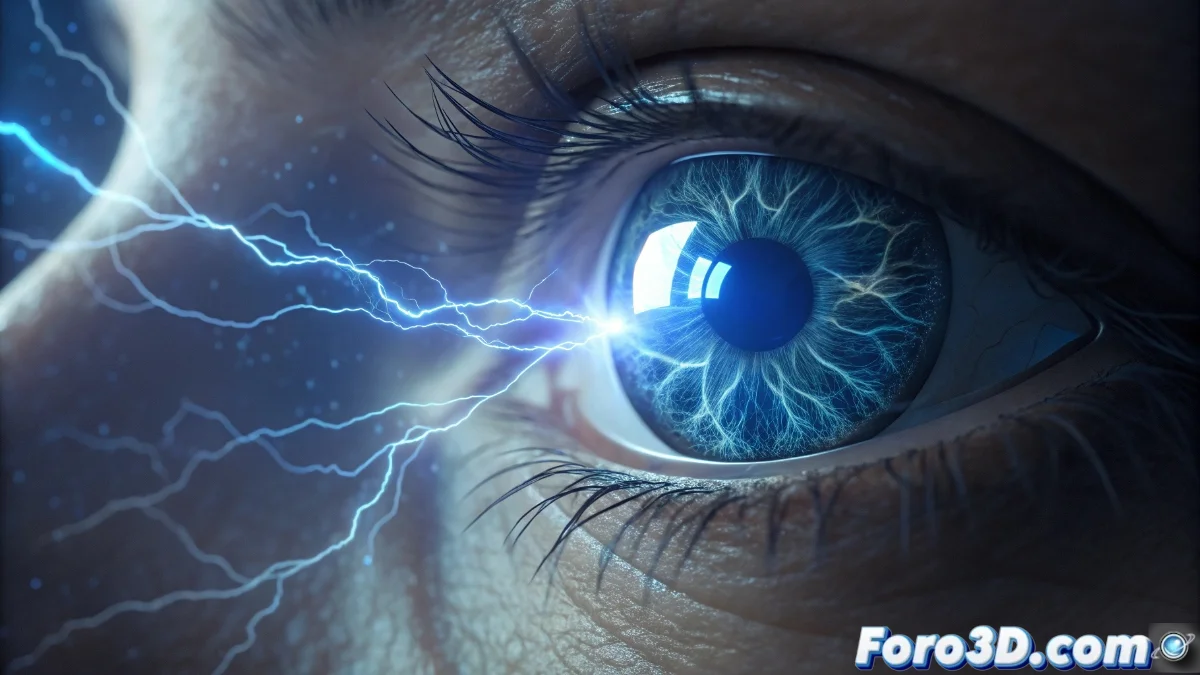
Advanced Retinal Prostheses in Regenerative Medicine
The retinal prosthesis technology marks a revolutionary milestone in the field of regenerative medicine, offering basic visual capabilities to people with blindness through direct stimulation of the visual cortex. These systems transform externally captured images into electrical signals transmitted to implanted electrodes, creating artificial perceptions that the brain learns to decode progressively 👁️🗨️.
Mechanism of Operation of Ocular Prostheses
The process begins with a miniaturized camera integrated into specialized glasses that captures the visual environment, sending this information to an external processor. This device converts the data into customized stimulation patterns that are wirelessly transmitted to a microchip surgically implanted in the retina, activating residual neurons to generate phosphenes, those luminous points that constitute the basic elements of artificial vision.
Essential Components of the System:- High-sensitivity external camera mounted on specialized glasses
- Visual signal processor that transforms images into electrical patterns
- Wireless transmission system to the retinal implant
Patients require extensive training to associate these luminous patterns with real-world objects, a process where brain neuroplasticity plays a fundamental role.
Current Status and Technological Challenges
Although devices like the Argus II allow distinguishing basic elements such as doors or curbs, the visual resolution achieved is far from natural vision, with images composed of just a few hundred pixels. Recent research explores the use of advanced biocompatible materials like graphene to increase electrode density, while artificial intelligence optimizes neuronal stimulation patterns.
Priority Development Areas:- Increase in electrode density using nanomaterials
- Optimization of visual processing algorithms with AI
- Improvement of the brain-machine interface for more natural integration
Future Perspectives in Artificial Vision
The main challenge continues to be the brain-machine interface, where brain neuroplasticity is crucial for adapting to these new signals. Currently, blind people can perceive luminous pixels, which, although not comparable to natural vision, represents a significant advancement that must continue evolving toward more sophisticated and accessible systems 🚀.