Adobe Substance Integrates Artificial Intelligence to Create 3D Materials
The Adobe Substance tools now include artificial intelligence capabilities that radically change how digital artists produce and manipulate surfaces for three-dimensional projects. This integration optimizes processes that previously required a lot of manual time. 🚀
From a Photograph to Complete PBR Textures
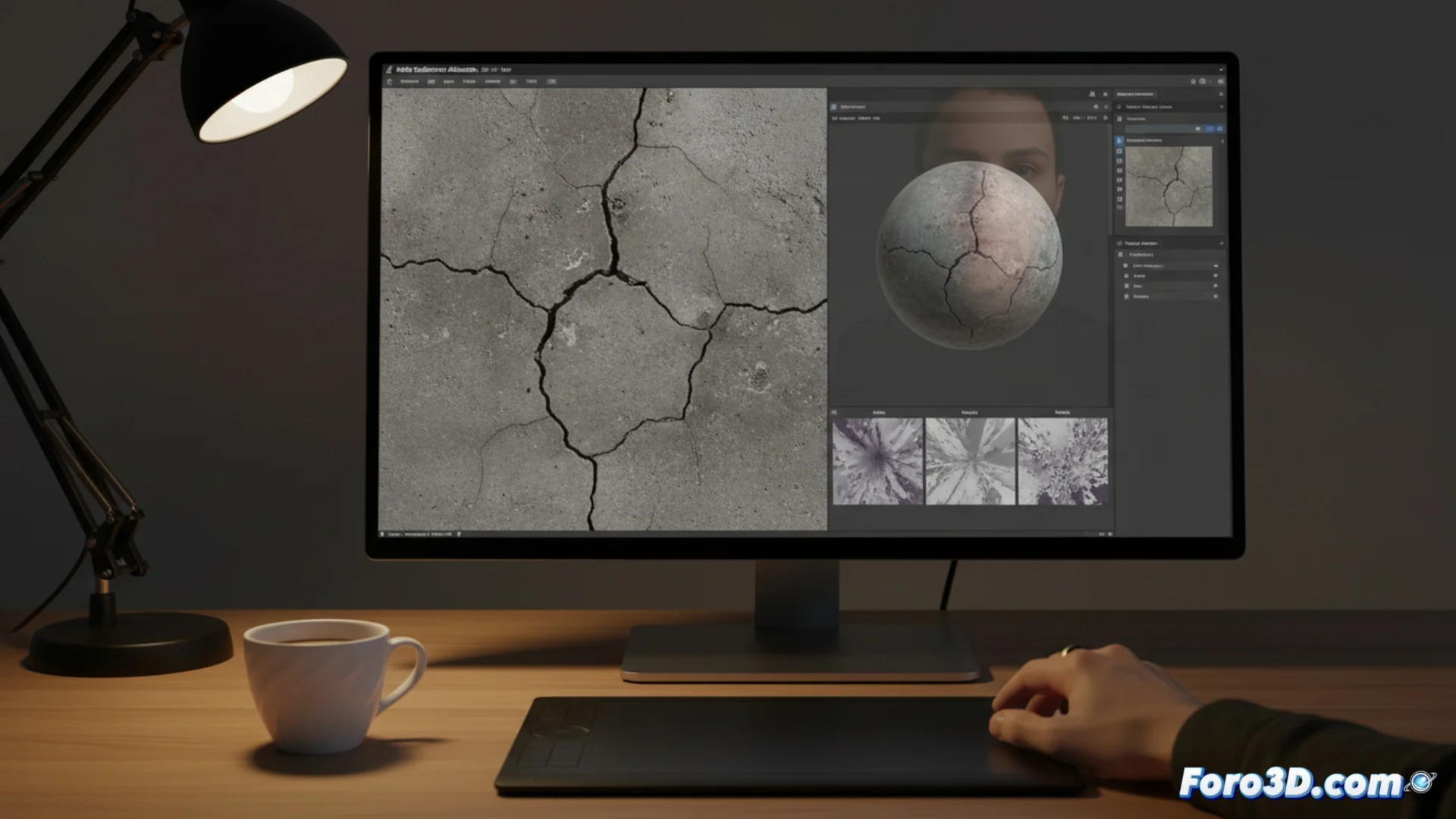
One of the most outstanding features is found in Substance Alchemist. This application can analyze a photographic image of a real object or surface and automatically produce a complete package of render-ready texture maps. The system interprets the input photo and calculates essential maps such as Albedo, Roughness, and Normal. This greatly speeds up the task of digitizing materials from the physical world and preparing them for use in a game engine or visualization software.
Key advantages of this process:- Speed up scanning: Transforming a simple photo into a usable 3D asset takes minutes.
- Physical accuracy: The generated maps maintain physically based rendering (PBR) properties.
- Basis for iteration: The artist receives a solid base on which they can refine and adjust.
AI does not replace creativity, but removes technical barriers so it can flow.
Merging Materials with Organic Logic
In applications like Substance Painter and Designer, AI also acts as an assistant to combine different types of surfaces. Instead of the user having to manually paint complex masks to define transitions, they can simply indicate how they want two materials to interact. The artificial intelligence takes care of calculating those blends, simulating realistic wear effects, and fusing visual properties to achieve a coherent result.
Practical use cases:- Create a wall that realistically shows moisture and dirt.
- Simulate corroded metal next to areas of peeling paint.
- Generate complex surfaces with multiple layers of eroded materials.
A Creativity-Centered Workflow
The main goal of these innovations is to free the artist from technical and repetitive tasks. Automating processes like generating maps from scratch or adjusting roughness channels allows more time and energy to be dedicated to making creative decisions. The user can test more variations, experiment with unusual combinations, and perfect the final material appearance more quickly. Artistic control remains intact, as the AI operates under their guidelines, functioning as a collaborator that suggests options based on an extensive library of real materials. Of course, the artist's knowledge remains crucial: it is necessary to know what to ask the system to avoid undesired results. 🎨