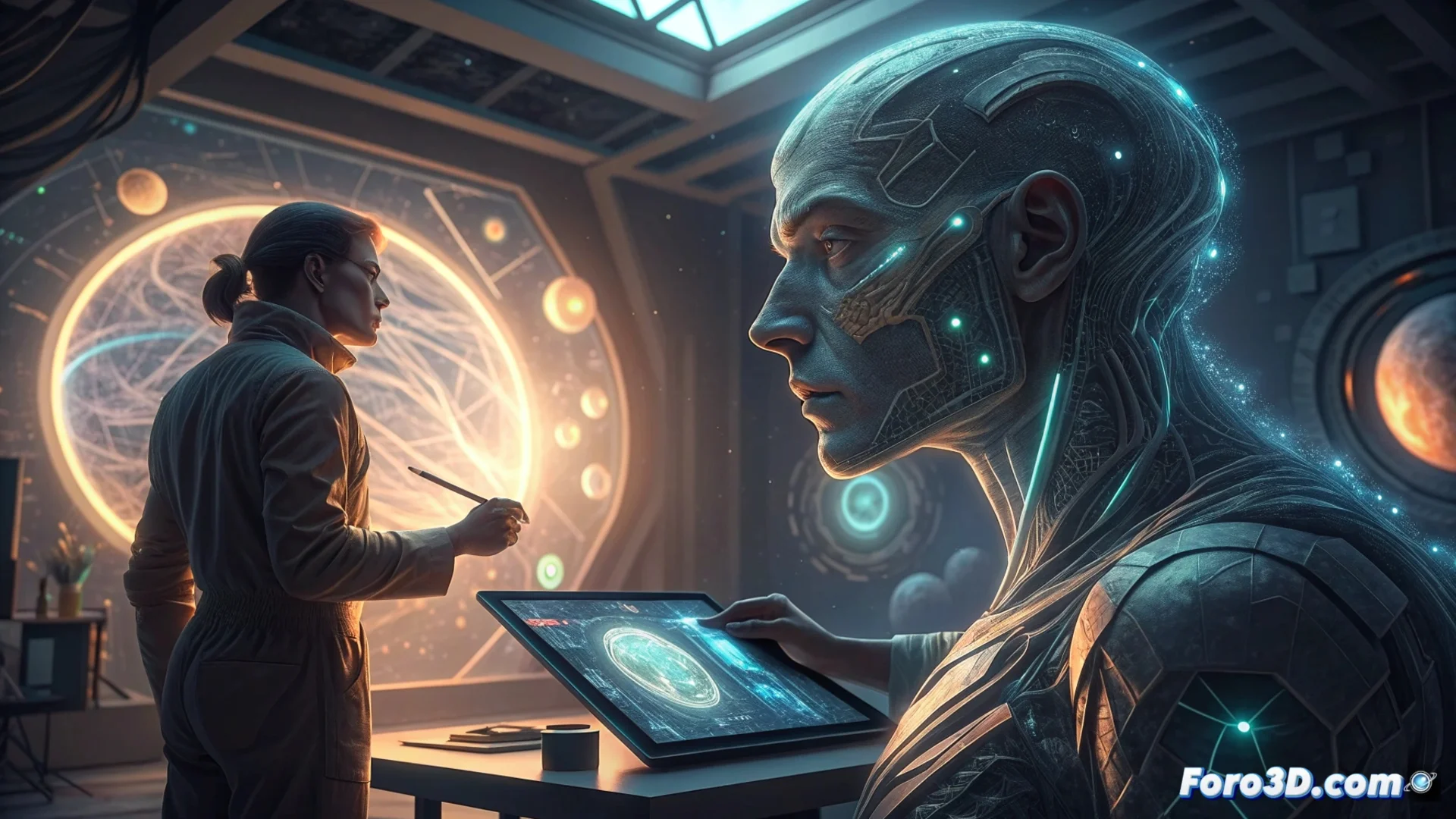
Adobe Integrates Artificial Intelligence to Enhance Its Creative Software
The creative software industry is evolving with the arrival of artificial intelligence. Instead of resisting, Adobe adopts this technology to transform how professionals work. Its approach is not to replace its flagship applications, but to enhance them with AI assistants that operate within the existing workflow. This allows exploring ideas more quickly and delegating repetitive tasks, while the person retains final authorship. 🚀
Firefly: Adobe's Native AI Engine
Adobe's key strategy is based on Firefly, its own image generation model. They integrate it directly into programs like Photoshop or After Effects, avoiding the need for users to leave the environment to use external tools. The company prioritizes generating commercially viable content and allows non-destructive editing. Features like Generative Fill or Generative Expand do not replace the software, but streamline tedious parts such as retouching an image or expanding a background.
Key advantages of this integration:- Accelerate the process: Automating mechanical tasks frees up time to focus on higher-level creative decisions.
- Maintain control: The artist directs every step and precisely adjusts the results suggested by the AI.
- Work in a secure ecosystem: Using a proprietary model within the applications reduces legal risks regarding copyrights.
The future is not AI against traditional software, but symbiosis where automation and professional control coexist.
AI as a Collaborator in Professional Tools
The obsolescence of complex professional software is not imminent. Programs for designing, video editing, or 3D modeling require a level of adjustment and precision that generic AI cannot yet guarantee consistently. Adobe positions its products as collaborative platforms, where artificial intelligence acts as an assistant. In Premiere Pro, for example, it can analyze footage and suggest cuts, but the editor makes the final decision on the assembly.
Examples of this collaboration in different areas:- Design and photo: Generate variants of a concept or remove unwanted objects in seconds.
- Video and animation: Suggest transitions or automatically correct color to quickly review options.
- 3D modeling: Create textures or initial sketches that the artist refines later with specialized tools.
Creative Control Remains in Human Hands
As debates arise about whether AI will replace creatives, Adobe emphasizes that its role is to enhance, not supplant. The professional workflow is transforming, but the essence remains: the vision, judgment, and final decisions are made by a person. The company seeks to combine the best of both worlds: the speed and idea generation capacity of AI, with the detailed control and intentionality offered by its traditional tools. The challenge for professionals will not be to say "stable diffusion," but to learn to direct these new assistants to make their work more efficient and expressive. 💡