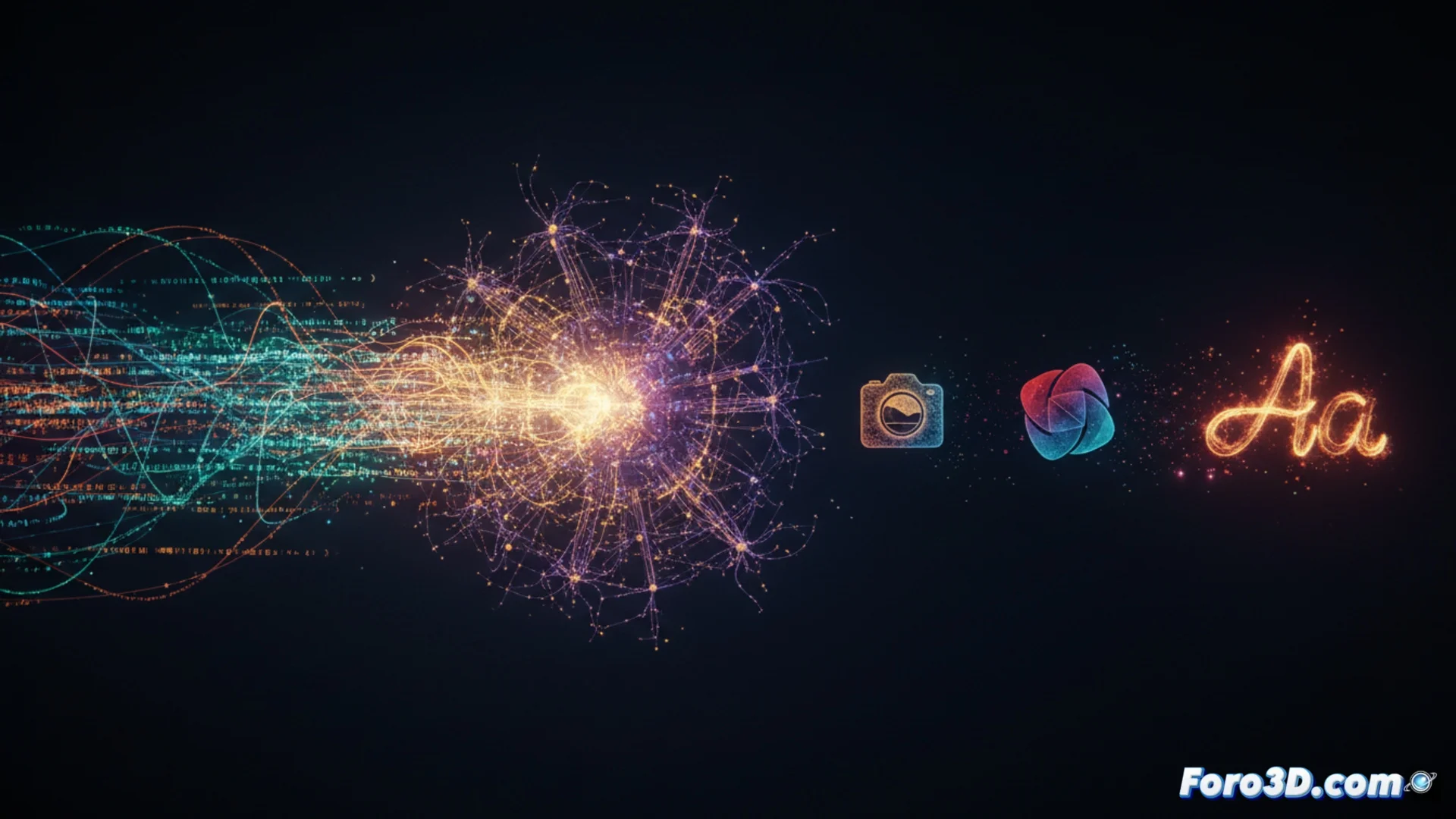
Adobe Firefly: an AI model for creating and editing graphics
In the realm of digital design, Adobe Firefly positions itself as a fundamental artificial intelligence model focused on producing and altering visual elements. Its core operates by interpreting user-written commands to manufacture entirely new results. 🎨
The mechanism for manufacturing images
The cycle begins when a person writes an indication or prompt. The system analyzes the key terms and concepts to understand the request. Using a neural network trained on a vast dataset that pairs text and images, it generates pixels from scratch or adjusts existing assets. The final product is an original visual composition that did not exist before.
Key phases in the process:- Text input: The user describes the scene or element they want.
- Semantic interpretation: The model breaks down and understands the concepts in the description.
- Pixel synthesis: The AI architecture builds or modifies the image based on its training.
Firefly transforms words into pixels, bridging the gap between language and visual representation.
Uses and standout capabilities
This AI engine is applied for multiple purposes within digital creation. It integrates natively into applications like Photoshop or Illustrator, acting as another tool in the artist's workflow. One of its main advantages is that it is designed to produce commercially safe content, which mitigates potential conflicts with copyright. Its goal is to streamline repetitive tasks and allow exploring visual concepts at high speed. ⚡
Main functionalities:- Generate images: Creates realistic photos or illustrations with specific artistic styles.
- Design vector graphics: Produces scalable illustrations without loss of quality.
- Apply typographic effects: Modifies text with custom designs and complex visual effects.
Creative interpretation and limits
Although it is a powerful tool, its interpretation can lead to unexpected results. For example, an instruction for "four tall trees" might materialize as a forest of giants with enormous trunks. This underscores that algorithmic creativity can still surprise or, at times, deviate from the user's precise intention, reminding us that AI complements but does not replace the final human judgment. 🤖