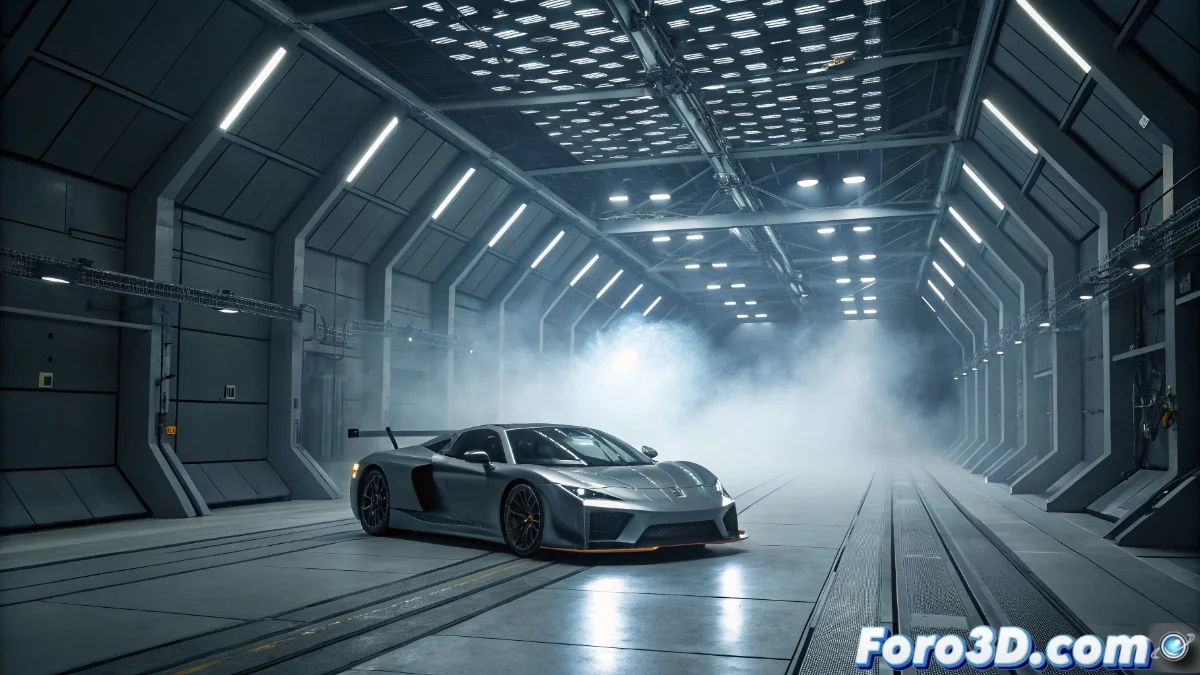
Additive Manufacturing in the McLaren Senna: Innovation in Aerodynamics and Customization
The McLaren Senna is a standout example of how additive manufacturing is applied in the creation of essential components to maximize aerodynamic performance and offer unprecedented interior customization. 🚗💨
Applications in Aerodynamic Development and Internal Components
During testing phases, McLaren uses 3D printing to manufacture scale models that faithfully replicate the vehicle's complex shapes, allowing precise adjustments to elements like spoilers and diffusers before final production. Additionally, in the interior, this technology is employed to create electronic supports and mounting parts that fit into tight spaces and unique geometries, typical of optimized monocoque chassis. 🔧✨
Key Advantages of Additive Manufacturing:- Rapid iterations during development, reducing wind tunnel validation times
- Creation of lightweight and durable components that would be unfeasible with traditional methods
- Comprehensive customization to meet the high standards of elite supercars
3D printing not only accelerates the design process but also ensures that every part, from internal supports to aerodynamic elements, contributes to the Senna's pure performance.
Impact on Customization and Efficiency
The ability to produce custom-made parts using additive technology allows McLaren to offer exclusive solutions, such as infotainment system supports that integrate perfectly into the innovative chassis design. This eliminates the need for expensive tooling and avoids design compromises, ensuring that every cubic centimeter is optimized. 💡🛠️
Examples of Components Manufactured with 3D Printing:- Scale models for aerodynamic testing in wind tunnels
- Internal electronic supports with complex geometries
- Mounting elements that fit into the monocoque's tight spaces
Conclusion: The Future of Manufacturing in High-End Automotive
The integration of additive manufacturing in the McLaren Senna underscores its crucial role in elite automotive, enabling not only performance improvements but also customization that justifies its high price. This technology continues to redefine the limits of design and efficiency in high-performance vehicles. 🌟🚀