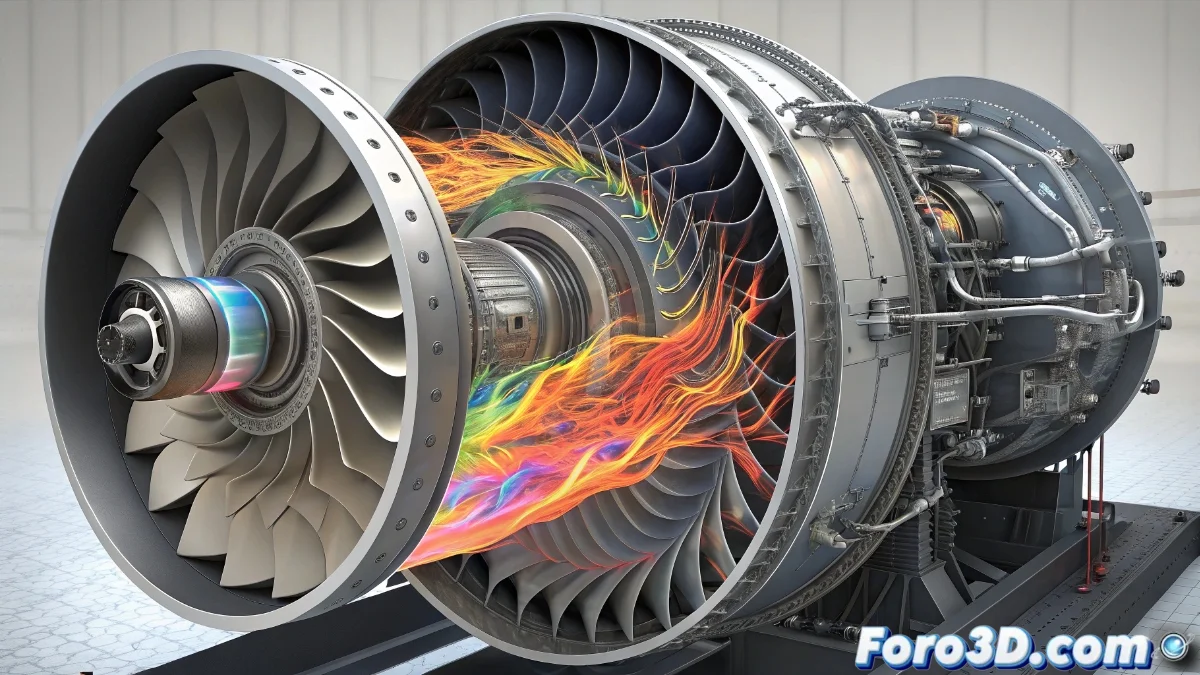
Additive Manufacturing in Rotating Detonation Engines: Key Advances
After years of research, additive manufacturing has become an essential element for the progress of rotating detonation engines. This technique enables the creation of intricate internal structures that were previously unfeasible with conventional processes, favoring the design of perfected combustion chambers for the continuous detonation waves that define these propulsion systems. 🚀
Benefits of 3D Printing in Detonation Propulsion
Additive manufacturing integrates cooling channels and injection mechanisms directly into the chamber walls, significantly increasing thermal efficiency and detonation process management. This manufacturing flexibility enables the use of advanced materials capable of withstanding extreme temperature and pressure conditions, while reducing weight and improving the overall engine's power-to-weight ratio.
Key aspects of the technology:- Integration of cooling systems into the combustion chamber structure
- Use of composite materials that withstand high temperatures and pressures
- Significant reduction in the total engine weight
Additive manufacturing has opened new frontiers in propulsion design, enabling geometries previously considered impossible.
Implementation in Innovative Propulsion Systems
Rotating detonation engines are transforming propulsion for rockets and supersonic aircraft, offering efficiency gains of up to 25% compared to traditional engines. Thanks to additive manufacturing, research teams can quickly test and adjust various geometric configurations, accelerating the creation of functional prototypes and reducing development and validation costs for new propulsion concepts.
Main fields of application:- Propulsion for space rockets and long-range missions
- Supersonic aviation and high-speed flights
- Research and development of new combustion systems
The Future of 3D Printing in Detonation Engines
It seems that 3D printing has found its ideal niche: building engines that operate through controlled explosions. After all, what could be more exciting than a chamber filled with detonation waves spinning at supersonic speeds? This technology not only optimizes performance but also drives innovation in the aerospace sector. 🌪️