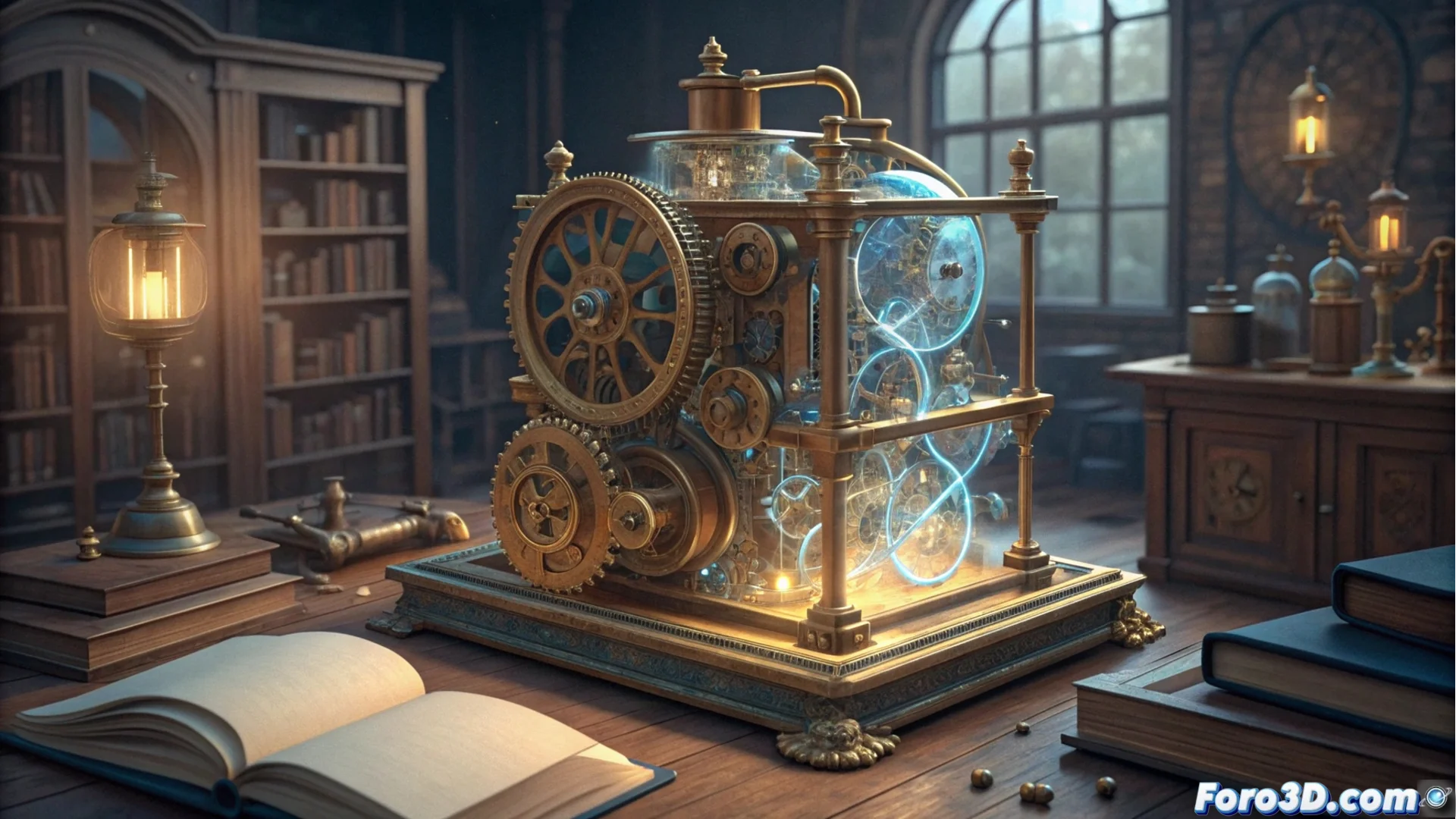
Ada Lovelace's Poetic Analytical Engine to Understand AI
Imagine that Ada Lovelace were evaluating the current black box problem in artificial intelligence. Her response would not be to create a more complex system, but to design a Poetic Analytical Engine. This idea does not aim for machines to think like humans, but for anyone to perceive how they operate. The solution fuses logic and artistic sensitivity to illuminate processes that are opaque today. 🎨
A visual language that makes the abstract tangible
The core of this proposal is a visual programming system. Instead of displaying textual code, it represents the internal flow of a neural network as a dynamic and interactive environment. Each neuron becomes a point of light and each data link a stream of particles. The platform interprets the model's weights and activations, generating graphical metaphors in real time. Thus, an image classification task can transform into seeing a garden where recognizable shapes bloom.
Main features of the visual system:- Translates AI data and operations into dynamic and intuitive landscapes.
- Represents neurons as luminous sources and connections as rivers of information.
- Generates real-time visualizations from the algorithm's activity.
The greatest error of an AI model would not be misclassifying a cat, but composing a particularly bad sonnet about it.
Expressing the algorithm's mind with sound and verse
This engine is not limited to the sense of sight. It also synthesizes sound compositions and poetic fragments from the system's internal activity. A sharp fluctuation in a gradient can produce a dissonant chord seeking resolution, while a stable and clear pattern is narrated with a concise haiku. The goal is for the AI logic to cease being a technical mystery and be perceived as a structured symphony, where aesthetic beauty facilitates understanding.
Sensory expression modalities:- Synthesize audio that reflects changes and stability in the algorithm's processes.
- Generate automatic poetry (like haikus) that narrates the model's behavior.
- Create a multisensory experience that brings technology closer to people without a technical background.
Towards a democratic and understandable artificial intelligence
This vision transcends pure engineering to embrace art as a tool for transparency. By transforming data into sensory experiences, it democratizes access to knowledge about how these systems work. The proposal suggests that the future of AI explainability might depend less on technical reports and more on our ability to feel and perceive its internal logic through powerful metaphors. 🤖➡️❤️