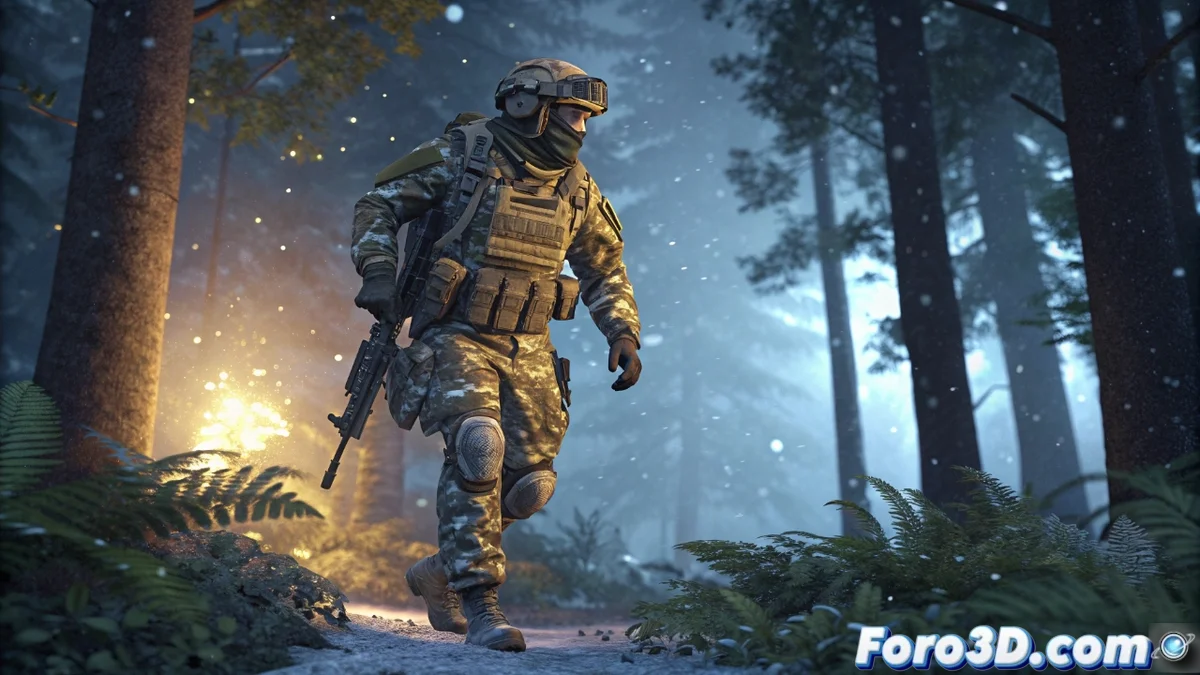
Active Infrared Camouflage with Smart Materials
The thermal concealment technology has evolved toward systems that employ smart materials capable of actively modifying their surface temperature. These advanced mechanisms integrate networks of sensors that capture ambient infrared radiation and microcontrollers that manage strategically distributed thermoelectric elements. The result is a dynamic adaptation that synchronizes the object's thermal signature with its immediate environment, generating an invisibility effect against infrared surveillance systems 🔥.
Mechanisms of Intelligent Thermal Adaptation
The process of active camouflage begins when high-precision infrared sensors continuously scan the surrounding thermal profile, detecting temperature variations on a submillimeter scale. The collected information is processed through artificial intelligence algorithms that predict the necessary evolution of the thermal pattern. Peltier modules respond in milliseconds, generating a thermal mosaic that faithfully replicates the detected environmental conditions. The system's effectiveness fundamentally depends on the density of the thermoregulating components and the control system's response speed ⚡.
Key System Components:- Network of passive infrared sensors with submillimeter measurement capability
- Microcontrollers specialized in real-time thermal processing
- Ultra-fast response Peltier modules distributed in specific patterns
True thermal invisibility requires the system to be faster than the observer's detection capability
Practical Applications and Technological Challenges
The most significant implementations are found in the military domain, where it is used to conceal vehicles, equipment, and personnel from infrared surveillance systems. However, this versatile technology also finds applications in the protection of critical infrastructure, advanced scientific research, and high-budget film productions. Among the main current limitations are the high energy consumption necessary to maintain active thermoregulation and the difficulty in camouflaging fast-moving objects, where processing delays can generate detectable artifacts in the thermal image 🎯.
Fields of Application:- Military operations and strategic defense
- Protection of critical and sensitive facilities
- Scientific research in advanced thermography
Paradoxes and Future of Thermal Camouflage
It is particularly paradoxical that to achieve invisibility against technological systems, it is necessary to implement such complex mechanisms that, in turn, generate their own detectable energy signature by other specialized sensors. This situation creates an ongoing technological race where perfect invisibility seems to remain always as an ever-evolving goal, driving innovations in smart materials and increasingly efficient and discreet processing systems 🌌.