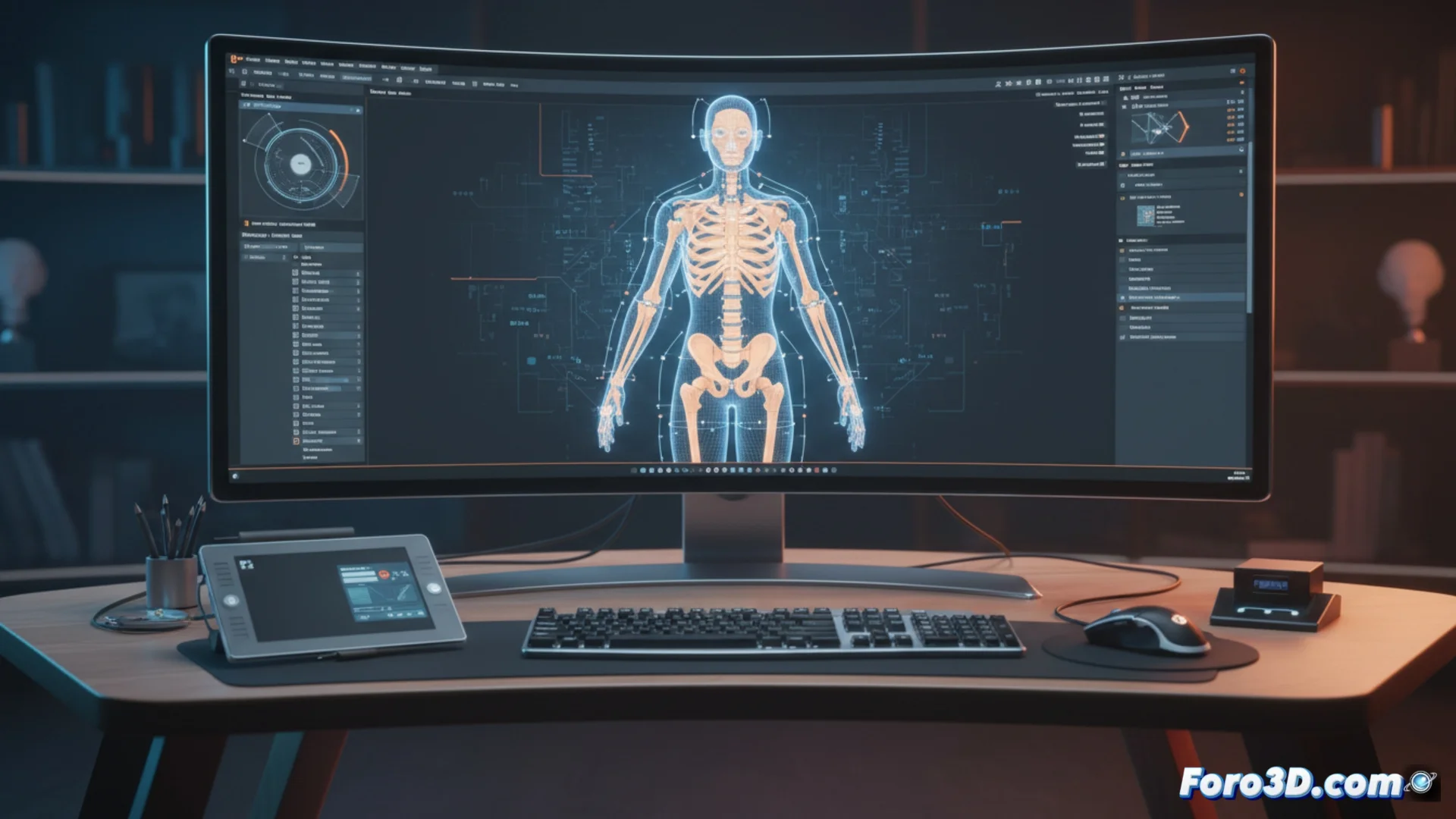
AccuRig: automates generating a skeleton for 3D characters
An artificial intelligence-based tool is changing how artists prepare their models for animation. It analyzes any 3D mesh, whether of a human or a creature, and builds its skeletal structure autonomously. 🦴
The system interprets the geometry and proposes bones
The user only needs to load their model into the application. The AI examines the topology and shape of the character to deduce the logical location of the joints. Then, it places the bones and establishes a complete hierarchy, offering a working base in minutes that can be modified later.
The automated process includes:- Analyzing the silhouette and geometry of the 3D model.
- Identifying key components like head, torso, and limbs.
- Placing and hierarchizing the bones in the calculated positions.
This automation significantly speeds up the pre-animation phase, allowing artists to focus on refining or animating directly.
Optimizing the animator's workflow
By eliminating the need to place each bone manually, it saves a lot of time. Artists can devote efforts to correcting details or to the animation itself. The system is compatible with exporting the resulting rig to standard industry software, making it easy to integrate into existing production pipelines without issues.
Key advantages for production:- Speed up the model preparation stage (rigging).
- Allow focusing resources on animation and fine-tuning.
- Facilitate integration with popular animation tools.
Considerations and final adjustment
Although the system promises to detect complex elements like creature tails, it may sometimes confuse parts of the mesh, such as interpreting a short arm as an ear. Therefore, human review remains crucial to ensure the skeleton is correct and avoid unexpected results. The tool is a powerful assistant, not a total replacement for the artist's judgment. 🤖