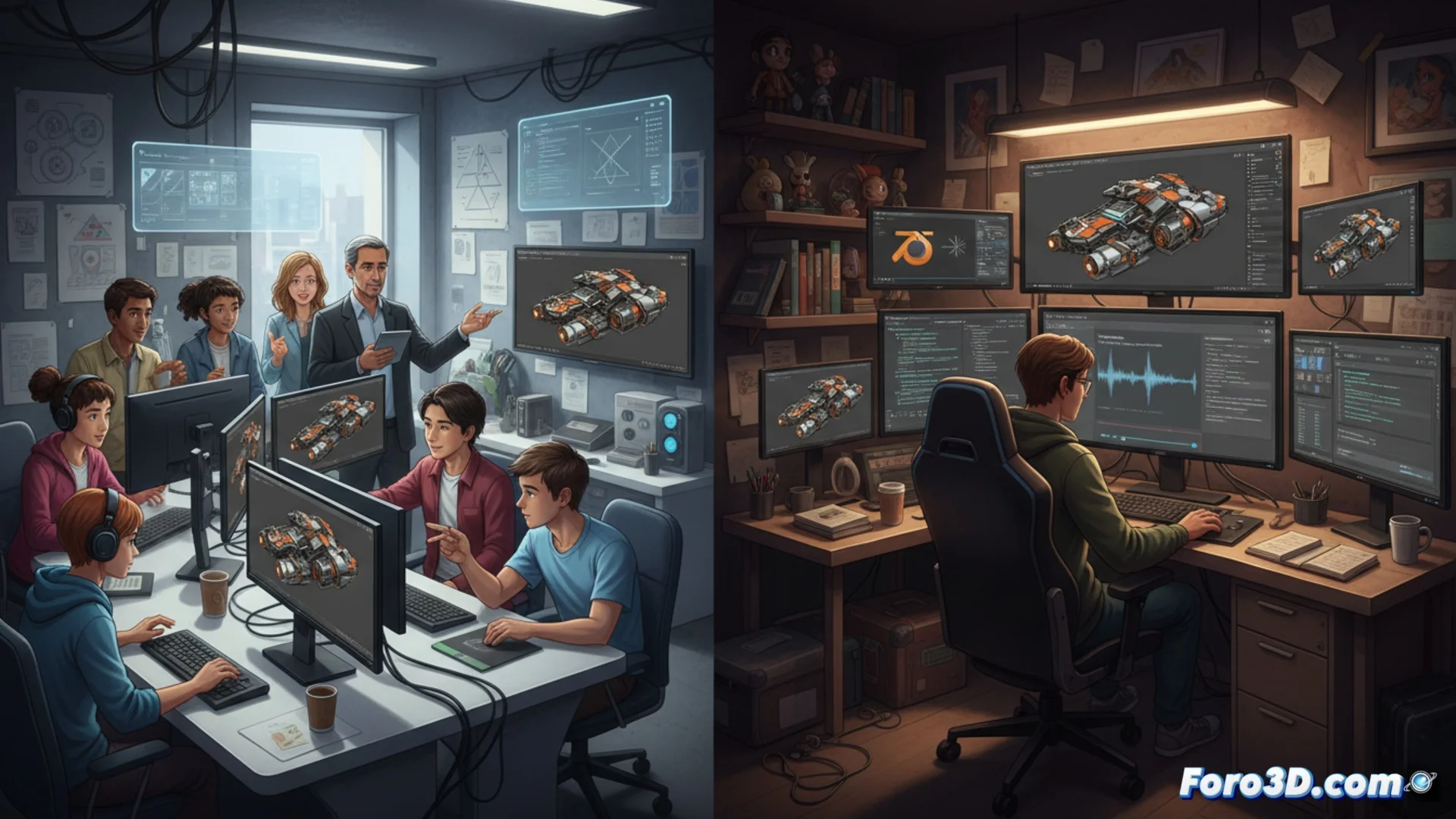
Academic Training and Self-Learning in 3D Design
Achieving a professional level in three-dimensional design is possible through two main routes: formal education and independent study. Both can produce high-quality results, although their methods and benefits differ significantly. 🎯
The University Route: Structure and Networking
Studying at an academic institution provides an organized curriculum that covers everything from the principles of art and physics to handling complex software. This comprehensive approach helps understand the fundamentals behind each technique. Additionally, the academic environment facilitates connecting with mentors and peers, a valuable resource for entering the job market. Simulating project presentations and meeting tight deadlines prepares the student for the real professional pace.
Key Advantages of the Formal Path:- Access to a structured curriculum that builds knowledge progressively.
- Direct guidance from professors and constructive criticism among peers.
- Opportunity to build a professional network from the early stages.
The university teaches the why of things, not just how to execute them.
The Self-Taught Route: Agility and Practical Focus
Learning primarily through online resources, tutorials, and books develops great autonomy. This professional profile is usually guided by the needs of specific projects, allowing them to dive deep quickly into specific areas such as modeling organic shapes, programming shaders, or simulating fluid dynamics. Their ability to search, filter, and apply new information is a competitive advantage in a constantly evolving industry. Their portfolio usually includes real projects from the start.
Strengths of Independent Learning:- Ability to solve problems autonomously and adapt to new tools.
- Possibility to specialize in highly demanded market niches.
- Development of a practical portfolio based on real or personal work.
The Final Verdict: The Portfolio Rules
In the creative industry, the origin of knowledge is rarely the deciding factor. What truly matters is the quality of the demonstrated work. In an interview, few ask where a technique was learned; the crucial thing is whether the final result fulfills its function, whether it's a convincing texture or a model that works optimally in a rendering engine. Discipline and curiosity are the common engines of both paths. 🏁