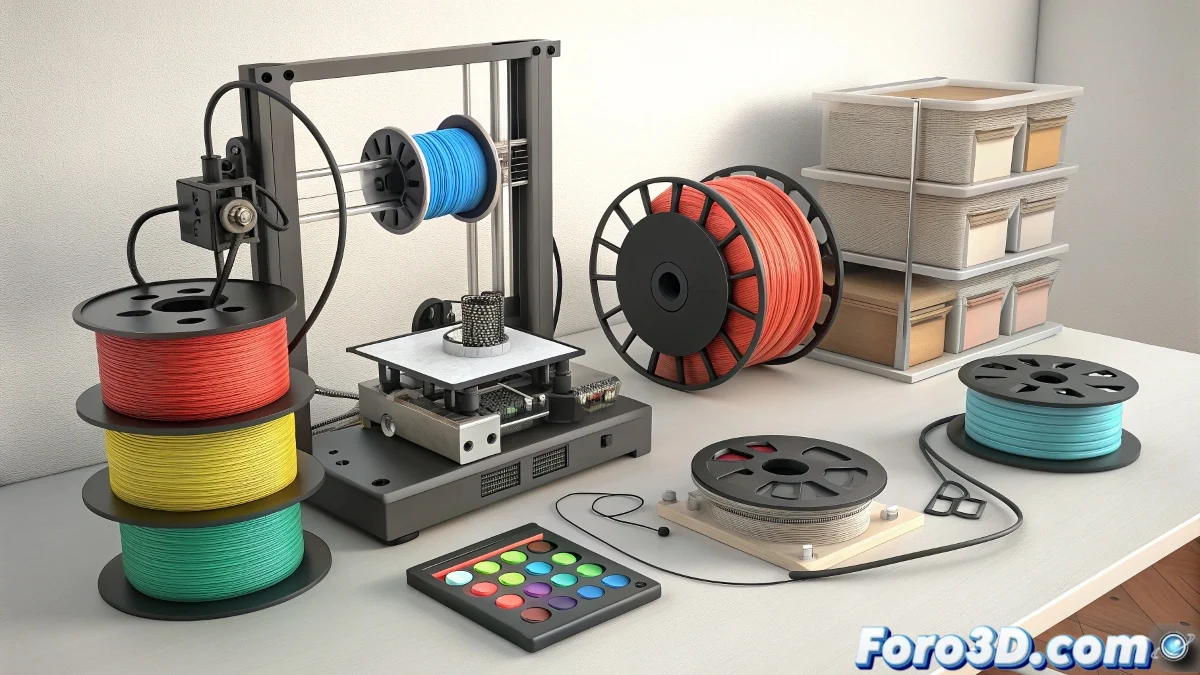
The Veteran of Technical Filaments
Before PLA conquered desktops and PETG emerged as a middle ground, acrylonitrile butadiene styrene reigned in the world of professional 3D printing. ABS was the standard material for industrial applications and functional prototyping for years, setting a performance benchmark that few materials could match. Its legacy endures in professional workshops and applications where mechanical properties are critical.
What defines ABS is its unique combination of strength, durability, and post-processing capability. Unlike more user-friendly materials like PLA, ABS requires controlled conditions to print correctly, including a heated bed at 90-110°C and preferably an enclosed chamber to avoid abrupt cooling. These technical demands explain why it remains primarily the territory of experienced users.
Exceptional Mechanical Properties
- High impact resistance and durability in mechanical applications
- Excellent thermal resistance up to 85-100°C without deforming
- Capability to be machined, sanded, and painted with excellent results
- Resistance to many chemicals including oils and greases
The Challenge of Mastering ABS
Successfully printing with ABS requires understanding and managing its notable tendency to warp and delaminate layers. This phenomenon occurs when different parts of the piece cool at different rates, generating internal stresses that can deform or even crack the print. The solution lies in maintaining a high and constant ambient temperature, preferably between 40-50°C, something that modern enclosed chambers greatly facilitate.
ABS rewards patience and technical knowledge with industrial-quality parts
One of the most significant advantages of ABS is its compatibility with advanced post-processing techniques. It responds exceptionally well to sanding and can be polished to achieve a shine almost like glass using acetone vapors. This feature makes it ideal for parts that require a professional finish or will be part of commercial products. Additionally, it accepts paints and adhesives much better than most filaments.
Applications Where ABS Shines
- Mechanical parts and structural components subjected to stress
- Devices and enclosures for electronics that generate heat
- Functional prototypes that must withstand rigorous testing
- Final products that require professional finishing and painting
While easier materials have gained popularity in the home realm, ABS maintains its position in professional environments where technical properties allow no compromises. Its combination of thermal resistance, mechanical durability, and versatility in post-processing makes it an option worth mastering for serious projects. 🔥
And remember: ABS is not a material for beginners, but mastering it is like getting the black belt in 3D printing... with the characteristic hot plastic aroma included. 🥋
You can see this product and similar ones in the : store