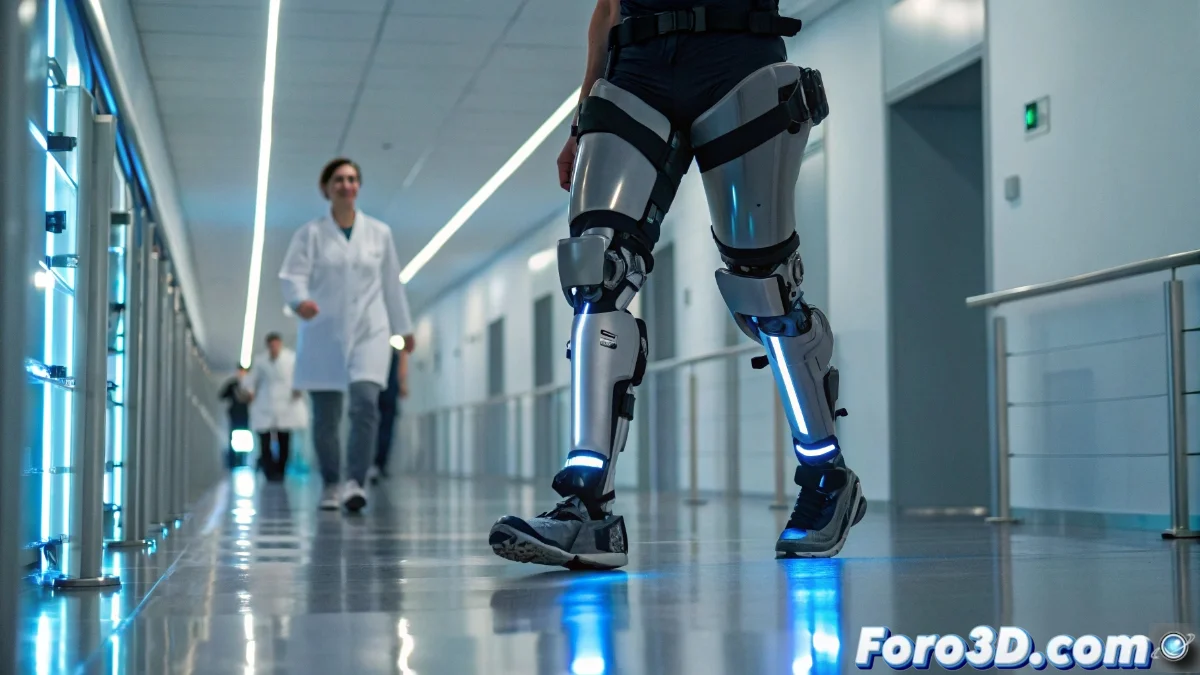
ABLE Human Motion: Revolution in Exoskeletons for Assisted Mobility
Wearable robotic technology is radically transforming the lives of people with reduced leg mobility, and the ABLE Human Motion system emerges as a pioneering solution in this field. This biomechanical device stands out for its ability to interpret the user's motor intention and respond with proportional real-time assistance 🦿.
Technological Innovation and User-Centered Design
The exoskeleton architecture integrates multiple kinematic sensors that capture body micromovements, enabling smooth transitions between seated and bipedal positions. The silent actuators generate synchronized assisted torque with natural gait, while the modular structure allows for specific anatomical customizations.
Key features of the system:- Ultralight composite materials that ensure prolonged comfort without additional fatigue
- Adaptive control algorithms that learn and adjust to individual movement patterns
- Intuitive interface with haptic feedback for an enriched user experience
The true innovation is not in making people walk, but in restoring the dignity of autonomy - Dr. Elena Torres, Institute of Biomechanics
Applications in Functional Recovery and Quality of Life
Beyond basic mobility, ABLE functions as an active therapeutic tool that stimulates neuroplasticity and prevents secondary complications from immobility. The documented physiological benefits include improved muscle trophism, optimization of venous return, and maintenance of bone density.
Advantages in clinical and home settings:- Progressive rehabilitation programs with granular adjustment of assistance levels
- Continuous monitoring of functional metrics through an integrated digital platform
- Independence for daily activities such as indoor displacements and social participation
Accessible Technology and Future Prospects
The technological ecosystem of ABLE incorporates high-energy-density batteries that ensure full days of autonomous use, along with Bluetooth connectivity for synchronization with mobile applications. The evolution toward affordable versions has democratized access to this technology, originally reserved for elite rehabilitation centers. The conceptual irony of needing the exoskeleton to reach its own manual perfectly illustrates the paradox of accessibility in assistive technologies 🤖.