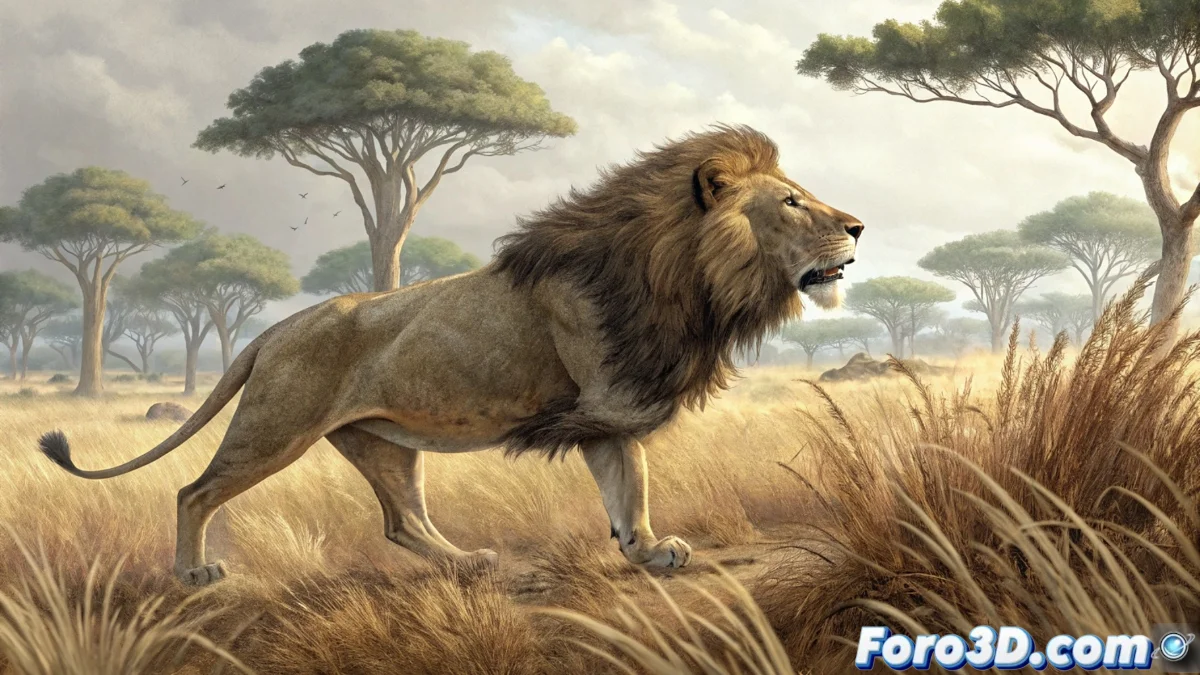
A Tripod Lion in Kruger Revolutionizes Hunting with Vertical Ambush Technique
In the vast plains of the Kruger National Park, an extraordinary male lion with only three limbs has captured the attention of the scientific community by developing a completely original hunting strategy that challenges established paradigms about the survival capacity of animals with disabilities in wild environments 🦁.
The Ingenious Aerial Ambush Method
This unique specimen, identified as Tripod by the rangers, lost its right front leg after being trapped in a poacher's device about two years ago. Far from being its death sentence, this physical limitation has catalyzed an unprecedented behavioral transformation that is currently being investigated by specialized biologists from the University of Pretoria.
Main characteristics of the technique:- Strategic positioning in low branches of trees near water sources frequented by prey
- Extreme patience during long hours of waiting until antelopes or warthogs position themselves under its location
- Controlled fall using body weight and strength concentrated in its two remaining front legs to immediately neutralize the target
This strategy allows it to optimize its energy and effectively compensate for its mobility limitations in open terrain where other felines rely on speed
Physical Transformations and Cultural Transmission
Studies have revealed how Tripod has developed exceptionally strengthened musculature in its left front leg, showing a strength capacity far superior to that of other lions of comparable size. Parallely, it has achieved surprising levels of balance and stability, maintaining postural control even during rapid movements on its three limbs.
Observed learning elements:- Asymmetric muscular development that compensates for the missing limb with hypertrophy in the remaining ones
- Tripod balance capacity that allows maintaining stability during short runs and changes of direction
- Behavioral imitation by younger lions who observe and practice variations of the technique
Lessons from the African Savanna
It is particularly significant that while humanity invests considerable resources in innovation methodologies and creative thinking, this majestic feline has solved its survival challenge through such a functional solution that it has even generated a replication phenomenon within its social group. This case vividly demonstrates how apparent limitations can become the most powerful catalyst for the development of ingenious solutions 🌟.