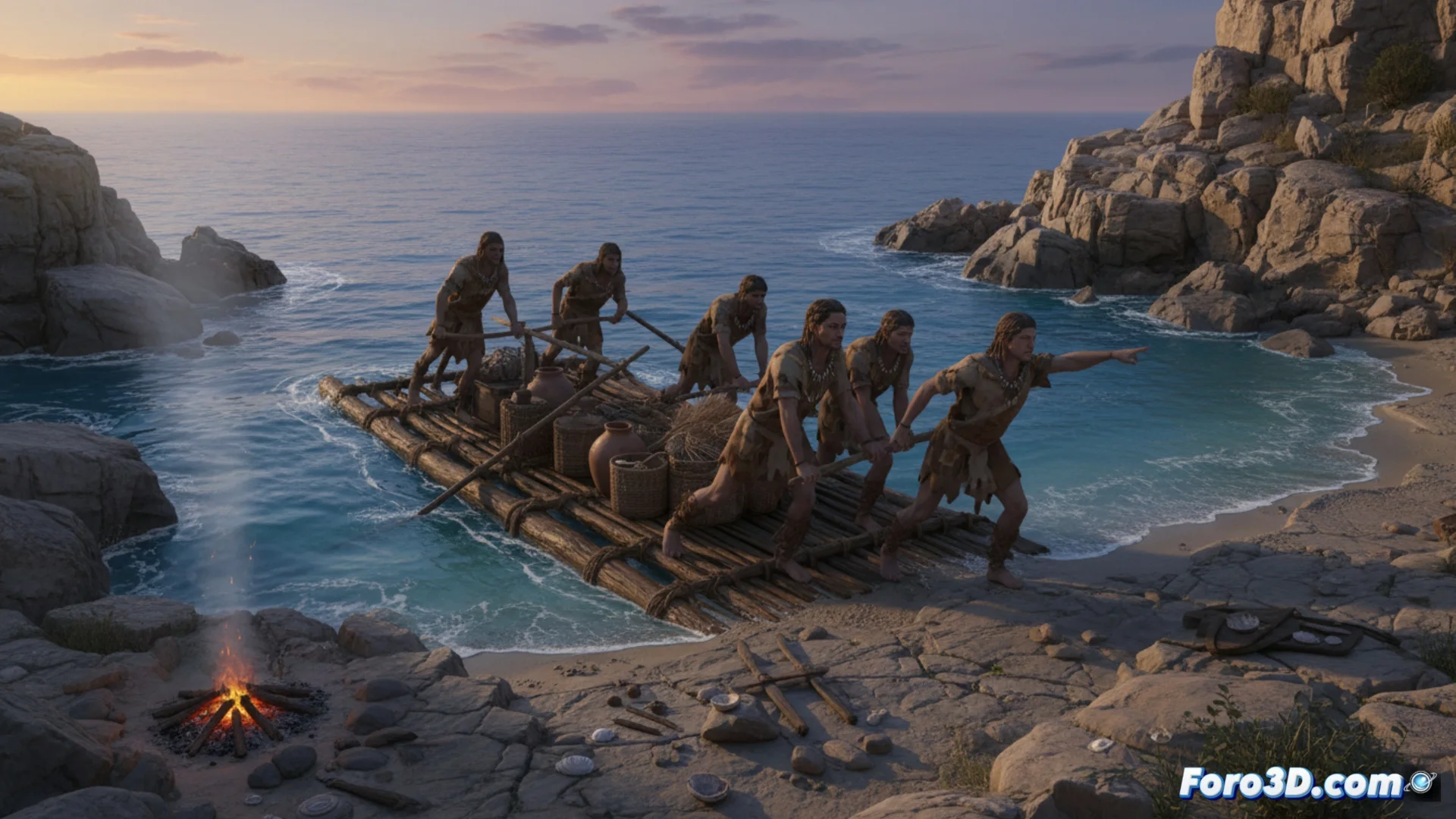
A Study Rethinks When Humans Mastered Sea Navigation
A new archaeological study proposes that prehistoric humans sailed the seas much earlier than estimated. The evidence indicates that about eight thousand five hundred years ago, hunter-gatherers were already crossing considerable distances of open sea. This finding changes what we knew about their capabilities to organize sea voyages. 🚣♂️
The Key Evidence at the Latnija Site
At the Latnija site, located in Malta, experts found remains indicating stable human settlements and not temporary ones. Among the vestiges discovered are stone tools, hearths, and food waste. These elements confirm prolonged occupation of the site. The presence of these groups on an island only accessible by sea is the fundamental data of the discovery.
Evidence Found at the Settlement:- Lithic tools made by those inhabitants.
- Remains of hearths demonstrating continuous activity.
- Food waste, indicating a stable diet and life in the place.
The ability to navigate in an organized manner seems to have developed earlier than documented.
Implications for Understanding Ancient Maritime Voyages
This discovery forces us to review the traditional view on how and when the first sea voyages occurred in prehistory. To reach the island of Malta, those humans needed to build vessels and handle them skillfully. Crossing more than a hundred kilometers of sea implies planning and executing a complex journey, far from any visible coast.
Implications of the Finding:- It advances the date when organized navigation is considered to have existed in the Mediterranean.
- It demonstrates that these voyages occurred almost a millennium before the first farmers arrived in the area.
- It suggests that the technical skill for navigation developed in the Mesolithic.
What Drove These Early Navigators?
The motivation to undertake such a risky journey may have been diverse. It is likely that the need to explore new territories for hunting, or simply human curiosity, overcame the fear of getting lost on the horizon. This instinct to discover and expand seems to be a constant in our history. 🌊