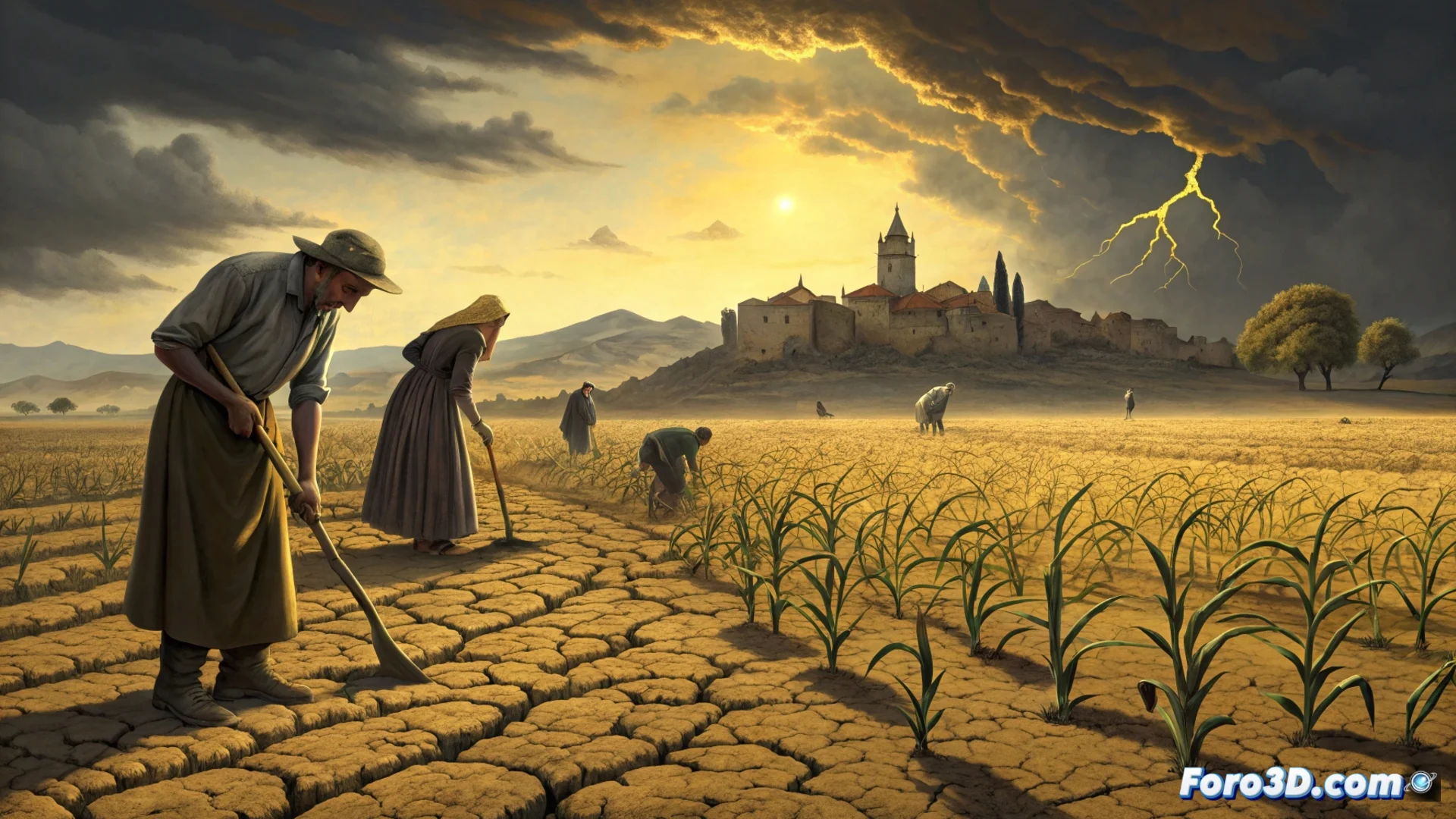
A study links the El Niño phenomenon with famines in modern Europe
A historical investigation analyzes 160 food crises in Europe from 1500 to 1800. The findings reveal a clear connection: the El Niño climate pattern acted as a trigger and amplifier of hunger, altering agricultural cycles and extending suffering. 🌍⚖️
The global impact of a climate pattern
The El Niño phenomenon warms the waters of the tropical Pacific, which modifies atmospheric circulation on a planetary scale. This change can cause intense droughts in some areas and devastating floods in others, destabilizing traditional agricultural systems. The study posits that when this event occurred, Europe was more likely to suffer extreme weather conditions that drastically reduced the capacity to produce food.
How El Niño affected Europe:- Altered monsoons and the jet stream, bringing droughts or excessive rains to key cereal-growing regions.
- Created a climatic domino effect, where anomalies in the Pacific impacted atmospheric pressure patterns in the North Atlantic and Mediterranean.
- Shortened growing seasons or ruined crops with isolated events like late frosts or hailstorms.
"El Niño events complicated recovery after a bad harvest, extending the period of scarcity beyond what reserves could sustain." - Key conclusion from the study.
Social vulnerability in the face of climate crisis
Early modern European societies depended almost entirely on subsistence agriculture. This structural fragility made them extremely sensitive to any variation in the climate. A succession of bad harvests, amplified by El Niño events, could quickly deplete granaries and trigger widespread famine. The research highlights that these episodes not only initiated crises but also prevented quick recovery, prolonging misery.
Factors that worsened the situation:- Absence of global markets to import grain in large quantities and alleviate local shortages.
- Precarious storage systems that could not preserve sufficient surpluses for several bad years.
- Rigid political structures that often responded slowly or with ineffective measures to food crises.
A historical lesson on resilience
This study underscores how, even in a preindustrial era, global climate phenomena had the power to shape the fate of societies. The excuse of "blaming the weather" had, in this context, devastatingly literal consequences. Understanding this historical relationship between climate and hunger helps us perceive the profound interconnection of natural and human systems, and the critical importance of building resilience against climate variability. ⏳🌾