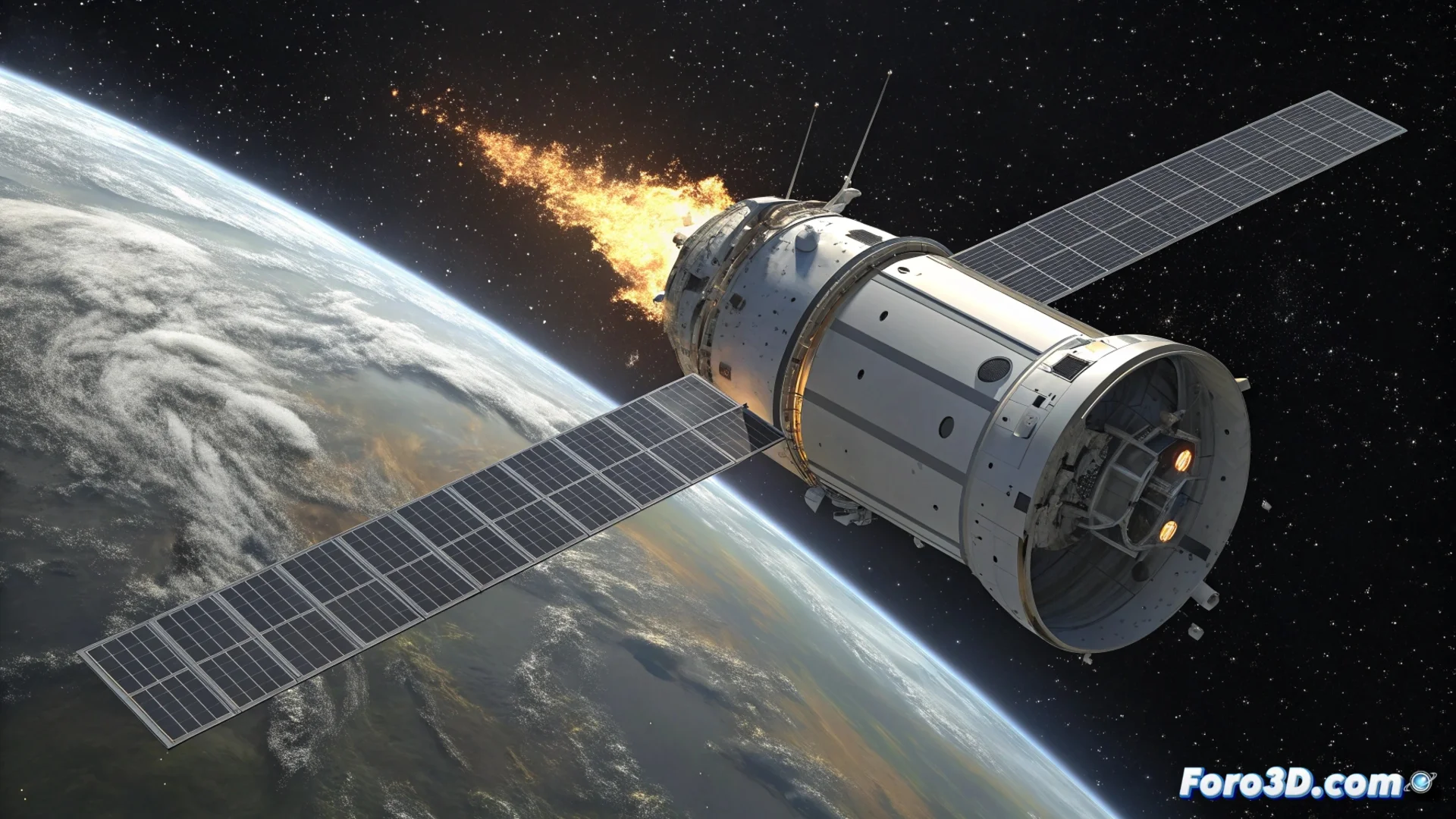
A Starlink Satellite Suffers an Anomaly and Plunges to Earth
An unexpected event shakes the Starlink satellite constellation. On December 17, 2025, a specific unit, identified by the number 35956, reports a serious operational anomaly while orbiting our planet. The situation quickly escalates to a total loss scenario. 🛰️
The Chain of Failures in Space
The anomaly begins with the rupture of the satellite's fuel tank. This structural failure causes the stored propellant to be released into the vacuum of space. The violent expulsion of the fluid generates an unforeseen thrust, which drastically alters the spacecraft's orbital parameters. As a direct consequence, the device immediately loses altitude and begins an uncontrolled descent toward the denser layers of Earth's atmosphere, where it is ultimately completely destroyed by friction.
SpaceX's Immediate Actions:- Launch an internal investigation to determine the precise origin of the failure.
- Review the telemetry data from satellite 35956 prior to the incident.
- Assess whether there is a risk pattern for other units in the constellation.
"SpaceX did not anticipate this failure and is committed to understanding the mechanisms that caused it to improve the reliability of its fleet."
The Search for Answers with Orbital Images
To deepen the analysis, SpaceX decides to request external images. The company contacts a specialized operator of Earth observation platforms. The goal is to obtain high-resolution photographs of the damaged satellite while it is still in space. These images are crucial for inspecting the external condition of the unit and searching for visible clues about the origin of the leak and the structural rupture.
Objectives of the Visual Analysis:- Identify the exact location of the breach in the tank.
- Look for signs of impact with micrometeorites or space debris.
- Analyze whether there was a manufacturing failure or design error.
Impact on the Network and Lessons for the Future
Despite the severity of the incident, the Starlink global network continues to operate normally. The loss of a single satellite among the thousands that form the constellation does not disrupt the service. However, for SpaceX, the subsequent analysis is fundamental. It may reveal potential weak points in the design or manufacturing process of these units. This knowledge is vital to prevent future similar incidents in a fleet that must be extremely reliable. The incident reminds us that, even in the vacuum of space, complex systems can sometimes fail catastrophically. 🔍