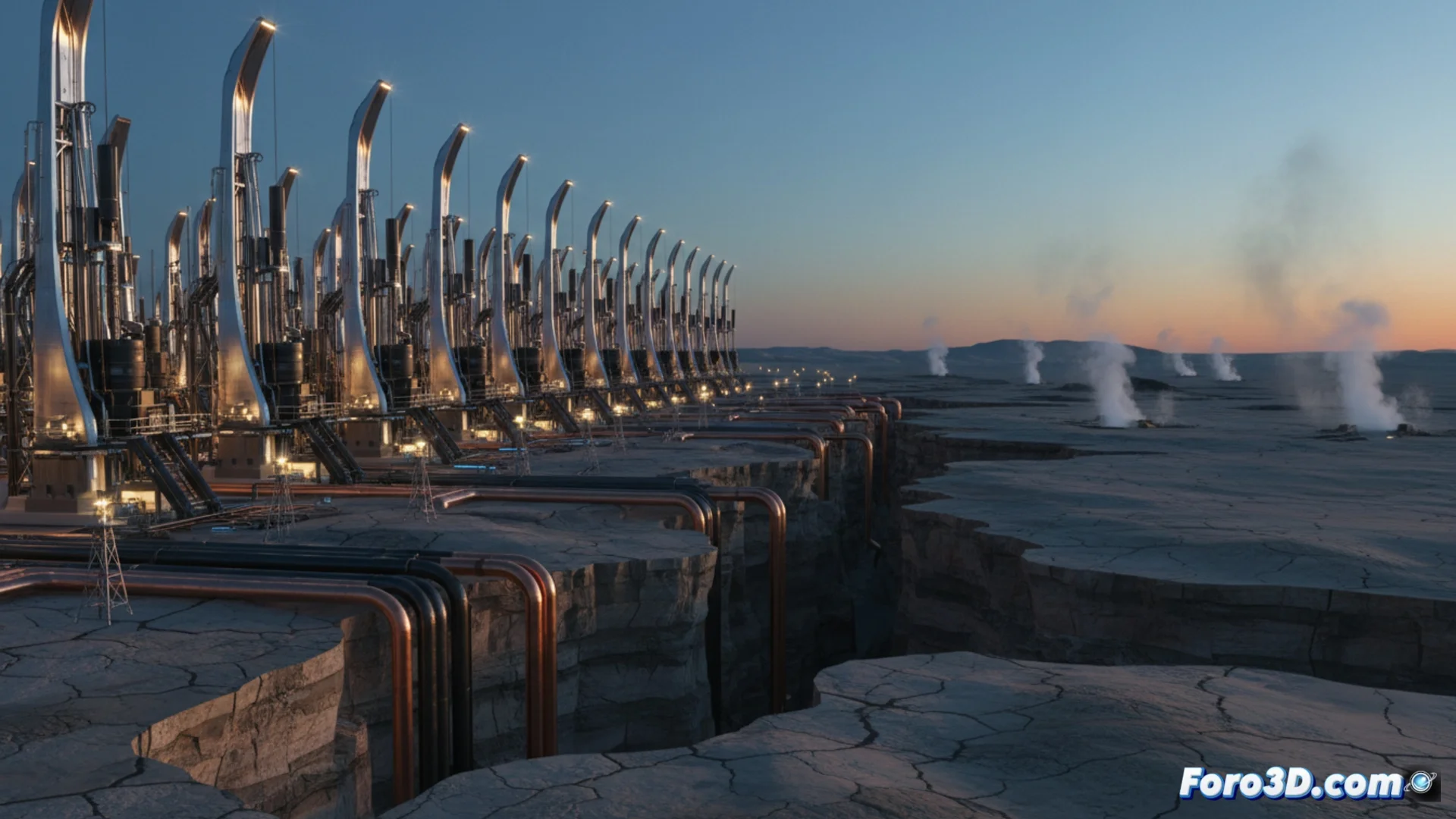
A Stanford Study Proposes That Enhanced Geothermal Energy Can Compete on Costs
A team of researchers from Stanford University has published an analysis that reveals transformative potential for enhanced geothermal energy (EGS). According to their findings, this technology could produce electricity at a cost up to 60% lower than plants that burn fossil fuels, marking a milestone in the search for clean and economical energy. 🌍
A Technology That Does Not Depend on Specific Natural Resources
Unlike conventional geothermal energy, which exploits natural hot springs, the EGS method creates its own reservoirs. The process involves drilling 3 to 8 kilometers deep to fracture hot rock, injecting water, and then extracting steam to drive turbines. The scientists emphasize that, by not requiring exceptional geological conditions, this solution can be implemented in a wide variety of locations, offering constant generation that would alleviate pressure on solar and wind sources. ⚙️
Key Advantages of EGS Systems:- Drastic Cost Reduction: The analysis projects that EGS electricity can be significantly cheaper than that from gas or coal plants.
- Rapid Implementation: Building a plant of this type takes between one and two years, a very short timeframe compared to a nuclear power plant.
- Expanded Geographic Reach: By not depending on conventional reservoirs, its deployment potential extends to many more regions of the planet.
If it covers just 10% of energy demand, this source could stabilize the electrical grid and ideally complement variable renewables.
The Path to Commercial Competitiveness
The researchers make an optimistic projection: they consider that enhanced geothermal energy can achieve full competitiveness in the commercial market by 2035. Its ability to generate without interruptions, along with short construction timelines, positions it as a solid pillar for the energy mix of the future. 🚀
Factors Driving Its Viability:- Complementarity with Other Renewables: It provides constant baseload energy, compensating for the variability of solar and wind.
- Grid Stabilization: Its continuous generation helps balance electrical supply and demand.
- Rapid Implementation: Agility in construction allows for quick response to energy needs.
Managing the Challenge of Induced Seismicity
The study does not omit the challenges. The authors acknowledge that fracturing rock at great depth carries the risk of triggering microseisms or induced earthquakes, a technical and social aspect that requires utmost care in management. However, they argue that ongoing advances in monitoring and controlling these processes can effectively mitigate the effects. The analysis concludes that, by overcoming these obstacles, EGS stands out as a solid, powerful, and low-cost alternative to decarbonize energy supply. The Earth holds a great reserve of energy under our feet, though it sometimes reminds us of its power with a tremor when we awaken it. ⚠️