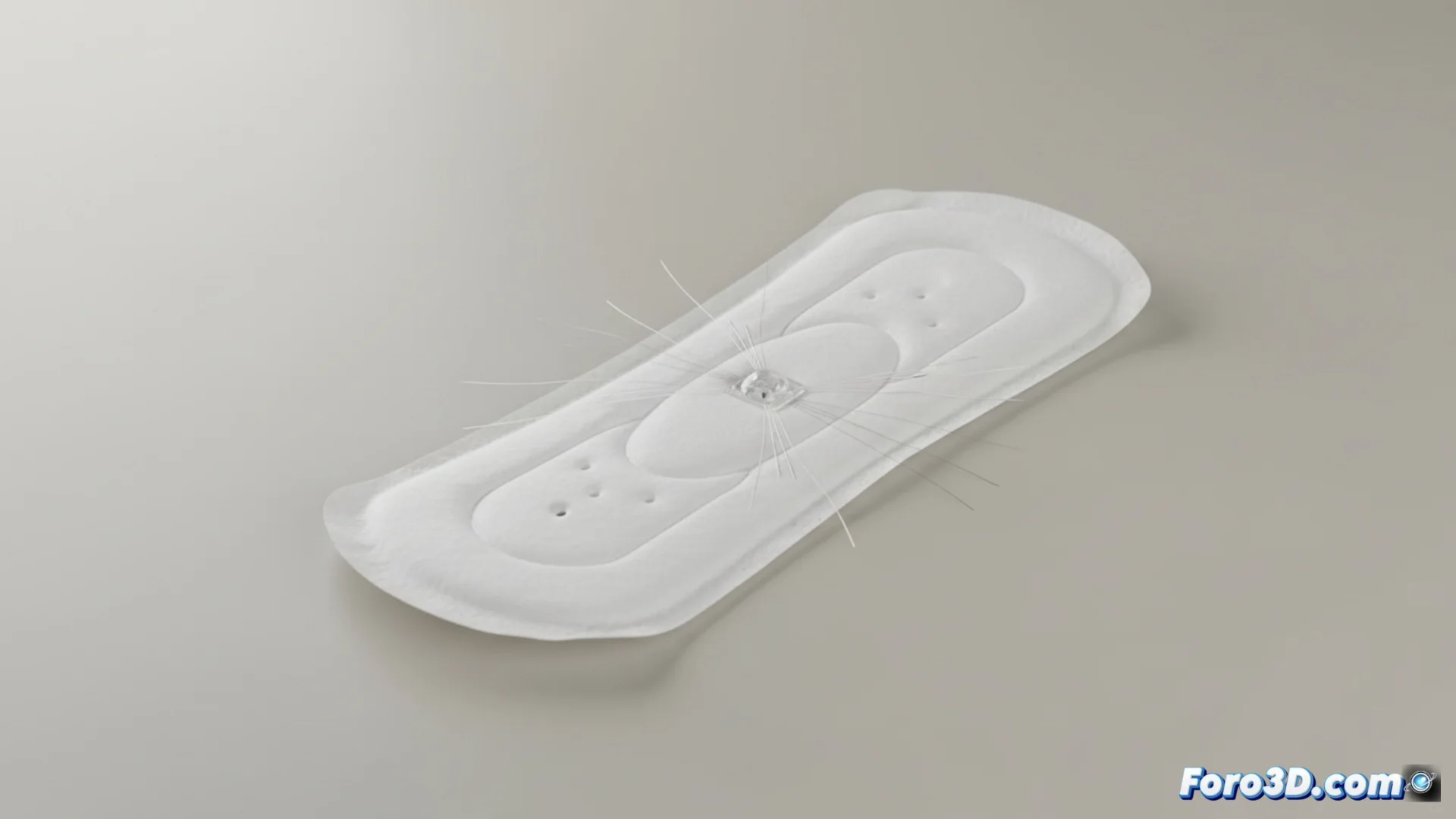
A sensor integrated into a sanitary pad analyzes female fertility
A team of researchers has designed an innovative sanitary pad that includes a biosensor to examine hormones in menstrual fluid. This technological advance aims to provide women with periodic data on their fertile period and reproductive health, using a non-invasive method. The idea is to provide objective information for planning or avoiding pregnancy, serving as a complement to other cycle tracking methods. 🩸
The biosensor measures key hormonal metabolites
The pad incorporates a device that identifies and measures the amount of estrone-3-glucuronide, a metabolite derived from estrogen. The information is sent wirelessly to a mobile phone, where an app processes it to calculate the probable time of ovulation. This method is based on the fact that hormone concentrations in menstrual fluid reflect the body's cyclic changes, providing a direct and personalized reading.
Main features of the system:- Passive measurement: Operates during menstruation without the user needing to intervene actively.
- Wireless transmission: Automatically sends recorded data to an app.
- Monthly report: Generates a hormonal summary each cycle to identify patterns.
This technology seeks to transform a personal care product into an accessible and discreet diagnostic tool.
Simplifying female cycle tracking
The central goal is to offer a tool that does not require daily sample collection, as with traditional urine tests. Used on period days, it produces a monthly hormonal report. The creators note that it can help detect irregularities in cycles and provide long-term records useful for consulting a doctor, although it still needs rigorous clinical validation. 📊
Potential advantages of the device:- Eliminates the need for daily test reminders.
- Provides objective and continuous data to assess reproductive health.
- Could integrate information to facilitate medical diagnosis.
The future of intimate monitoring
This development suggests that in the future, managing the menstrual cycle will not only involve caring for it, but also "analyzing" it monthly with detailed reports. The fusion of portable biosensors with common hygiene products opens a new avenue to empower women with knowledge about their own bodies, making fertility tracking a more integrated and less intrusive process. 🔬