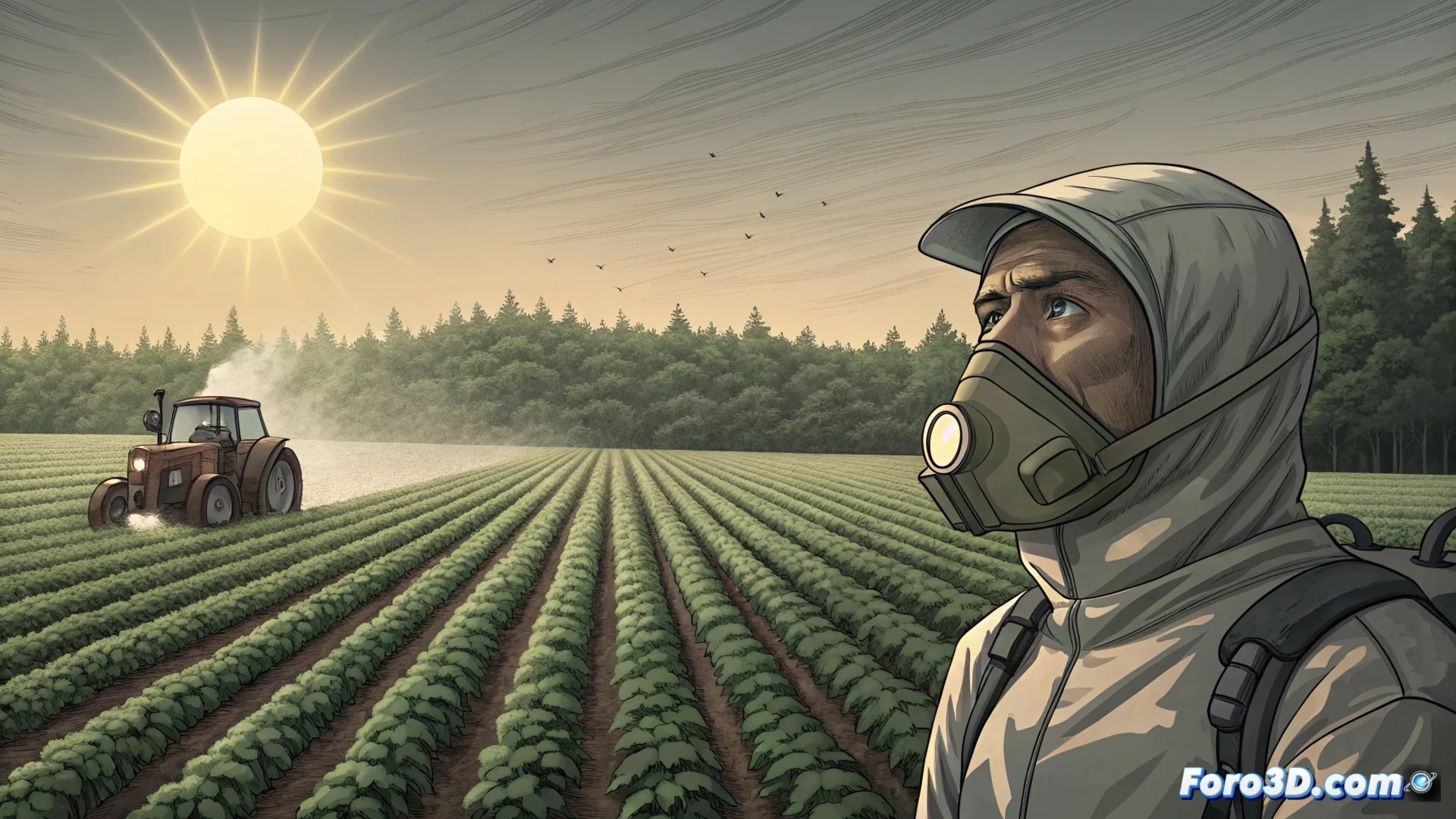
A report links the EU-Mercosur agreement with pesticide poisonings in Brazil
An official document associated with the negotiations of the treaty between the European Union and Mercosur has uncovered alarming figures on the use of agrochemicals in Brazil. The report details a severe impact on public health, fueling the debate on the production standards that could be consolidated with the trade agreement. 🌍
The hidden figures of a toxic decade
Between 2010 and 2019, the Brazilian health system recorded nearly 56,000 people poisoned by pesticides. Official statistics add that, on average, one person died every 48 hours due to causes directly linked to these products. These numbers, however, only reflect the cases that authorities managed to document, so the real dimension of the problem is presumably greater. 📊
Factors that worsen the situation:- Underreporting is high, especially in rural areas and among temporary workers.
- Many incidents do not enter the official health system, distorting the statistics.
- The lack of precise data makes it difficult to design effective policies to protect communities.
The panorama is so toxic that some might think breathing the countryside air is a high-risk activity, although clearly the problem is not the air, but what is added to it.
The trade agreement under scrutiny
The publication of this report coincides with a critical moment in the ratification of the trade agreement. The data have intensified discussions on the possible effects of increasing trade with an agricultural model that intensively depends on these chemicals. Some European sectors fear that the treaty will incentivize and perpetuate these practices. 🤝
Key points of the debate:- Concern over long-term effects on human health and the environment.
- The possibility that controls will be relaxed to facilitate trade exchange.
- The need to harmonize production and safety standards between the blocs.
A problem of uncertain magnitude
Public health experts insist that official figures are just the tip of the iceberg. The real magnitude of people affected by pesticides in Brazil during that decade could be much higher. This information gap not only prevents accurately measuring the damage but also leaves the most vulnerable and exposed groups unprotected. The situation demands greater transparency and more robust surveillance systems. ⚠️